Taylor & Francis

Neurological Research Template

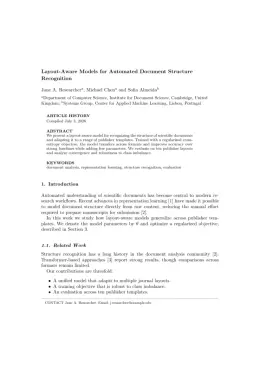
Write in a clean editor, then format for Neurological Research in one click — DocuGuru applies the official Taylor & Francis template with author–year references and exports a submission-ready PDF plus the editable LaTeX source. Free to start.

About the Neurological Research format

Neurological Research is a peer-reviewed journal published by Taylor & Francis, covering Traumatic Brain Injury and Neurovascular Disturbances, Intracranial Aneurysms: Treatment and Complications, Acute Ischemic Stroke Management.

PublisherTaylor & Francis
Reference styleAuthor–year (Chicago, T&F)
Author–year — (Smith, 2023) in the text
Smith, Ada, Ben Jones, and Cara Lee. 2023. "A Representative Article Title." Neurological Research 12 (3): 45–58.

Formats any DOI in Neurological Research style. No sign-up.

Publishes research inTraumatic Brain Injury and Neurovascular Disturbances Intracranial Aneurysms: Treatment and Complications Acute Ischemic Stroke Management Cerebrovascular and Carotid Artery Diseases Cerebrospinal fluid and hydrocephalus
ISSN0161-6412
Citation impact (2-yr)1.21
h-index108
i10-index3,095
Total citations116,663
Top institutions publishing hereWayne State University
Journal websitewww.tandfonline.com
You getA submission-ready PDF and the editable LaTeX source — ready to submit.

Papers published in Neurological Research per year

166
2014
112
2015
167
2016
150
2017
153
2018
102
2019
181
2020
135
2021
130
2022
106
2023
108
2024
295
2025

Citation impact of Neurological Research by publication year

3.4K
2014
1.8K
2015
4.1K
2016
4K
2017
3K
2018
2K
2019
2.4K
2020
1.4K
2021
896
2022
506
2023
337
2024
226
2025

Citations each year’s papers have accumulated so far — the most recent years are still building up.

Most-cited papers in Neurological Research

Oxidative stress and mitochondrial dysfunction-linked neurodegenerative disorders

Muhammad Torequl Islam · 3 Nov 2016

Reactive species play an important role in physiological functions. Overproduction of reactive species, notably reactive oxygen (ROS) and nitrogen (RNS) species along with the failure of balance by the body's antioxidant enzyme systems results in destruction of cellular structures, lipids, proteins, and genetic materials such as DNA and RNA. Moreover, the effects of reactive species…

Silver Staining of Myelin by Means of Physical Development

Ferenc Gallyas · 1 Jan 1979

For staining myelin with silver a physical development technique has been devised that can render visible the thinnest fibers in various animal species, including fishes and reptiles, even in the early phase of myelination and may be applied to both frozen and embedded materials. Its principle is as follows: Myelin can form and bind colloidal…

Music training causes long-term enhancement of preschool children’s spatial–temporal reasoning

Frances H. Rauscher, Gordon L. Shaw, Linda J. Levine et al. · 1 Feb 1997

Predictions from a structured cortical model led us to test the hypothesis that music training enhances young children's spatial-temporal reasoning. Seventy-eight preschool children participated in this study. Thirty-four children received private piano keyboard lessons, 20 children received private computer lessons, and 24 children provided other controls. Four standard, age-calibrated, spatial reasoning tests were given before…

Cerebral vasospasm following subarachnoid hemorrhage: time for a new world of thought

Ryszard M. Pluta, Jacob Hansen‐Schwartz, Jens P. Dreier et al. · 1 Mar 2009

OBJECTIVE: Delayed cerebral vasospasm has long been recognized as an important cause of poor outcome after an otherwise successful treatment of a ruptured intracranial aneurysm, but it remains a pathophysiological enigma despite intensive research for more than half a century. METHOD: Summarized in this review are highlights of research from North America, Europe and Asia…

Peripheral nerve regeneration through guidance tubes

Jason S. Belkas, Molly S. Shoichet, Rajiv Midha · 1 Mar 2004

Biological nerve grafts have been extensively utilized in the past to repair peripheral nerve injuries. More recently, the use of synthetic guidance tubes in repairing these injuries has gained in popularity. This review focuses on artificial conduits, nerve regeneration through them, and an account of various synthetic materials that comprise these tubes in experimental animal…

Neurological Research template — frequently asked questions

How do I write a paper in the Neurological Research format?
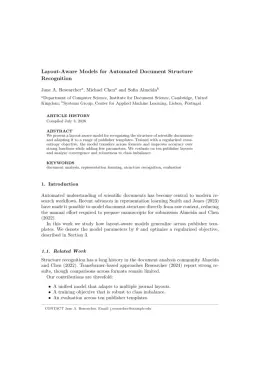
In DocuGuru you write your manuscript in a normal editor — no LaTeX setup required — and select the Neurological Research template. When you export, DocuGuru compiles the paper into the official Taylor & Francis format and hands you a submission-ready PDF along with the editable LaTeX source.
What reference style does Neurological Research use?
Neurological Research uses Author–year (Chicago, T&F) references, shown as author–year markers such as (Smith, 2023) in the text. DocuGuru formats every in-text citation and the reference list in this exact style automatically. A reference appears like this: Smith, Ada, Ben Jones, and Cara Lee. 2023. "A Representative Article Title." Neurological Research 12 (3): 45–58.
Do I need to know LaTeX to submit to Neurological Research?
No. DocuGuru generates the interact LaTeX class and compiles the PDF for you in the background, so you get a Taylor & Francis-ready Neurological Research document without writing any LaTeX. If you do want it, the LaTeX source is included in the export.
Can I import an existing draft into the Neurological Research template?
Yes. Paste or upload your current manuscript — Word, LaTeX, Markdown, or plain text — and DocuGuru reflows it into the Neurological Research format with correct headings, figures, tables, and author–year citations.
Who publishes Neurological Research?
Neurological Research is a multidisciplinary journal published by Taylor & Francis. DocuGuru's Neurological Research template matches Taylor & Francis's official submission format.
Can I export a submission-ready Neurological Research PDF?
Yes — DocuGuru produces a PDF built with the official Neurological Research template (the interact class) that is ready to submit to Taylor & Francis, together with the matching LaTeX source files.
How much does the Neurological Research template cost?
You can start writing in the Neurological Research template for free. Exporting the final submission-ready Neurological Research PDF and LaTeX source is part of DocuGuru's paid plans — see the app for current pricing.
Use the Neurological Research template