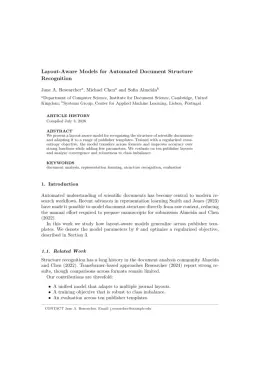
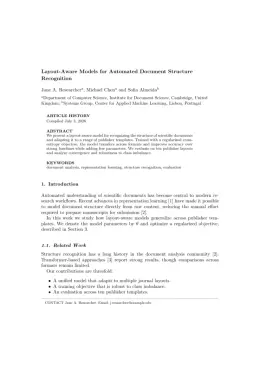
About the Media History format
Media History is a peer-reviewed journal published by Taylor & Francis, covering Media Studies and Communication, Australian History and Society, Cinema and Media Studies.
| Publisher | Taylor & Francis |
|---|
| Reference style | Author–year (Chicago, T&F) Author–year — (Smith, 2023) in the text
Smith, Ada, Ben Jones, and Cara Lee. 2023. "A Representative Article Title." Media History 12 (3): 45–58.
Formats any DOI in Media History style. No sign-up.
|
|---|
| Publishes research in | Media Studies and Communication Australian History and Society Cinema and Media Studies Italian Fascism and Post-war Society European history and politics |
|---|
| ISSN | 1368-8804 |
|---|
| Citation impact (2-yr) | 1.29 |
|---|
| h-index | 30 |
|---|
| i10-index | 150 |
|---|
| Total citations | 5,416 |
|---|
| Top institutions publishing here | Schlumberger (Ireland) |
|---|
| Journal website | www.tandfonline.com |
|---|
| You get | A submission-ready PDF and the editable LaTeX source — ready to submit. |
|---|
Papers published in Media History per year
Citation impact of Media History by publication year
Citations each year’s papers have accumulated so far — the most recent years are still building up.
Most-cited papers in Media History
Piracy: The Intellectual Property Wars from Gutenberg to Gates
Adrian Johns · 26 Aug 2014
"Piracy explores the intellectual property wars from the advent of print culture in the fifteenth century to the reign of the Internet in the twenty-first. Written with a historian's flair for narrative and sparkling detail, the book swarms throughout with characters of genius, principle, cunning, and outright criminal intent. In the wars over piracy, it…
Periodical Time in the Nineteenth Century
Mark Turner · 1 Dec 2002
Reading Women's Magazines
Amy Aronson · 1 Dec 2000
THE DIGITAL TURN
Bob Nicholson · 4 Jan 2013
Advances in digital technology have made the recent past seem like a foreign country. Media historians did things very differently in 2002. In the last decade, hundreds of historical newspapers and periodicals have been digitised and made available to researchers via online archives. Whilst the emergence of these resources has generated contrasting responses from historians,…
Media and the Imaginary in History
Simone Natale, Gabriele Balbi · 19 Mar 2014
This paper discusses how media theory and history should approach specimens of evidence about the cultural reception of media pertaining to the realms of the fantastic, such as speculations, predictions, dreams, and other forms of fantasy regarding media. It argues that the role of the imaginary in the history of media can be fully comprehended…