Taylor & Francis

Mathematical and Computer Modelling of Dynamical Systems Template

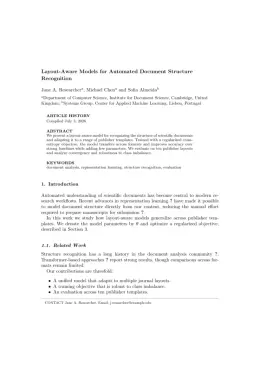
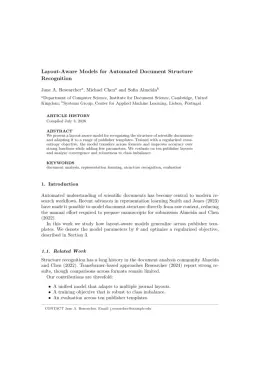
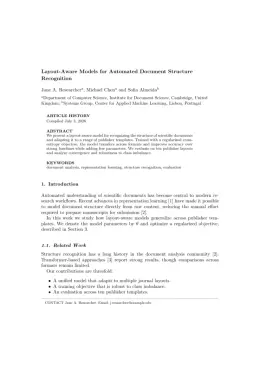
Write in a clean editor, then format for Mathematical and Computer Modelling of Dynamical Systems in one click — DocuGuru applies the official Taylor & Francis template with author–year references and exports a submission-ready PDF plus the editable LaTeX source. Free to start.

About the Mathematical and Computer Modelling of Dynamical Systems format

Mathematical and Computer Modelling of Dynamical Systems is a peer-reviewed journal published by Taylor & Francis, covering Numerical methods for differential equations, Model Reduction and Neural Networks, Advanced Control Systems Optimization.

PublisherTaylor & Francis
Reference styleAuthor–year (Chicago, T&F)
Author–year — (Smith, 2023) in the text
Smith, Ada, Ben Jones, and Cara Lee. 2023. "A Representative Article Title." Mathematical and Computer Modelling of Dynamical Systems 12 (3): 45–58.

Formats any DOI in Mathematical and Computer Modelling of Dynamical Systems style. No sign-up.

Publishes research inNumerical methods for differential equations Model Reduction and Neural Networks Advanced Control Systems Optimization Modeling and Simulation Systems Control and Stability of Dynamical Systems
ISSN1387-3954
Citation impact (2-yr)3.38
h-index43
i10-index305
Total citations11,205
Article processing charge$1,533
Open accessYes
Top institutions publishing hereTU Wien
Journal websitewww.tandfonline.com
You getA submission-ready PDF and the editable LaTeX source — ready to submit.

Papers published in Mathematical and Computer Modelling of Dynamical Systems per year

24
2014
13
2015
45
2016
27
2017
24
2018
27
2019
24
2020
26
2021
8
2022
14
2023
44
2024
34
2025

Citation impact of Mathematical and Computer Modelling of Dynamical Systems by publication year

233
2014
74
2015
562
2016
240
2017
176
2018
301
2019
178
2020
348
2021
63
2022
71
2023
260
2024
63
2025

Citations each year’s papers have accumulated so far — the most recent years are still building up.

Most-cited papers in Mathematical and Computer Modelling of Dynamical Systems

New features of the software M<scp>at</scp>C<scp>ont</scp>for bifurcation analysis of dynamical systems

Annick Dhooge, W. Govaerts, Yuri A. Kuznetsov et al. · 14 Mar 2008

Bifurcation software is an essential tool in the study of dynamical systems. From the beginning (the first packages were written in the 1970's) it was also used in the modelling process, in particular to determine the values of critical parameters. More recently, it is used in a systematic way in the design of dynamical models…

Extended Kalman filtering for fuzzy modelling and multi-sensor fusion

Gerasimos Rigatos, Spyros G. Tzafestaş · 24 May 2007

Extended Kalman Filtering (EKF) is proposed for: (i) the extraction of a fuzzy model from numerical data; and (ii) the localization of an autonomous vehicle. In the first case, the EKF algorithm is compared to the Gauss–Newton nonlinear least-squares method and is shown to be faster. An analysis of the EKF convergence is given. In…

Model Based Design of a Novel Process for Nitrogen Removal from Concentrated Flows

C. Hellinga, Mark C.M. van Loosdrecht, Joseph J. Heijnen · 1 Dec 1999

A new process for biological nitrification was developed that is operated in a single aerated reactor at relatively high temperature and pH. This process, termed SHARON, was designed to achieve substantial ammonia conversion at high reaction rates for relatively concentrated flows, rather than to meet strict effluent standards. First large scale applications that are under…

Dynamic systems identification with Gaussian processes

Juš Kocijan, Agathe Girard, Blaž Banko et al. · 8 Nov 2005

This paper describes the identification of nonlinear dynamic systems with a Gaussian process (GP) prior model. This model is an example of the use of a probabilistic non-parametric modelling approach. GPs are flexible models capable of modelling complex nonlinear systems. Also, an attractive feature of this model is that the variance associated with the model…

Two Methods of Simulator Coupling

R. K�bler, Werner Schiehlen · 1 Jun 2000

Modelling and simulation of complex engineering systems are often relieved by a modular approach in which the global system is decomposed into subsystems. Advantages arise from independent and parallel modelling of subsystems over easy exchange of the resulting modules to the use of different software for each module. However, the modular simulation of the global…

Mathematical and Computer Modelling of Dynamical Systems template — frequently asked questions

How do I write a paper in the Mathematical and Computer Modelling of Dynamical Systems format?
In DocuGuru you write your manuscript in a normal editor — no LaTeX setup required — and select the Mathematical and Computer Modelling of Dynamical Systems template. When you export, DocuGuru compiles the paper into the official Taylor & Francis format and hands you a submission-ready PDF along with the editable LaTeX source.
What reference style does Mathematical and Computer Modelling of Dynamical Systems use?
Mathematical and Computer Modelling of Dynamical Systems uses Author–year (Chicago, T&F) references, shown as author–year markers such as (Smith, 2023) in the text. DocuGuru formats every in-text citation and the reference list in this exact style automatically. A reference appears like this: Smith, Ada, Ben Jones, and Cara Lee. 2023. "A Representative Article Title." Mathematical and Computer Modelling of Dynamical Systems 12 (3): 45–58.
Do I need to know LaTeX to submit to Mathematical and Computer Modelling of Dynamical Systems?
No. DocuGuru generates the interact LaTeX class and compiles the PDF for you in the background, so you get a Taylor & Francis-ready Mathematical and Computer Modelling of Dynamical Systems document without writing any LaTeX. If you do want it, the LaTeX source is included in the export.
Can I import an existing draft into the Mathematical and Computer Modelling of Dynamical Systems template?
Yes. Paste or upload your current manuscript — Word, LaTeX, Markdown, or plain text — and DocuGuru reflows it into the Mathematical and Computer Modelling of Dynamical Systems format with correct headings, figures, tables, and author–year citations.
Who publishes Mathematical and Computer Modelling of Dynamical Systems?
Mathematical and Computer Modelling of Dynamical Systems is a multidisciplinary journal published by Taylor & Francis. DocuGuru's Mathematical and Computer Modelling of Dynamical Systems template matches Taylor & Francis's official submission format.
Can I export a submission-ready Mathematical and Computer Modelling of Dynamical Systems PDF?
Yes — DocuGuru produces a PDF built with the official Mathematical and Computer Modelling of Dynamical Systems template (the interact class) that is ready to submit to Taylor & Francis, together with the matching LaTeX source files.
How much does the Mathematical and Computer Modelling of Dynamical Systems template cost?
You can start writing in the Mathematical and Computer Modelling of Dynamical Systems template for free. Exporting the final submission-ready Mathematical and Computer Modelling of Dynamical Systems PDF and LaTeX source is part of DocuGuru's paid plans — see the app for current pricing.

Use the Mathematical and Computer Modelling of Dynamical Systems template