Taylor & Francis

Journal of the Malacological Society of Australia Template

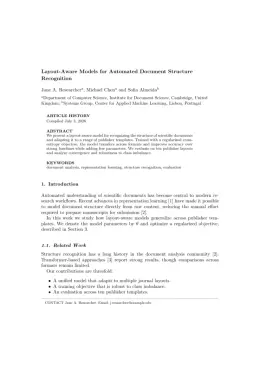
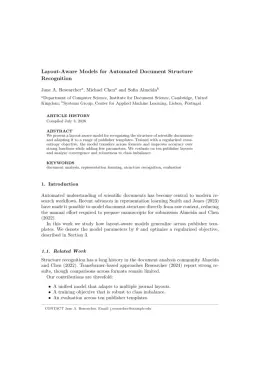
Write in a clean editor, then format for Journal of the Malacological Society of Australia in one click — DocuGuru applies the official Taylor & Francis template with author–year references and exports a submission-ready PDF plus the editable LaTeX source. Free to start.

About the Journal of the Malacological Society of Australia format

Journal of the Malacological Society of Australia is a peer-reviewed journal published by Taylor & Francis, covering Marine Biology and Ecology Research, Aquatic Invertebrate Ecology and Behavior, Mollusks and Parasites Studies.

PublisherTaylor & Francis
Reference styleAuthor–year (Chicago, T&F)
Author–year — (Smith, 2023) in the text
Smith, Ada, Ben Jones, and Cara Lee. 2023. "A Representative Article Title." Journal of the Malacological Society of Australia 12 (3): 45–58.

Formats any DOI in Journal of the Malacological Society of Australia style. No sign-up.

Publishes research inMarine Biology and Ecology Research Aquatic Invertebrate Ecology and Behavior Mollusks and Parasites Studies Marine Bivalve and Aquaculture Studies Ichthyology and Marine Biology
ISSN0085-2988
h-index18
i10-index47
Total citations1,585
Top institutions publishing hereAustralian Museum
Journal websitewww.tandfonline.com
You getA submission-ready PDF and the editable LaTeX source — ready to submit.

Papers published in Journal of the Malacological Society of Australia per year

11
1983
8
1984
8
1985
8
1986
8
1987
6
1988
11
1989
9
1990
8
1991
13
1992
9
1993
1
2013

Citation impact of Journal of the Malacological Society of Australia by publication year

35
1983
96
1984
40
1985
46
1986
41
1987
68
1988
52
1989
50
1990
16
1991
37
1992
25
1993
3
2013

Citations each year’s papers have accumulated so far — the most recent years are still building up.

Most-cited papers in Journal of the Malacological Society of Australia

Distribution and feeding of chitons in a boulder habitat at West Island, South Australia

Mervi Kangas, S.A. Shepherd · 1 Jan 1984

Abstract The vertical distribution and feeding of sixteen species of chiton was examined on a boulder slope at West Island, South Australia. There is a trend of increasing abundance and diversity of species with depth, with most species present at 4–5 m depth where boulders are partly buried by sediment. Six species are herbivorous, seven…

A Memorial Report on the Tom Crawford Collection of Victorian Opisthobranchia

R. P. Burn · 1 Jan 1969

Summary Thirty-nine species of opisthobranchiate Gastropoda from the central Victorian coastline comprise the collection of the late Tom Crawford (1944–1966). Six new species are described: Aglaja henri Discodoris crawfordi, D. turia, D. paroa; Sclerodoris tarka and Acanthodoris nanega. Zoogeographically, 71% of the remaining species form part of the large cool-temperate eurythermal fauna that extends from…

A review of diets in the Notaspidea (Mollusca: Opisthobranchia)

Richard C. Willan · 1 Jan 1984

Abstract This paper reviews the scattered and often anecdotal literature on foods for the opisthobranch order Notaspidea. All Umbraculacea are sponge-feeders (accepting sponges of the class Demospongiae only). The Pleurabranchacea shows a diversity of diet: Berthella species eat sponges (Demospongiae); Berthellina species eat sponges (Demospongiae; ? Calcarea) and cnidarians (Scleractinia — not previously reported; ?…

Journal of the Malacological Society of Australia template — frequently asked questions

How do I write a paper in the Journal of the Malacological Society of Australia format?
In DocuGuru you write your manuscript in a normal editor — no LaTeX setup required — and select the Journal of the Malacological Society of Australia template. When you export, DocuGuru compiles the paper into the official Taylor & Francis format and hands you a submission-ready PDF along with the editable LaTeX source.
What reference style does Journal of the Malacological Society of Australia use?
Journal of the Malacological Society of Australia uses Author–year (Chicago, T&F) references, shown as author–year markers such as (Smith, 2023) in the text. DocuGuru formats every in-text citation and the reference list in this exact style automatically. A reference appears like this: Smith, Ada, Ben Jones, and Cara Lee. 2023. "A Representative Article Title." Journal of the Malacological Society of Australia 12 (3): 45–58.
Do I need to know LaTeX to submit to Journal of the Malacological Society of Australia?
No. DocuGuru generates the interact LaTeX class and compiles the PDF for you in the background, so you get a Taylor & Francis-ready Journal of the Malacological Society of Australia document without writing any LaTeX. If you do want it, the LaTeX source is included in the export.
Can I import an existing draft into the Journal of the Malacological Society of Australia template?
Yes. Paste or upload your current manuscript — Word, LaTeX, Markdown, or plain text — and DocuGuru reflows it into the Journal of the Malacological Society of Australia format with correct headings, figures, tables, and author–year citations.
Who publishes Journal of the Malacological Society of Australia?
Journal of the Malacological Society of Australia is a multidisciplinary journal published by Taylor & Francis. DocuGuru's Journal of the Malacological Society of Australia template matches Taylor & Francis's official submission format.
Can I export a submission-ready Journal of the Malacological Society of Australia PDF?
Yes — DocuGuru produces a PDF built with the official Journal of the Malacological Society of Australia template (the interact class) that is ready to submit to Taylor & Francis, together with the matching LaTeX source files.
How much does the Journal of the Malacological Society of Australia template cost?
You can start writing in the Journal of the Malacological Society of Australia template for free. Exporting the final submission-ready Journal of the Malacological Society of Australia PDF and LaTeX source is part of DocuGuru's paid plans — see the app for current pricing.

Use the Journal of the Malacological Society of Australia template