Taylor & Francis

Journal of Receptors and Signal Transduction Template

Write in a clean editor, then format for Journal of Receptors and Signal Transduction in one click — DocuGuru applies the official Taylor & Francis template with author–year references and exports a submission-ready PDF plus the editable LaTeX source. Free to start.

About the Journal of Receptors and Signal Transduction format

Journal of Receptors and Signal Transduction is a peer-reviewed journal published by Taylor & Francis, covering Receptor Mechanisms and Signaling, Neuropeptides and Animal Physiology, Computational Drug Discovery Methods.

PublisherTaylor & Francis
Reference styleAuthor–year (Chicago, T&F)
Author–year — (Smith, 2023) in the text
Smith, Ada, Ben Jones, and Cara Lee. 2023. "A Representative Article Title." Journal of Receptors and Signal Transduction 12 (3): 45–58.

Formats any DOI in Journal of Receptors and Signal Transduction style. No sign-up.

Publishes research inReceptor Mechanisms and Signaling Neuropeptides and Animal Physiology Computational Drug Discovery Methods Neuroscience and Neuropharmacology Research Ion channel regulation and function
ISSN1079-9893
Citation impact (2-yr)1.73
h-index62
i10-index777
Total citations28,127
Top institutions publishing hereSun Yat-sen University
Journal websitewww.informapharmascience.com
You getA submission-ready PDF and the editable LaTeX source — ready to submit.

Papers published in Journal of Receptors and Signal Transduction per year

105
2014
82
2015
51
2016
39
2017
48
2018
54
2019
159
2020
43
2021
19
2022
17
2023
24
2024
26
2025

Citation impact of Journal of Receptors and Signal Transduction by publication year

1.7K
2014
3.2K
2015
804
2016
681
2017
641
2018
790
2019
2.5K
2020
503
2021
177
2022
107
2023
61
2024
36
2025

Citations each year’s papers have accumulated so far — the most recent years are still building up.

Most-cited papers in Journal of Receptors and Signal Transduction

Signaling pathway of MAPK/ERK in cell proliferation, differentiation, migration, senescence and apoptosis

Yu Sun, Wenzhou Liu, Tao Liu et al. · 22 Jun 2015

The generic mitogen-activated protein kinases (MAPK) signaling pathway is shared by four distinct cascades, including the extracellular signal-related kinases (ERK1/2), Jun amino-terminal kinases (JNK1/2/3), p38-MAPK and ERK5. Mitogen-activated protein kinases/extracellular signal-regulated kinase (MAPK/ERK) pathway is reported to be associated with the cell proliferation, differentiation, migration, senescence and apoptosis. The literatures were searched extensively and this…

1,890 citations Cite SaveGo to paper →
Dopamine Receptor Signaling

Kim A. Neve, Jeremy K. Seamans, Heather Trantham‐Davidson · 1 Jan 2004

The D1-like (D1, D5) and D2-like (D2, D3, D4) classes of dopamine receptors each has shared signaling properties that contribute to the definition of the receptor class, although some differences among subtypes within a class have been identified. D1-like receptor signaling is mediated chiefly by the heterotrimeric G proteins Galphas and Galphaolf, which cause sequential…

Thermodynamics of Protein–Ligand Interactions: History, Presence, and Future Aspects

Remo Perozzo, Gerd Folkers, Léonardo Scapozza · 1 Jan 2004

The understanding of molecular recognition processes of small ligands and biological macromolecules requires a complete characterization of the binding energetics and correlation of thermodynamic data with interacting structures involved. A quantitative description of the forces that govern molecular associations requires determination of changes of all thermodynamic parameters, including free energy of binding (deltaG), enthalpy (deltaH),…

Tissue Distribution Profiles of the Human TRPM Cation Channel Family

Elena Fonfría, Paul R. Murdock, Fiona S. Cusdin et al. · 1 Jan 2006

Eight members of the TRP-melastatin (TRPM) subfamily have been identified, whose physiological functions and distribution are poorly characterized. Although tissue expression and distribution patterns have been reported for individual TRPM channels, comparisons between individual studies are not possible because of variations in analysis techniques and tissue selection. We report here a comparative analysis of the…

The Jak-Stat Pathway: Cytokine Signalling from the Receptor to the Nucleus

Markus H. Heim · 1 Jan 1999

The Jak-STAT pathway was originally discovered through the study of interferon induced intracellular signal transduction. Meanwhile, a large number of cytokines, hormones and growth factors have been found to activate Jaks and STATs. Jaks (Janus Kinases) are a unique class of tyrosine kinases that associate with cytokine receptors. Upon ligand binding, they activate members of…

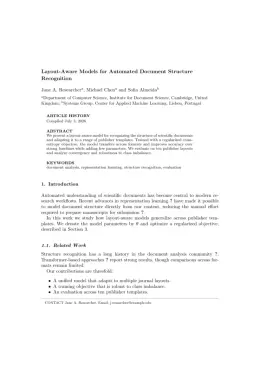
Journal of Receptors and Signal Transduction template — frequently asked questions

How do I write a paper in the Journal of Receptors and Signal Transduction format?
In DocuGuru you write your manuscript in a normal editor — no LaTeX setup required — and select the Journal of Receptors and Signal Transduction template. When you export, DocuGuru compiles the paper into the official Taylor & Francis format and hands you a submission-ready PDF along with the editable LaTeX source.
What reference style does Journal of Receptors and Signal Transduction use?
Journal of Receptors and Signal Transduction uses Author–year (Chicago, T&F) references, shown as author–year markers such as (Smith, 2023) in the text. DocuGuru formats every in-text citation and the reference list in this exact style automatically. A reference appears like this: Smith, Ada, Ben Jones, and Cara Lee. 2023. "A Representative Article Title." Journal of Receptors and Signal Transduction 12 (3): 45–58.
Do I need to know LaTeX to submit to Journal of Receptors and Signal Transduction?
No. DocuGuru generates the interact LaTeX class and compiles the PDF for you in the background, so you get a Taylor & Francis-ready Journal of Receptors and Signal Transduction document without writing any LaTeX. If you do want it, the LaTeX source is included in the export.
Can I import an existing draft into the Journal of Receptors and Signal Transduction template?
Yes. Paste or upload your current manuscript — Word, LaTeX, Markdown, or plain text — and DocuGuru reflows it into the Journal of Receptors and Signal Transduction format with correct headings, figures, tables, and author–year citations.
Who publishes Journal of Receptors and Signal Transduction?
Journal of Receptors and Signal Transduction is a multidisciplinary journal published by Taylor & Francis. DocuGuru's Journal of Receptors and Signal Transduction template matches Taylor & Francis's official submission format.
Can I export a submission-ready Journal of Receptors and Signal Transduction PDF?
Yes — DocuGuru produces a PDF built with the official Journal of Receptors and Signal Transduction template (the interact class) that is ready to submit to Taylor & Francis, together with the matching LaTeX source files.
How much does the Journal of Receptors and Signal Transduction template cost?
You can start writing in the Journal of Receptors and Signal Transduction template for free. Exporting the final submission-ready Journal of Receptors and Signal Transduction PDF and LaTeX source is part of DocuGuru's paid plans — see the app for current pricing.
Use the Journal of Receptors and Signal Transduction template

