
161 citations
Cite
SaveGo to paper →
Taylor & Francis
Journal of Educational Television Template
Write in a clean editor, then format for Journal of Educational Television in one click — DocuGuru applies the official Taylor & Francis template with author–year references and exports a submission-ready PDF plus the editable LaTeX source. Free to start.
About the Journal of Educational Television format
Journal of Educational Television is a peer-reviewed journal published by Taylor & Francis, covering Literacy, Media, and Education, Multimedia Communication and Technology, Media Studies and Communication.
| Publisher | Taylor & Francis |
|---|---|
| Reference style | Author–year (Chicago, T&F) Author–year — (Smith, 2023) in the text Smith, Ada, Ben Jones, and Cara Lee. 2023. "A Representative Article Title." Journal of Educational Television 12 (3): 45–58.
Formats any DOI in Journal of Educational Television style. No sign-up. |
| Publishes research in | Literacy, Media, and Education Multimedia Communication and Technology Media Studies and Communication Human auditory perception and evaluation Education and Technology Integration |
| ISSN | 0260-7417 |
| h-index | 16 |
| i10-index | 31 |
| Total citations | 1,283 |
| Top institutions publishing here | University of Liverpool |
| Journal website | www.tandfonline.com |
| You get | A submission-ready PDF and the editable LaTeX source — ready to submit. |
Papers published in Journal of Educational Television per year
Citation impact of Journal of Educational Television by publication year
Citations each year’s papers have accumulated so far — the most recent years are still building up.
Most-cited papers in Journal of Educational Television
Abstract A sample of 68 university undergraduates were presented with a sequence of violent and nonviolent news stories either audiovisually (via television), in audio only or in print. Subjects were tested for cued recall of story content immediately after presentation. There was a significant main effect of presentation mode: recall of news was best from…
65 citations
Cite
SaveGo to paper →
55 citations
Cite
SaveGo to paper →
Abstract ’High quality’ television is a valuable part of open and distance education, as exemplified in its use by The Open University. Television has a unique role to play in distance education because of its distinctive delivery, presentational, and control characteristics. The ways in which these characteristics could be exploited are discussed in depth, and…
42 citations
Cite
SaveGo to paper →
Abstract This paper outlines a ‘conversational framework’ for describing the essential elements of the learning process. The framework is used to elaborate the kinds of learning activities students need to carry out in order to arrive at a conceptual understanding of the topic they are studying. The framework is then applied to contrasting learning media:…
36 citations
Cite
SaveGo to paper →
Related journal templates
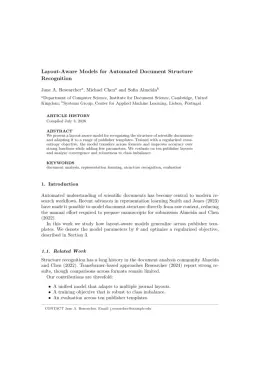
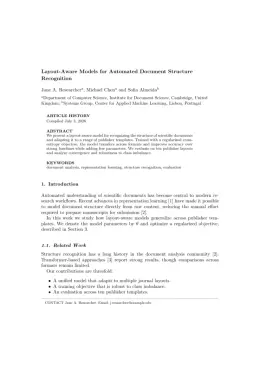
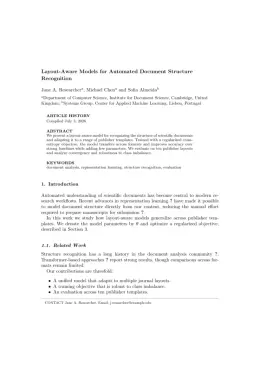
Journal of Educational Television template — frequently asked questions
How do I write a paper in the Journal of Educational Television format?
In DocuGuru you write your manuscript in a normal editor — no LaTeX setup required — and select the Journal of Educational Television template. When you export, DocuGuru compiles the paper into the official Taylor & Francis format and hands you a submission-ready PDF along with the editable LaTeX source.
What reference style does Journal of Educational Television use?
Journal of Educational Television uses Author–year (Chicago, T&F) references, shown as author–year markers such as (Smith, 2023) in the text. DocuGuru formats every in-text citation and the reference list in this exact style automatically. A reference appears like this: Smith, Ada, Ben Jones, and Cara Lee. 2023. "A Representative Article Title." Journal of Educational Television 12 (3): 45–58.
Do I need to know LaTeX to submit to Journal of Educational Television?
No. DocuGuru generates the interact LaTeX class and compiles the PDF for you in the background, so you get a Taylor & Francis-ready Journal of Educational Television document without writing any LaTeX. If you do want it, the LaTeX source is included in the export.
Can I import an existing draft into the Journal of Educational Television template?
Yes. Paste or upload your current manuscript — Word, LaTeX, Markdown, or plain text — and DocuGuru reflows it into the Journal of Educational Television format with correct headings, figures, tables, and author–year citations.
Who publishes Journal of Educational Television?
Journal of Educational Television is a multidisciplinary journal published by Taylor & Francis. DocuGuru's Journal of Educational Television template matches Taylor & Francis's official submission format.
Can I export a submission-ready Journal of Educational Television PDF?
Yes — DocuGuru produces a PDF built with the official Journal of Educational Television template (the interact class) that is ready to submit to Taylor & Francis, together with the matching LaTeX source files.
How much does the Journal of Educational Television template cost?
You can start writing in the Journal of Educational Television template for free. Exporting the final submission-ready Journal of Educational Television PDF and LaTeX source is part of DocuGuru's paid plans — see the app for current pricing.