Taylor & Francis

Journal of Crime and Justice Template

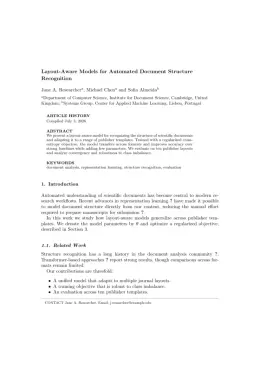
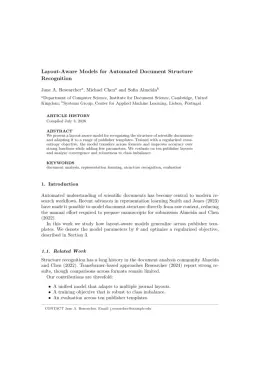
Write in a clean editor, then format for Journal of Crime and Justice in one click — DocuGuru applies the official Taylor & Francis template with author–year references and exports a submission-ready PDF plus the editable LaTeX source. Free to start.

About the Journal of Crime and Justice format

Journal of Crime and Justice is a peer-reviewed journal published by Taylor & Francis, covering Crime Patterns and Interventions, Criminal Justice and Corrections Analysis, Psychopathy, Forensic Psychiatry, Sexual Offending.

PublisherTaylor & Francis
Reference styleAuthor–year (Chicago, T&F)
Author–year — (Smith, 2023) in the text
Smith, Ada, Ben Jones, and Cara Lee. 2023. "A Representative Article Title." Journal of Crime and Justice 12 (3): 45–58.

Formats any DOI in Journal of Crime and Justice style. No sign-up.

Publishes research inCrime Patterns and Interventions Criminal Justice and Corrections Analysis Psychopathy, Forensic Psychiatry, Sexual Offending Policing Practices and Perceptions Homelessness and Social Issues
ISSN0735-648X
Citation impact (2-yr)1.03
h-index52
i10-index381
Total citations12,975
Top institutions publishing hereUniversity of South Florida
Journal websitewww.tandfonline.com
You getA submission-ready PDF and the editable LaTeX source — ready to submit.

Papers published in Journal of Crime and Justice per year

29
2014
32
2015
36
2016
26
2017
36
2018
43
2019
54
2020
28
2021
41
2022
36
2023
58
2024
50
2025

Citation impact of Journal of Crime and Justice by publication year

424
2014
665
2015
815
2016
555
2017
562
2018
708
2019
514
2020
243
2021
302
2022
153
2023
89
2024
40
2025

Citations each year’s papers have accumulated so far — the most recent years are still building up.

Most-cited papers in Journal of Crime and Justice

RISK-TAKING AND SELF-CONTROL: SOCIAL PSYCHOLOGICAL CORRELATES OF DELINQUENCY

Peter B. Wood, Betty Pfefferbaum, Bruce J. Arneklev · 1 Jan 1993

ABSTRACT Analysis presented provides strong support for considering individual differences along personality dimensions to predict self-reported delinquency. The paper provides an explicit test of the Gottfredson and Hirschi concept of self-control and its utility in explaining variation in interpersonal delinquency, theft, vandalism, legal substance use, illegal substance use, and impnident behaviors. Multivariate analysis demonstrates that…

The unintended consequences of digital technology: exploring the relationship between sexting and cybervictimization

Bradford W. Reyns, Melissa W. Burek, Billy Henson et al. · 7 Dec 2011

Progress in cyber technology has created innovative ways for individuals to communicate with each other. Sophisticated cell phones, often with integrated cameras, have made it possible for users to instantly send photos, videos, and other materials back and forth to each other regardless of their physical separation. This same technology also makes sexting possible –…

SOCIAL LEARNING AND CYBER-DEVIANCE: EXAMINING THE IMPORTANCE OF A FULL SOCIAL LEARNING MODEL IN THE VIRTUAL WORLD

Thomas J. Holt, George W. Burruss, Adam M. Bossler · 1 Jan 2010

ABSTRACT Akers’ social learning theory is one of the most recognized criminological theories because of its comprehensiveness and strong empirical support. Recent research that has applied social learning theory to account for the problem of cybercrime and deviance has provided only partial examinations of the social learning process and gives little insight into the Social…

Mass shootings and the media: why all events are not created equal

Jaclyn Schildkraut, H. Jaymi Elsass, Kimberly Meredith · 5 Feb 2017

Due to their sensational nature, mass shootings receive a considerable amount of attention in the media. Despite their rarity, not all shootings garner the same coverage. The present study examines characteristics of newsworthiness among 90 shootings between 2000 and 2012. Using a media distortion analysis of articles in The New York Times, specific consideration is…

BEHIND BARS: AN ASSESSMENT OF THE EFFECTS OF JOB SATISFACTION, JOB-RELATED STRESS, AND ANXIETY ON JAIL EMPLOYEES’ INCLINATIONS TO QUIT

Terry G. Byrd, John K. Cochran, Ira J. Silverman et al. · 1 Jan 2000

ABSTRACT Perhaps one of the most neglected areas of criminological research is the jail and what limited research is available has focused primarily on issues concerning the conditions of confinement within these facilities. Research on jail employees is extremely rare. These persons often must work in an environment that is unstable, uncertain, and unsafe. As…

Journal of Crime and Justice template — frequently asked questions

How do I write a paper in the Journal of Crime and Justice format?
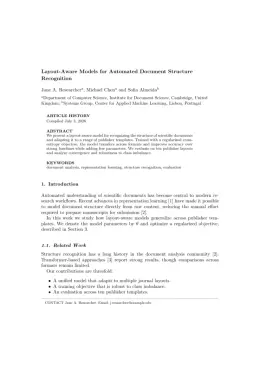
In DocuGuru you write your manuscript in a normal editor — no LaTeX setup required — and select the Journal of Crime and Justice template. When you export, DocuGuru compiles the paper into the official Taylor & Francis format and hands you a submission-ready PDF along with the editable LaTeX source.
What reference style does Journal of Crime and Justice use?
Journal of Crime and Justice uses Author–year (Chicago, T&F) references, shown as author–year markers such as (Smith, 2023) in the text. DocuGuru formats every in-text citation and the reference list in this exact style automatically. A reference appears like this: Smith, Ada, Ben Jones, and Cara Lee. 2023. "A Representative Article Title." Journal of Crime and Justice 12 (3): 45–58.
Do I need to know LaTeX to submit to Journal of Crime and Justice?
No. DocuGuru generates the interact LaTeX class and compiles the PDF for you in the background, so you get a Taylor & Francis-ready Journal of Crime and Justice document without writing any LaTeX. If you do want it, the LaTeX source is included in the export.
Can I import an existing draft into the Journal of Crime and Justice template?
Yes. Paste or upload your current manuscript — Word, LaTeX, Markdown, or plain text — and DocuGuru reflows it into the Journal of Crime and Justice format with correct headings, figures, tables, and author–year citations.
Who publishes Journal of Crime and Justice?
Journal of Crime and Justice is a multidisciplinary journal published by Taylor & Francis. DocuGuru's Journal of Crime and Justice template matches Taylor & Francis's official submission format.
Can I export a submission-ready Journal of Crime and Justice PDF?
Yes — DocuGuru produces a PDF built with the official Journal of Crime and Justice template (the interact class) that is ready to submit to Taylor & Francis, together with the matching LaTeX source files.
How much does the Journal of Crime and Justice template cost?
You can start writing in the Journal of Crime and Justice template for free. Exporting the final submission-ready Journal of Crime and Justice PDF and LaTeX source is part of DocuGuru's paid plans — see the app for current pricing.
Use the Journal of Crime and Justice template