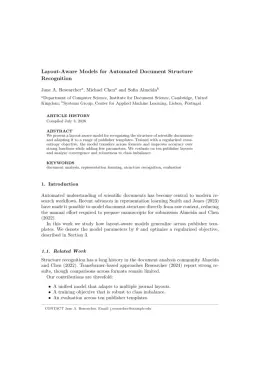
Taylor & Francis

Islets Template

Write in a clean editor, then format for Islets in one click — DocuGuru applies the official Taylor & Francis template with author–year references and exports a submission-ready PDF plus the editable LaTeX source. Free to start.

About the Islets format

Islets is a peer-reviewed journal published by Taylor & Francis, covering Pancreatic function and diabetes, Diabetes and associated disorders, Diabetes Management and Research.

PublisherTaylor & Francis
Reference styleAuthor–year (Chicago, T&F)
Author–year — (Smith, 2023) in the text
Smith, Ada, Ben Jones, and Cara Lee. 2023. "A Representative Article Title." Islets 12 (3): 45–58.

Formats any DOI in Islets style. No sign-up.

Publishes research inPancreatic function and diabetes Diabetes and associated disorders Diabetes Management and Research Metabolism, Diabetes, and Cancer Diet, Metabolism, and Disease
ISSN1938-2014
Citation impact (2-yr)1.29
h-index52
i10-index279
Total citations11,526
Article processing charge$2,390
Open accessYes
Top institutions publishing hereUniversity of Alberta
Journal websitewww.landesbioscience.com
You getA submission-ready PDF and the editable LaTeX source — ready to submit.

Papers published in Islets per year

25
2014
14
2015
19
2016
16
2017
19
2018
15
2019
13
2020
18
2021
10
2022
14
2023
11
2024
8
2025

Citation impact of Islets by publication year

734
2014
661
2015
319
2016
375
2017
503
2018
282
2019
144
2020
210
2021
98
2022
85
2023
24
2024
5
2025

Citations each year’s papers have accumulated so far — the most recent years are still building up.

Most-cited papers in Islets

Pancreatic islet plasticity: Interspecies comparison of islet architecture and composition

Donald Steiner, Abraham Kim, Kevin Miller et al. · 1 May 2010

The pancreatic islet displays diverse patterns of endocrine cell arrangement. The prototypic islet, with insulin-secreting beta-cells forming the core surrounded by other endocrine cells in the periphery, is largely based on studies of normal rodent islets. Recent reports on large animals, including humans, show a difference in islet architecture, in which the endocrine cells are…

Islet architecture: A comparative study

Abraham Kim, Kevin Miller, Junghyo Jo et al. · 1 Sep 2009

Emerging reports on the organization of the different hormone-secreting cell types (alpha, glucagon; beta, insulin; and delta, somatostatin) in human islets have emphasized the distinct differences between human and mouse islets, raising questions about the relevance of studies of mouse islets to human islet physiology. Here, we examine the differences and similarities between the architecture…

Structural similarities and differences between the human and the mouse pancreas

Jurij Dolenšek, Marjan Slak Rupnik, Andraž Stožer · 2 Jan 2015

Mice remain the most studied animal model in pancreas research. Since the findings of this research are typically extrapolated to humans, it is important to understand both similarities and differences between the 2 species. Beside the apparent difference in size and macroscopic organization of the organ in the 2 species, there are a number of…

Heavy metals, islet function and diabetes development

Ya‐Wen Chen, Ching‐Yao Yang, Chun Fa Huang et al. · 1 Nov 2009

It has long been believed that heavy metals possess many adverse health effects. Uncontrolled industrialization has released heavy metal pollution in the world. Heavy metal pollutants damage organ functions and disrupt physiological homeostasis. Diabetes mellitus is growing in prevalence worldwide. Several studies have indicated that the deficiency and efficiency of some essential trace metals may…

Insulitis in human type 1 diabetes

Pieter In 'T Veld · 1 Jul 2011

The histopathology of type 1 diabetes is defined by a decreased β-cell mass in association with insulitis, a characteristic lymphocytic infiltration limited to the islets of Langerhans and prominent in early stage disease in children. A cytotoxic T-cell mediated destruction of insulin-producing β-cells is thought to be initiated by an unknown (auto)antigen, leading to the…

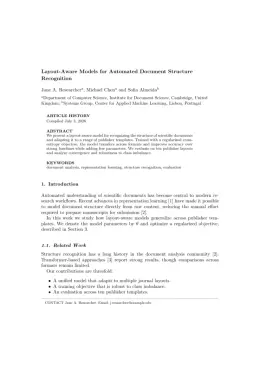
Islets template — frequently asked questions

How do I write a paper in the Islets format?
In DocuGuru you write your manuscript in a normal editor — no LaTeX setup required — and select the Islets template. When you export, DocuGuru compiles the paper into the official Taylor & Francis format and hands you a submission-ready PDF along with the editable LaTeX source.
What reference style does Islets use?
Islets uses Author–year (Chicago, T&F) references, shown as author–year markers such as (Smith, 2023) in the text. DocuGuru formats every in-text citation and the reference list in this exact style automatically. A reference appears like this: Smith, Ada, Ben Jones, and Cara Lee. 2023. "A Representative Article Title." Islets 12 (3): 45–58.
Do I need to know LaTeX to submit to Islets?
No. DocuGuru generates the interact LaTeX class and compiles the PDF for you in the background, so you get a Taylor & Francis-ready Islets document without writing any LaTeX. If you do want it, the LaTeX source is included in the export.
Can I import an existing draft into the Islets template?
Yes. Paste or upload your current manuscript — Word, LaTeX, Markdown, or plain text — and DocuGuru reflows it into the Islets format with correct headings, figures, tables, and author–year citations.
Who publishes Islets?
Islets is a multidisciplinary journal published by Taylor & Francis. DocuGuru's Islets template matches Taylor & Francis's official submission format.
Can I export a submission-ready Islets PDF?
Yes — DocuGuru produces a PDF built with the official Islets template (the interact class) that is ready to submit to Taylor & Francis, together with the matching LaTeX source files.
How much does the Islets template cost?
You can start writing in the Islets template for free. Exporting the final submission-ready Islets PDF and LaTeX source is part of DocuGuru's paid plans — see the app for current pricing.
Use the Islets template