Taylor & Francis

Immunological Investigations Template

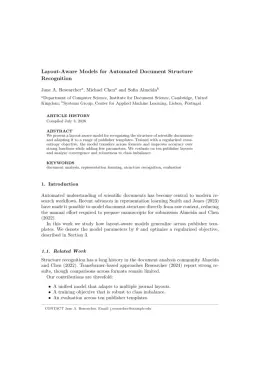
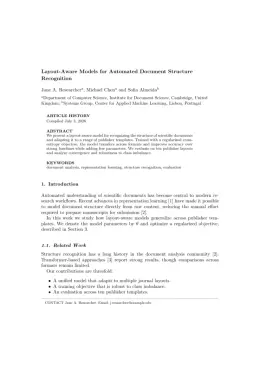
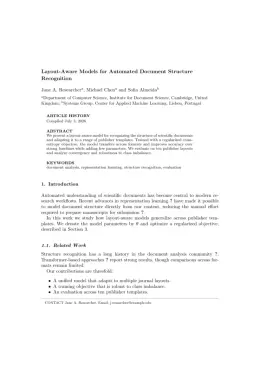
Write in a clean editor, then format for Immunological Investigations in one click — DocuGuru applies the official Taylor & Francis template with author–year references and exports a submission-ready PDF plus the editable LaTeX source. Free to start.

About the Immunological Investigations format

Immunological Investigations is a peer-reviewed journal published by Taylor & Francis, covering Immune Cell Function and Interaction, T-cell and B-cell Immunology, Monoclonal and Polyclonal Antibodies Research.

PublisherTaylor & Francis
Reference styleAuthor–year (Chicago, T&F)
Author–year — (Smith, 2023) in the text
Smith, Ada, Ben Jones, and Cara Lee. 2023. "A Representative Article Title." Immunological Investigations 12 (3): 45–58.

Formats any DOI in Immunological Investigations style. No sign-up.

Publishes research inImmune Cell Function and Interaction T-cell and B-cell Immunology Monoclonal and Polyclonal Antibodies Research Immunotherapy and Immune Responses Immune Response and Inflammation
ISSN0882-0139
Citation impact (2-yr)2.23
h-index71
i10-index1,163
Total citations38,926
Top institutions publishing hereUniversity at Buffalo, State University of New York
Journal websitewww.tandfonline.com
You getA submission-ready PDF and the editable LaTeX source — ready to submit.

Papers published in Immunological Investigations per year

62
2014
48
2015
84
2016
67
2017
82
2018
88
2019
123
2020
84
2021
57
2022
60
2023
85
2024
76
2025

Citation impact of Immunological Investigations by publication year

1.3K
2014
1K
2015
2.4K
2016
1.4K
2017
1.6K
2018
1.4K
2019
2.1K
2020
1K
2021
603
2022
362
2023
325
2024
115
2025

Citations each year’s papers have accumulated so far — the most recent years are still building up.

Most-cited papers in Immunological Investigations

Metabolism of L-Arginine by Myeloid-Derived Suppressor Cells in Cancer: Mechanisms of T cell suppression and Therapeutic Perspectives

Patrick Raber, Augusto C. Ochoa, Paulo C. Rodrı́guez · 1 Aug 2012

Patients with cancer have an impaired T cell response that can decrease the potential therapeutic benefit of cancer vaccines and other forms of immunotherapy. The establishment of a chronic inflammatory environment in patients with cancer plays a critical role in the induction of T cell dysfunction. The accumulation of myeloid-derived suppressor cells (MDSC) in tumor…

Detection of heat shock protein 70 (HSP70) and anti-HSP70 antibodies in the serum of normal individuals

A. Graham Pockley, J Shepherd, Julia M. Corton · 1 Jan 1998

Heat shock or stress proteins (Hsp) are typically regarded as being intracellular proteins that have a range of functions including the maintenance of cellular integrity. Members of the Hsp70 family of molecules have been implicated in the processing and presentation of antigen and the cross reactivity of lymphocytes specific for pathogen-derived heat shock proteins with…

Effects of Ganopoly<sup>®</sup>(A<i>Ganoderma lucidum</i>Polysaccharide Extract) on the Immune Functions in Advanced‐Stage Cancer Patients

Yihuai Gao, Shufeng Zhou, Wenqi Jiang et al. · 1 Jan 2003

Preclinical studies have established that the Ganoderma lucidum polysaccharide (GLPS) fractions have potent anti-tumor activity, which has been associated with the immuno-stimulating effects of GLPS. However, it is unclear whether GLPS has immuno-modulating effects in humans in vivo. This study aimed to investigate the effects of Ganopoly, the polysaccharides fractions extracted from G. lucidum, on…

The role of cytokines in inflammatory bone loss

Pedro Paulo Chaves de Souza, Ulf H. Lerner · 5 Sep 2013

Chronic inflammatory processes close to bone often lead to loss of bone in diseases such as rheumatoid arthritis, periodontitis, loosened joint prosthesis and tooth implants. This is mainly due to local formation of bone resorbing osteoclasts which degrade bone without any subsequent coupling to new bone formation. Crucial for osteoclastogenesis is stimulation of mononuclear osteoclast…

Immunological Investigations template — frequently asked questions

How do I write a paper in the Immunological Investigations format?
In DocuGuru you write your manuscript in a normal editor — no LaTeX setup required — and select the Immunological Investigations template. When you export, DocuGuru compiles the paper into the official Taylor & Francis format and hands you a submission-ready PDF along with the editable LaTeX source.
What reference style does Immunological Investigations use?
Immunological Investigations uses Author–year (Chicago, T&F) references, shown as author–year markers such as (Smith, 2023) in the text. DocuGuru formats every in-text citation and the reference list in this exact style automatically. A reference appears like this: Smith, Ada, Ben Jones, and Cara Lee. 2023. "A Representative Article Title." Immunological Investigations 12 (3): 45–58.
Do I need to know LaTeX to submit to Immunological Investigations?
No. DocuGuru generates the interact LaTeX class and compiles the PDF for you in the background, so you get a Taylor & Francis-ready Immunological Investigations document without writing any LaTeX. If you do want it, the LaTeX source is included in the export.
Can I import an existing draft into the Immunological Investigations template?
Yes. Paste or upload your current manuscript — Word, LaTeX, Markdown, or plain text — and DocuGuru reflows it into the Immunological Investigations format with correct headings, figures, tables, and author–year citations.
Who publishes Immunological Investigations?
Immunological Investigations is a multidisciplinary journal published by Taylor & Francis. DocuGuru's Immunological Investigations template matches Taylor & Francis's official submission format.
Can I export a submission-ready Immunological Investigations PDF?
Yes — DocuGuru produces a PDF built with the official Immunological Investigations template (the interact class) that is ready to submit to Taylor & Francis, together with the matching LaTeX source files.
How much does the Immunological Investigations template cost?
You can start writing in the Immunological Investigations template for free. Exporting the final submission-ready Immunological Investigations PDF and LaTeX source is part of DocuGuru's paid plans — see the app for current pricing.

Use the Immunological Investigations template