Taylor & Francis

Human-Computer Interaction Template

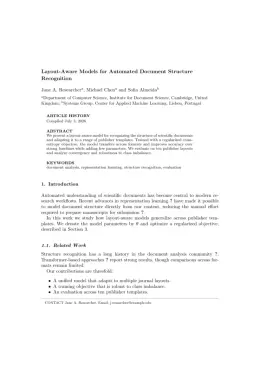
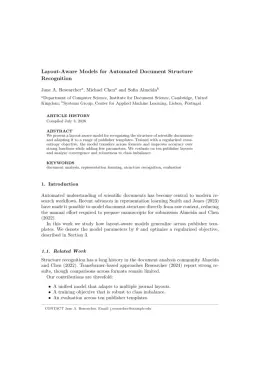
Write in a clean editor, then format for Human-Computer Interaction in one click — DocuGuru applies the official Taylor & Francis template with author–year references and exports a submission-ready PDF plus the editable LaTeX source. Free to start.

About the Human-Computer Interaction format

Human-Computer Interaction is a peer-reviewed journal published by Taylor & Francis, covering Usability and User Interface Design, Innovative Human-Technology Interaction, Personal Information Management and User Behavior.

PublisherTaylor & Francis
Reference styleAuthor–year (Chicago, T&F)
Author–year — (Smith, 2023) in the text
Smith, Ada, Ben Jones, and Cara Lee. 2023. "A Representative Article Title." Human-Computer Interaction 12 (3): 45–58.

Formats any DOI in Human-Computer Interaction style. No sign-up.

Publishes research inUsability and User Interface Design Innovative Human-Technology Interaction Personal Information Management and User Behavior Interactive and Immersive Displays Mobile Learning in Education
ISSN0737-0024
Citation impact (2-yr)1.76
h-index122
i10-index513
Total citations59,566
Top institutions publishing hereCarnegie Mellon University
Journal websitewww.tandfonline.com
You getA submission-ready PDF and the editable LaTeX source — ready to submit.

Papers published in Human-Computer Interaction per year

19
2014
138
2015
15
2016
38
2017
13
2018
11
2019
20
2020
31
2021
16
2022
29
2023
125
2024
10
2025

Citation impact of Human-Computer Interaction by publication year

1.2K
2014
1.1K
2015
386
2016
1.4K
2017
406
2018
425
2019
864
2020
615
2021
378
2022
452
2023
193
2024
33
2025

Citations each year’s papers have accumulated so far — the most recent years are still building up.

Most-cited papers in Human-Computer Interaction

A Conceptual Framework and a Toolkit for Supporting the Rapid Prototyping of Context-Aware Applications

Anind K. Dey, Gregory D. Abowd, Daniel Salber · 1 Dec 2001

Computing devices and applications are now used beyond the desktop, in diverse environments, and this trend toward ubiquitous computing is accelerating. One challenge that remains in this emerging research field is the ability to enhance the behavior of any application by informing it of the context of its use. By context, we refer to any…

2,952 citations Cite SaveGo to paper →
Distance Matters

Gary M. Olson, Judith S. Olson · 1 Sep 2000

Giant strides in information technology at the turn of the century may have unleashed unreachable goals. With the invention of groupware, people expect to communicate easily with each other and accomplish difficult work even though they are remotely located or rarely overlap in time. Major corporations launch global teams, expecting that technology will make "virtual…

1,935 citations Cite SaveGo to paper →
Fitts' Law as a Research and Design Tool in Human-Computer Interaction

I. Scott MacKenzie · 1 Mar 1992

According to Fitts' law, human movement can be modeled by analogy to the transmission of information. Fitts' popular model has been widely adopted in numerous research areas, including kinematics, human factors, and (recently) human-computer interaction (HCI). The present study provides a historical and theoretical context for the model, including an analysis of problems that have…

1,617 citations Cite SaveGo to paper →
Direct Manipulation Interfaces

Edwin Hutchins, James D. Hollan, Donald A. Norman · 1 Dec 1985

In this paper we seek a cognitive account of both the advantages and disadvantages of direct manipulation interfaces. We identify two underlying phenomena that give rise to the sensation of directness. One has to do with the information processing distance between the user's intentions and the facilities provided by the machine. Reduction of this distance…

1,298 citations Cite SaveGo to paper →
The Interplay of Beauty, Goodness, and Usability in Interactive Products

Marc Hassenzahl · 1 Dec 2004

Two studies considered the interplay between user-perceived usability (i.e., pragmatic attributes), hedonic attributes (e.g., stimulation, identification), goodness (i.e., satisfaction), and beauty of 4 different MP3-player skins. As long as beauty and goodness stress the subjective valuation of a product, both were related to each other. However, the nature of goodness and beauty was found to…

1,072 citations Cite SaveGo to paper →

Human-Computer Interaction template — frequently asked questions

How do I write a paper in the Human-Computer Interaction format?
In DocuGuru you write your manuscript in a normal editor — no LaTeX setup required — and select the Human-Computer Interaction template. When you export, DocuGuru compiles the paper into the official Taylor & Francis format and hands you a submission-ready PDF along with the editable LaTeX source.
What reference style does Human-Computer Interaction use?
Human-Computer Interaction uses Author–year (Chicago, T&F) references, shown as author–year markers such as (Smith, 2023) in the text. DocuGuru formats every in-text citation and the reference list in this exact style automatically. A reference appears like this: Smith, Ada, Ben Jones, and Cara Lee. 2023. "A Representative Article Title." Human-Computer Interaction 12 (3): 45–58.
Do I need to know LaTeX to submit to Human-Computer Interaction?
No. DocuGuru generates the interact LaTeX class and compiles the PDF for you in the background, so you get a Taylor & Francis-ready Human-Computer Interaction document without writing any LaTeX. If you do want it, the LaTeX source is included in the export.
Can I import an existing draft into the Human-Computer Interaction template?
Yes. Paste or upload your current manuscript — Word, LaTeX, Markdown, or plain text — and DocuGuru reflows it into the Human-Computer Interaction format with correct headings, figures, tables, and author–year citations.
Who publishes Human-Computer Interaction?
Human-Computer Interaction is a multidisciplinary journal published by Taylor & Francis. DocuGuru's Human-Computer Interaction template matches Taylor & Francis's official submission format.
Can I export a submission-ready Human-Computer Interaction PDF?
Yes — DocuGuru produces a PDF built with the official Human-Computer Interaction template (the interact class) that is ready to submit to Taylor & Francis, together with the matching LaTeX source files.
How much does the Human-Computer Interaction template cost?
You can start writing in the Human-Computer Interaction template for free. Exporting the final submission-ready Human-Computer Interaction PDF and LaTeX source is part of DocuGuru's paid plans — see the app for current pricing.
Use the Human-Computer Interaction template