Taylor & Francis

Grana Template

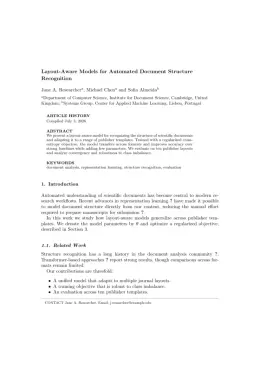
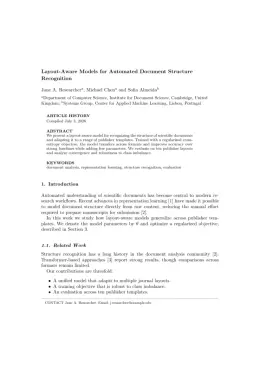
Write in a clean editor, then format for Grana in one click — DocuGuru applies the official Taylor & Francis template with author–year references and exports a submission-ready PDF plus the editable LaTeX source. Free to start.

About the Grana format

Grana is a peer-reviewed journal published by Taylor & Francis, covering Plant Diversity and Evolution, Plant and animal studies, Lichen and fungal ecology.

PublisherTaylor & Francis
Reference styleAuthor–year (Chicago, T&F)
Author–year — (Smith, 2023) in the text
Smith, Ada, Ben Jones, and Cara Lee. 2023. "A Representative Article Title." Grana 12 (3): 45–58.

Formats any DOI in Grana style. No sign-up.

Publishes research inPlant Diversity and Evolution Plant and animal studies Lichen and fungal ecology Allergic Rhinitis and Sensitization Plant and Fungal Species Descriptions
ISSN0017-3134
Citation impact (2-yr)1.33
h-index71
i10-index1,063
Total citations35,427
Top institutions publishing hereSwedish Museum of Natural History
Journal websitewww.tandfonline.com
You getA submission-ready PDF and the editable LaTeX source — ready to submit.

Papers published in Grana per year

37
2014
21
2015
38
2016
33
2017
25
2018
34
2019
47
2020
25
2021
33
2022
25
2023
26
2024
17
2025

Citation impact of Grana by publication year

569
2014
332
2015
378
2016
439
2017
211
2018
285
2019
348
2020
109
2021
111
2022
72
2023
55
2024
6
2025

Citations each year’s papers have accumulated so far — the most recent years are still building up.

Most-cited papers in Grana

Tree pollen spectra in the stockholm region (sweden), 1973–1980

Siwert Nilsson, Staffan Persson · 1 Jan 1981

Abstract By means of a Burkard Seven Day Recording Volumetric Spore Trap located in central Stockhom, about 20 m above ground level, pollen was sampled between March and August for eight consecutive years (1973–1980). The pollen spectra with special reference to trees, in particular Betula and Pinus, were compared as to amount and distribution of…

A model to predict the beginning of the pollen season

Torben Toldam-Andersen · 1 Jan 1991

Abstract In order to predict the beginning of the pollen season, a model comprising the Utah phenoclimatography Chill Unit (CU) and ASYMCUR-Growing Degree Hour (GDH) submodels were used to predict the first bloom in Alnus, Ulmus and Betula. The model relates environmental temperatures to rest completion and bud development. As phenologic parameter 14 years of…

Pollen production in anemophilous trees

Rafael Tormo Molina, Adolfo Muñoz Rodríguez, Inmaculada Silva Palaciso et al. · 1 Jan 1996

Abstract A study was made of the total pollen production per individual tree in ten anemophilous arboreal species (including wild, cultivated and ornamental species) of considerable aerobiological importance: Pinus pinaster, Ulmus minor, Juglans regia, Platanus hispanica, Quercus rotundifolia, Salix atrocinerea, Populus nigra, Acer negundo, Olea europaea and Fraxinus angustifolia. For each species three isolated well-shaped…

Pollen Dispersal in a Mountain Area

Vera Markgraf · 1 Aug 1980

Abstract Atmospheric pollen, phenologic and meteorologic data collected during 12 intervals throughout one year in Tauber traps at different elevations allowed conclusions on vertical pollen dispersal in a mountain/valley system in the Niederhorn, Switzerland. Thus, pollen spectra at higher elevations near the timberline cannot be explained by dispersal through upslope winds but through gradient winds,…

Atmospheric birch (<i>Betula</i>) pollen in Europe: Trends and fluctuations in annual quantities and the starting dates of the seasons

Frits Th. M. Spieksma, Jean Emberlin, Mervi Hjelmroos et al. · 1 Feb 1995

Abstract Long term observations of atmospheric pollen offer the possibility of studying patterns in fluctuations in the airborne pollen presence. In this study, birch pollen measured at five monitoring stations in Europe with records of 18 to 30 years, have been analysed comparatively on three aspects: trends and fluctuations of annual sums of daily concentrations,…

Grana template — frequently asked questions

How do I write a paper in the Grana format?
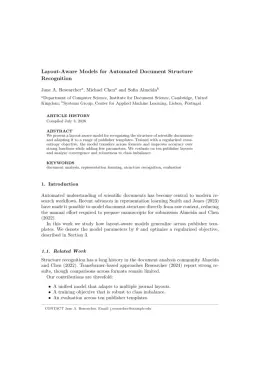
In DocuGuru you write your manuscript in a normal editor — no LaTeX setup required — and select the Grana template. When you export, DocuGuru compiles the paper into the official Taylor & Francis format and hands you a submission-ready PDF along with the editable LaTeX source.
What reference style does Grana use?
Grana uses Author–year (Chicago, T&F) references, shown as author–year markers such as (Smith, 2023) in the text. DocuGuru formats every in-text citation and the reference list in this exact style automatically. A reference appears like this: Smith, Ada, Ben Jones, and Cara Lee. 2023. "A Representative Article Title." Grana 12 (3): 45–58.
Do I need to know LaTeX to submit to Grana?
No. DocuGuru generates the interact LaTeX class and compiles the PDF for you in the background, so you get a Taylor & Francis-ready Grana document without writing any LaTeX. If you do want it, the LaTeX source is included in the export.
Can I import an existing draft into the Grana template?
Yes. Paste or upload your current manuscript — Word, LaTeX, Markdown, or plain text — and DocuGuru reflows it into the Grana format with correct headings, figures, tables, and author–year citations.
Who publishes Grana?
Grana is a multidisciplinary journal published by Taylor & Francis. DocuGuru's Grana template matches Taylor & Francis's official submission format.
Can I export a submission-ready Grana PDF?
Yes — DocuGuru produces a PDF built with the official Grana template (the interact class) that is ready to submit to Taylor & Francis, together with the matching LaTeX source files.
How much does the Grana template cost?
You can start writing in the Grana template for free. Exporting the final submission-ready Grana PDF and LaTeX source is part of DocuGuru's paid plans — see the app for current pricing.
Use the Grana template