Taylor & Francis

Geosystem Engineering Template

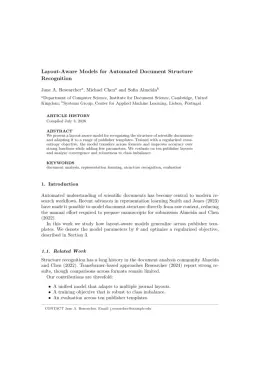
Write in a clean editor, then format for Geosystem Engineering in one click — DocuGuru applies the official Taylor & Francis template with author–year references and exports a submission-ready PDF plus the editable LaTeX source. Free to start.

About the Geosystem Engineering format

Geosystem Engineering is a peer-reviewed journal published by Taylor & Francis, covering Hydraulic Fracturing and Reservoir Analysis, Enhanced Oil Recovery Techniques, Drilling and Well Engineering.

PublisherTaylor & Francis
Reference styleAuthor–year (Chicago, T&F)
Author–year — (Smith, 2023) in the text
Smith, Ada, Ben Jones, and Cara Lee. 2023. "A Representative Article Title." Geosystem Engineering 12 (3): 45–58.

Formats any DOI in Geosystem Engineering style. No sign-up.

Publishes research inHydraulic Fracturing and Reservoir Analysis Enhanced Oil Recovery Techniques Drilling and Well Engineering Hydrocarbon exploration and reservoir analysis Extraction and Separation Processes
ISSN1226-9328
Citation impact (2-yr)0.79
h-index33
i10-index160
Total citations5,999
Top institutions publishing hereKorea Institute of Geoscience and Mineral Resources
Journal websitewww.tandfonline.com
You getA submission-ready PDF and the editable LaTeX source — ready to submit.

Papers published in Geosystem Engineering per year

40
2014
49
2015
51
2016
40
2017
48
2018
22
2019
20
2020
16
2021
29
2022
29
2023
40
2024
90
2025

Citation impact of Geosystem Engineering by publication year

432
2014
912
2015
963
2016
440
2017
530
2018
91
2019
204
2020
125
2021
175
2022
119
2023
59
2024
64
2025

Citations each year’s papers have accumulated so far — the most recent years are still building up.

Most-cited papers in Geosystem Engineering

The bonded-particle model as a tool for rock mechanics research and application: current trends and future directions

D.O. Potyondy · 2 Jan 2015

We generalize our view of a bonded-particle model (BPM) to consist of a base material (that is a packed assembly of rigid grains joined by deformable and breakable cement at grain–grain contacts) to which larger-scale joints can be added and whose mechanical behavior is simulated by the distinct-element method using the two- and three-dimensional discontinuum…

Reviews of unmanned aerial vehicle (drone) technology trends and its applications in the mining industry

Sungjae Lee, Yosoon Choi · 16 Mar 2016

In this study, the trend of unmanned aerial vehicle (UAV) technology and its applications in the mining industry were reviewed. To understand the trend of the UAV technology, the definition and classification of the UAVs, their major applications in each field, the characteristics of the sensors of the UAV were investigated. Some examples that used…

The fundamental phenomena of nanobubbles and their behavior in wastewater treatment technologies

Anup Gurung, Olli Dahl, Kaj Jansson · 2 Mar 2016

The importance of nanobubbles is widely acknowledged, particularly in terms of their role with respect to bubble size and stability. Nanobubbles are tiny spherical cap-shaped bubbles, and have several unique physical and mechanical characteristics. Longevity, virtual disappearance of buoyancy, high internal pressure, extremely large surface/volume ratio, high oxygen dissolution rate, and generation of free radicals…

An overview on advances in computational fracture mechanics of rock

Mojtaba Mohammadnejad, Hongyuan Liu, Andrew Chan et al. · 12 Mar 2018

Due to its complexities, rock fracturing process still poses many pressing challenges despite intense research efforts. With the rapid development of computational mechanics, numerical techniques have gradually become robust tools for the investigation of rock fracture. Nevertheless, not all of the devised methods are capable of adequately modelling the rock fracture process. For an accurate…

A review on the separation of molybdenum, tungsten, and vanadium from leach liquors of diverse resources by solvent extraction

Thi Hong Nguyen, Man Seung Lee · 23 May 2016

Molybdenum, vanadium, and tungsten coexist with other valuable metals in diverse resources. In order to recover these metals with high purity, hydrometallurgical processes consisting of leaching followed by solvent extraction have been developed. The solvent extraction systems for the separation of Mo–V, Mo–W, and Mo–V–W from various aqueous medium were reviewed in this work. The…

Geosystem Engineering template — frequently asked questions

How do I write a paper in the Geosystem Engineering format?
In DocuGuru you write your manuscript in a normal editor — no LaTeX setup required — and select the Geosystem Engineering template. When you export, DocuGuru compiles the paper into the official Taylor & Francis format and hands you a submission-ready PDF along with the editable LaTeX source.
What reference style does Geosystem Engineering use?
Geosystem Engineering uses Author–year (Chicago, T&F) references, shown as author–year markers such as (Smith, 2023) in the text. DocuGuru formats every in-text citation and the reference list in this exact style automatically. A reference appears like this: Smith, Ada, Ben Jones, and Cara Lee. 2023. "A Representative Article Title." Geosystem Engineering 12 (3): 45–58.
Do I need to know LaTeX to submit to Geosystem Engineering?
No. DocuGuru generates the interact LaTeX class and compiles the PDF for you in the background, so you get a Taylor & Francis-ready Geosystem Engineering document without writing any LaTeX. If you do want it, the LaTeX source is included in the export.
Can I import an existing draft into the Geosystem Engineering template?
Yes. Paste or upload your current manuscript — Word, LaTeX, Markdown, or plain text — and DocuGuru reflows it into the Geosystem Engineering format with correct headings, figures, tables, and author–year citations.
Who publishes Geosystem Engineering?
Geosystem Engineering is a multidisciplinary journal published by Taylor & Francis. DocuGuru's Geosystem Engineering template matches Taylor & Francis's official submission format.
Can I export a submission-ready Geosystem Engineering PDF?
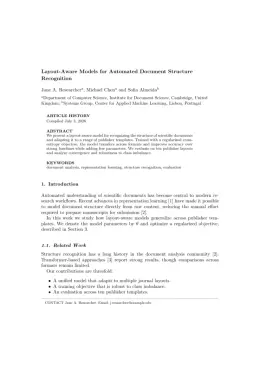
Yes — DocuGuru produces a PDF built with the official Geosystem Engineering template (the interact class) that is ready to submit to Taylor & Francis, together with the matching LaTeX source files.
How much does the Geosystem Engineering template cost?
You can start writing in the Geosystem Engineering template for free. Exporting the final submission-ready Geosystem Engineering PDF and LaTeX source is part of DocuGuru's paid plans — see the app for current pricing.
Use the Geosystem Engineering template