Taylor & Francis

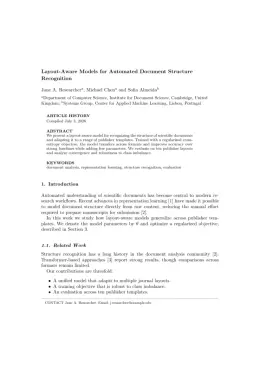
Fullerenes Nanotubes and Carbon Nanostructures Template

Write in a clean editor, then format for Fullerenes Nanotubes and Carbon Nanostructures in one click — DocuGuru applies the official Taylor & Francis template with author–year references and exports a submission-ready PDF plus the editable LaTeX source. Free to start.

About the Fullerenes Nanotubes and Carbon Nanostructures format

Fullerenes Nanotubes and Carbon Nanostructures is a peer-reviewed journal published by Taylor & Francis, covering Carbon Nanotubes in Composites, Graphene research and applications, Fullerene Chemistry and Applications.

PublisherTaylor & Francis
Reference styleAuthor–year (Chicago, T&F)
Author–year — (Smith, 2023) in the text
Smith, Ada, Ben Jones, and Cara Lee. 2023. "A Representative Article Title." Fullerenes Nanotubes and Carbon Nanostructures 12 (3): 45–58.

Formats any DOI in Fullerenes Nanotubes and Carbon Nanostructures style. No sign-up.

Publishes research inCarbon Nanotubes in Composites Graphene research and applications Fullerene Chemistry and Applications Diamond and Carbon-based Materials Research Boron and Carbon Nanomaterials Research
ISSN1536-383X
Citation impact (2-yr)2.21
h-index52
i10-index826
Total citations27,040
Top institutions publishing hereLomonosov Moscow State University
Journal websitewww.tandfonline.com
You getA submission-ready PDF and the editable LaTeX source — ready to submit.

Papers published in Fullerenes Nanotubes and Carbon Nanostructures per year

113
2014
76
2015
101
2016
85
2017
129
2018
172
2019
136
2020
153
2021
95
2022
133
2023
132
2024
139
2025

Citation impact of Fullerenes Nanotubes and Carbon Nanostructures by publication year

1.7K
2014
1.1K
2015
1.4K
2016
1.1K
2017
1.9K
2018
1.8K
2019
3.3K
2020
1.5K
2021
727
2022
820
2023
465
2024
248
2025

Citations each year’s papers have accumulated so far — the most recent years are still building up.

Most-cited papers in Fullerenes Nanotubes and Carbon Nanostructures

A review on C1s XPS-spectra for some kinds of carbon materials

Xiangnan Chen, Xiaohui Wang, De Fang · 21 Jul 2020

The surface properties of carbon materials are very important since many complex physical and chemical reactions take place on their surfaces. X-ray photoelectron spectroscopy (XPS) test is one of the most significant characterization methods to analyze the surfaces. The carbon species and banding energies for several typical kinds of carbon materials (graphite, carbon black, graphene,…

1,682 citations Cite SaveGo to paper →
Investigation of Graphene/Ag Nanocomposites Synthesis Parameters for Two Different Synthesis Methods

Zafer Çıplak, Nuray Yıldız, Ayla Çalımlı · 2 Jul 2014

Graphene/Ag nanocomposites were prepared with two different approaches; (i) sequential reduction of graphene oxide and silver nitrate (AgNO3), (ii) simultaneous reduction of graphene oxide and AgNO3 with hydrazine hydrate. The effect of synthesis parameters such as AgNO3 amount, concentration of AgNO3 solution, reducing agent amount, concentration of reducing agent solution, on the mean size and…

Is the C<sub>60</sub> Fullerene Molecule Toxic?!

G. V. Andrievsky, Vladimir Klochkov, L. I. Derevyanchenko · 1 Jul 2005

Abstract Presented theses criticize the hasty observations and conclusions about some toxic properties of various aqueous dispersions of C60 nanoparticles. In turn, a number of arguments are made emphasizing that pristine fullerenes are non‐toxic, but the supramolecular system of "fullerene‐water" has a wide spectrum of positive and unique biological activity.

Carbon Nanotube Synthesis via the Catalytic CVD Method: A Review on the Effect of Reaction Parameters

Çınar Öncel, Yuda Yürüm · 10 Mar 2006

Abstract This review covers the results obtained in carbon nanotube synthesis by chemical vapor deposition. Parameters such as catalysts, supports, carbon precursors, reaction time, temperature and gas flow rates that are used in the production of carbon nanotubes are discussed throughout the text. Purification of the synthesized carbon nanotubes and methods utilized for cost reduction…

Graphene oxide and reduced graphene oxide supported ZnO nanochips for removal of basic dyes from the industrial effluents

Khadija Chaudhary, Muhammad Aadil, Sonia Zulfiqar et al. · 18 May 2021

Currently, graphene and its functional derivatives are in high demand due to their unprecedented potential to build multifunctional catalysts. Here, we report the synthesis of highly active and cheap photo-catalyst materials consisting of sol-gel synthesized ZnO nanochips, assembled over the oxidized (GO) and partially reduced (RGO) derivatives of graphene in presence of ultrasound radiations. Structure,…

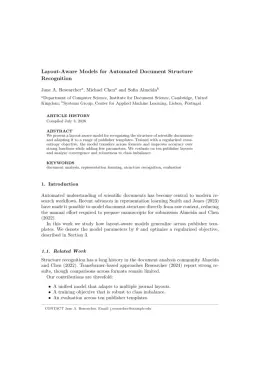
Fullerenes Nanotubes and Carbon Nanostructures template — frequently asked questions

How do I write a paper in the Fullerenes Nanotubes and Carbon Nanostructures format?
In DocuGuru you write your manuscript in a normal editor — no LaTeX setup required — and select the Fullerenes Nanotubes and Carbon Nanostructures template. When you export, DocuGuru compiles the paper into the official Taylor & Francis format and hands you a submission-ready PDF along with the editable LaTeX source.
What reference style does Fullerenes Nanotubes and Carbon Nanostructures use?
Fullerenes Nanotubes and Carbon Nanostructures uses Author–year (Chicago, T&F) references, shown as author–year markers such as (Smith, 2023) in the text. DocuGuru formats every in-text citation and the reference list in this exact style automatically. A reference appears like this: Smith, Ada, Ben Jones, and Cara Lee. 2023. "A Representative Article Title." Fullerenes Nanotubes and Carbon Nanostructures 12 (3): 45–58.
Do I need to know LaTeX to submit to Fullerenes Nanotubes and Carbon Nanostructures?
No. DocuGuru generates the interact LaTeX class and compiles the PDF for you in the background, so you get a Taylor & Francis-ready Fullerenes Nanotubes and Carbon Nanostructures document without writing any LaTeX. If you do want it, the LaTeX source is included in the export.
Can I import an existing draft into the Fullerenes Nanotubes and Carbon Nanostructures template?
Yes. Paste or upload your current manuscript — Word, LaTeX, Markdown, or plain text — and DocuGuru reflows it into the Fullerenes Nanotubes and Carbon Nanostructures format with correct headings, figures, tables, and author–year citations.
Who publishes Fullerenes Nanotubes and Carbon Nanostructures?
Fullerenes Nanotubes and Carbon Nanostructures is a multidisciplinary journal published by Taylor & Francis. DocuGuru's Fullerenes Nanotubes and Carbon Nanostructures template matches Taylor & Francis's official submission format.
Can I export a submission-ready Fullerenes Nanotubes and Carbon Nanostructures PDF?
Yes — DocuGuru produces a PDF built with the official Fullerenes Nanotubes and Carbon Nanostructures template (the interact class) that is ready to submit to Taylor & Francis, together with the matching LaTeX source files.
How much does the Fullerenes Nanotubes and Carbon Nanostructures template cost?
You can start writing in the Fullerenes Nanotubes and Carbon Nanostructures template for free. Exporting the final submission-ready Fullerenes Nanotubes and Carbon Nanostructures PDF and LaTeX source is part of DocuGuru's paid plans — see the app for current pricing.
Use the Fullerenes Nanotubes and Carbon Nanostructures template