Taylor & Francis

Food Additives & Contaminants Template

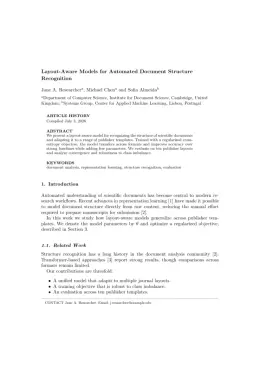
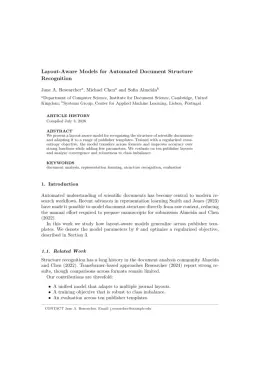
Write in a clean editor, then format for Food Additives & Contaminants in one click — DocuGuru applies the official Taylor & Francis template with author–year references and exports a submission-ready PDF plus the editable LaTeX source. Free to start.

About the Food Additives & Contaminants format

Food Additives & Contaminants is a peer-reviewed journal published by Taylor & Francis, covering Mycotoxins in Agriculture and Food, Pesticide Residue Analysis and Safety, Effects and risks of endocrine disrupting chemicals.

PublisherTaylor & Francis
Reference styleAuthor–year (Chicago, T&F)
Author–year — (Smith, 2023) in the text
Smith, Ada, Ben Jones, and Cara Lee. 2023. "A Representative Article Title." Food Additives & Contaminants 12 (3): 45–58.

Formats any DOI in Food Additives & Contaminants style. No sign-up.

Publishes research inMycotoxins in Agriculture and Food Pesticide Residue Analysis and Safety Effects and risks of endocrine disrupting chemicals Toxic Organic Pollutants Impact Carcinogens and Genotoxicity Assessment
ISSN0265-203X
h-index129
i10-index1,874
Total citations99,602
Top institutions publishing hereNorwich Research Park
Journal websitewww.tandfonline.com
You getA submission-ready PDF and the editable LaTeX source — ready to submit.

Papers published in Food Additives & Contaminants per year

104
1997
135
1998
70
1999
126
2000
196
2001
156
2002
157
2003
134
2004
179
2005
157
2006
154
2007
8
2008

Citation impact of Food Additives & Contaminants by publication year

3.4K
1997
4.2K
1998
3.3K
1999
5.7K
2000
6.6K
2001
9.6K
2002
8.3K
2003
7.1K
2004
12.2K
2005
7.4K
2006
6.7K
2007
12
2008

Citations each year’s papers have accumulated so far — the most recent years are still building up.

Most-cited papers in Food Additives & Contaminants

Effects of caffeine on human health

P. S. Nawrot, Scott A. Jordan, Jo‐Ann Eastwood et al. · 1 Jan 2003

Caffeine is probably the most frequently ingested pharmacologically active substance in the world. It is found in common beverages (coffee, tea, soft drinks), in products containing cocoa or chocolate, and in medications. Because of its wide consumption at different levels by most segments of the population, the public and the scientific community have expressed interest…

1,200 citations Cite SaveGo to paper →
Effects of trichothecene mycotoxins on eukaryotic cells: A review

Olga Rocha, Khairul I. Ansari, Fiona M. Doohan · 1 Apr 2005

The major products of the trichothecene mycotoxin biosynthetic pathway produced in a species- and sometimes isolate-specific manner by cereal-pathogenic Fusarium fungi include T-2 toxin, diacetoxyscirpenol, deoxynivalenol and nivalenol. This paper briefly reviews the major effects of such trichothecenes on the gross morphology, cytology and molecular signalling within eukaryotic cells. The gross toxic effects of select…

Naturally occurring oestrogens in foods—A review

K.R. Price, G. R. Fenwick · 1 Apr 1985

This review is concerned with the presence of naturally occurring oestrogens in food plants and processed foods. Particular emphasis is placed on isoflavones and coumestans, both of which are true plant oestrogens, and the resorcylic acid lactones, more correctly classified as fungal oestrogens. The metabolism and mode of action of these compounds is discussed and…

Perfluorochemicals: Potential sources of and migration from food packaging

Timothy H. Begley, K. White, P. Honigfort et al. · 1 Oct 2005

Perfluorochemicals are widely used in the manufacturing and processing of a vast array of consumer goods, including electrical wiring, clothing, household and automotive products. Furthermore, relatively small quantities of perfluorochemicals are also used in the manufacturing of food-contact substances that represent potential sources of oral exposure to these chemicals. The most recognizable products to consumers…

Food Additives & Contaminants template — frequently asked questions

How do I write a paper in the Food Additives & Contaminants format?
In DocuGuru you write your manuscript in a normal editor — no LaTeX setup required — and select the Food Additives & Contaminants template. When you export, DocuGuru compiles the paper into the official Taylor & Francis format and hands you a submission-ready PDF along with the editable LaTeX source.
What reference style does Food Additives & Contaminants use?
Food Additives & Contaminants uses Author–year (Chicago, T&F) references, shown as author–year markers such as (Smith, 2023) in the text. DocuGuru formats every in-text citation and the reference list in this exact style automatically. A reference appears like this: Smith, Ada, Ben Jones, and Cara Lee. 2023. "A Representative Article Title." Food Additives & Contaminants 12 (3): 45–58.
Do I need to know LaTeX to submit to Food Additives & Contaminants?
No. DocuGuru generates the interact LaTeX class and compiles the PDF for you in the background, so you get a Taylor & Francis-ready Food Additives & Contaminants document without writing any LaTeX. If you do want it, the LaTeX source is included in the export.
Can I import an existing draft into the Food Additives & Contaminants template?
Yes. Paste or upload your current manuscript — Word, LaTeX, Markdown, or plain text — and DocuGuru reflows it into the Food Additives & Contaminants format with correct headings, figures, tables, and author–year citations.
Who publishes Food Additives & Contaminants?
Food Additives & Contaminants is a multidisciplinary journal published by Taylor & Francis. DocuGuru's Food Additives & Contaminants template matches Taylor & Francis's official submission format.
Can I export a submission-ready Food Additives & Contaminants PDF?
Yes — DocuGuru produces a PDF built with the official Food Additives & Contaminants template (the interact class) that is ready to submit to Taylor & Francis, together with the matching LaTeX source files.
How much does the Food Additives & Contaminants template cost?
You can start writing in the Food Additives & Contaminants template for free. Exporting the final submission-ready Food Additives & Contaminants PDF and LaTeX source is part of DocuGuru's paid plans — see the app for current pricing.
Use the Food Additives & Contaminants template