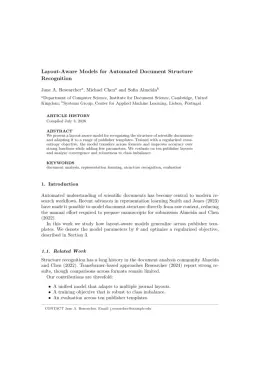
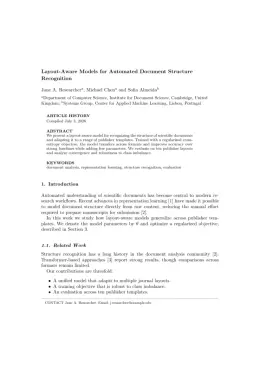
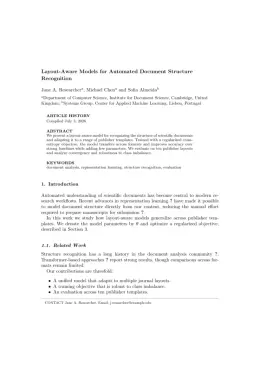
Taylor & Francis

Expert Opinion on Investigational Drugs Template

Write in a clean editor, then format for Expert Opinion on Investigational Drugs in one click — DocuGuru applies the official Taylor & Francis template with author–year references and exports a submission-ready PDF plus the editable LaTeX source. Free to start.

About the Expert Opinion on Investigational Drugs format

Expert Opinion on Investigational Drugs is a peer-reviewed journal published by Taylor & Francis, covering Monoclonal and Polyclonal Antibodies Research, Diabetes Treatment and Management, Asthma and respiratory diseases.

PublisherTaylor & Francis
Reference styleAuthor–year (Chicago, T&F)
Author–year — (Smith, 2023) in the text
Smith, Ada, Ben Jones, and Cara Lee. 2023. "A Representative Article Title." Expert Opinion on Investigational Drugs 12 (3): 45–58.

Formats any DOI in Expert Opinion on Investigational Drugs style. No sign-up.

Publishes research inMonoclonal and Polyclonal Antibodies Research Diabetes Treatment and Management Asthma and respiratory diseases Lipoproteins and Cardiovascular Health HIV/AIDS drug development and treatment
ISSN1354-3784
Citation impact (2-yr)4.35
h-index132
i10-index2,914
Total citations135,973
Top institutions publishing hereWeatherford College
Journal websiteinformahealthcare.com
You getA submission-ready PDF and the editable LaTeX source — ready to submit.

Papers published in Expert Opinion on Investigational Drugs per year

163
2014
132
2015
130
2016
132
2017
102
2018
100
2019
143
2020
111
2021
85
2022
109
2023
110
2024
86
2025

Citation impact of Expert Opinion on Investigational Drugs by publication year

4.6K
2014
3.2K
2015
3.7K
2016
4.7K
2017
4.1K
2018
3.4K
2019
4K
2020
2.8K
2021
1.3K
2022
1.4K
2023
744
2024
260
2025

Citations each year’s papers have accumulated so far — the most recent years are still building up.

Most-cited papers in Expert Opinion on Investigational Drugs

Why do trials for Alzheimer’s disease drugs keep failing? A discontinued drug perspective for 2010-2015

Dev Mehta, Robert Jackson, Gaurav Paul et al. · 2 May 2017

INTRODUCTION: There are dozens of drugs in development for AD with billions of dollars invested. Despite the massive investment in AD drugs and a burgeoning pipeline, there have been more setbacks and failures than treatment successes. Areas covered: The classes of drugs that have failed to date include the monoclonal antibodies, the gamma secretase inhibitors,…

Glioblastoma multiforme: a review of where we have been and where we are going

Cory Adamson, Okezie Obasi Kanu, Ankit I. Mehta et al. · 26 Jun 2009

Malignant gliomas such as glioblastoma multiforme (GBM) present some of the greatest challenges in the management of cancer patients worldwide, despite notable recent achievements in oncology. Even with aggressive surgical resections using state-of-the-art preoperative and intraoperative neuroimaging, along with recent advances in radiotherapy and chemotherapy, the prognosis for GBM patients remains dismal: median survival after…

American Association for Cancer Research

Michael L. Salgaller · 1 Jun 2000

A major session at this annual gathering of the cancer researchers from around the globe dealt with the current state of immunotherapy for cancer. Immunotherapy is a form of cancer treatment that enhances its scientific promise and legitimacy with each passing year. As a result, this topic has become one of the most highly attended…

The p38 MAPK inhibitors for the treatment of inflammatory diseases and cancer

Hae‐Young Yong, Min-Soo Koh, Aree Moon · 23 Oct 2009

BACKGROUND: The p38 mitogen-activated protein kinase (MAPK) is activated by various pro-inflammatory and stressful stimuli. Mounting evidence suggests that the p38 MAPK signaling cascade is involved in various biological responses other than inflammation such as cell proliferation, differentiation, apoptosis and invasion, suggesting that the p38 MAPK can serve as a potential therapeutic target for the…

Cationic antimicrobial peptides as novel cytotoxic agents for cancer treatment

Jamie S. Mader, David W. Hoskin · 21 Jul 2006

Cancer treatment by conventional chemotherapy is hindered by toxic side effects and the frequent development of multi-drug resistance by cancer cells. Cationic antimicrobial peptides (CAPs) are a promising new class of natural-source drugs that may avoid the shortcomings of conventional chemotherapy because certain CAPs exhibit selective cytotoxicity against a broad spectrum of human cancer cells,…

Expert Opinion on Investigational Drugs template — frequently asked questions

How do I write a paper in the Expert Opinion on Investigational Drugs format?
In DocuGuru you write your manuscript in a normal editor — no LaTeX setup required — and select the Expert Opinion on Investigational Drugs template. When you export, DocuGuru compiles the paper into the official Taylor & Francis format and hands you a submission-ready PDF along with the editable LaTeX source.
What reference style does Expert Opinion on Investigational Drugs use?
Expert Opinion on Investigational Drugs uses Author–year (Chicago, T&F) references, shown as author–year markers such as (Smith, 2023) in the text. DocuGuru formats every in-text citation and the reference list in this exact style automatically. A reference appears like this: Smith, Ada, Ben Jones, and Cara Lee. 2023. "A Representative Article Title." Expert Opinion on Investigational Drugs 12 (3): 45–58.
Do I need to know LaTeX to submit to Expert Opinion on Investigational Drugs?
No. DocuGuru generates the interact LaTeX class and compiles the PDF for you in the background, so you get a Taylor & Francis-ready Expert Opinion on Investigational Drugs document without writing any LaTeX. If you do want it, the LaTeX source is included in the export.
Can I import an existing draft into the Expert Opinion on Investigational Drugs template?
Yes. Paste or upload your current manuscript — Word, LaTeX, Markdown, or plain text — and DocuGuru reflows it into the Expert Opinion on Investigational Drugs format with correct headings, figures, tables, and author–year citations.
Who publishes Expert Opinion on Investigational Drugs?
Expert Opinion on Investigational Drugs is a multidisciplinary journal published by Taylor & Francis. DocuGuru's Expert Opinion on Investigational Drugs template matches Taylor & Francis's official submission format.
Can I export a submission-ready Expert Opinion on Investigational Drugs PDF?
Yes — DocuGuru produces a PDF built with the official Expert Opinion on Investigational Drugs template (the interact class) that is ready to submit to Taylor & Francis, together with the matching LaTeX source files.
How much does the Expert Opinion on Investigational Drugs template cost?
You can start writing in the Expert Opinion on Investigational Drugs template for free. Exporting the final submission-ready Expert Opinion on Investigational Drugs PDF and LaTeX source is part of DocuGuru's paid plans — see the app for current pricing.

Use the Expert Opinion on Investigational Drugs template