Taylor & Francis

Expert Opinion on Emerging Drugs Template

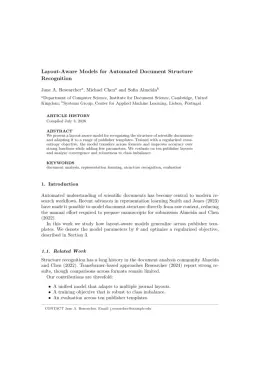
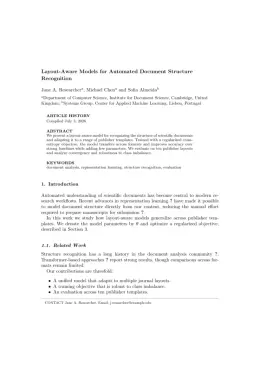
Write in a clean editor, then format for Expert Opinion on Emerging Drugs in one click — DocuGuru applies the official Taylor & Francis template with author–year references and exports a submission-ready PDF plus the editable LaTeX source. Free to start.

About the Expert Opinion on Emerging Drugs format

Expert Opinion on Emerging Drugs is a peer-reviewed journal published by Taylor & Francis, covering Asthma and respiratory diseases, Retinal Diseases and Treatments, Cancer Immunotherapy and Biomarkers.

PublisherTaylor & Francis
Reference styleAuthor–year (Chicago, T&F)
Author–year — (Smith, 2023) in the text
Smith, Ada, Ben Jones, and Cara Lee. 2023. "A Representative Article Title." Expert Opinion on Emerging Drugs 12 (3): 45–58.

Formats any DOI in Expert Opinion on Emerging Drugs style. No sign-up.

Publishes research inAsthma and respiratory diseases Retinal Diseases and Treatments Cancer Immunotherapy and Biomarkers Lung Cancer Treatments and Mutations CAR-T cell therapy research
ISSN1472-8214
Citation impact (2-yr)4.61
h-index64
i10-index590
Total citations21,654
Top institutions publishing hereWeatherford College
Journal websiteinformahealthcare.com
You getA submission-ready PDF and the editable LaTeX source — ready to submit.

Papers published in Expert Opinion on Emerging Drugs per year

46
2014
48
2015
40
2016
25
2017
30
2018
21
2019
42
2020
34
2021
35
2022
29
2023
33
2024
25
2025

Citation impact of Expert Opinion on Emerging Drugs by publication year

969
2014
1.4K
2015
1K
2016
513
2017
872
2018
465
2019
866
2020
457
2021
352
2022
197
2023
264
2024
69
2025

Citations each year’s papers have accumulated so far — the most recent years are still building up.

Most-cited papers in Expert Opinion on Emerging Drugs

Emerging PEGylated drugs

Jung Seok Kang, Patrick P. DeLuca, Kang Choon Lee · 20 May 2009

PEGylation is a pharmaceutical technology that involves the covalent attachment of polyethylene glycol (PEG) to a drug to improve its pharmacokinetic, pharmacodynamic, and immunological profiles, and thus, enhance its therapeutic effect. Currently, PEGylation is used to modify proteins, peptides, oligonucleotides, antibody fragments, and small organic molecules. Research groups are striving to improve the consistencies of…

What is the future of PEGylated therapies?

Magdalena Swierczewska, Kang Choon Lee, Seulki Lee · 2 Oct 2015

The tremendous potential of biologic drugs is hampered by short half-lives in vivo, resulting in significantly lower potency than activity seen in vitro. These short-acting therapeutic agents require frequent dosing profiles that can reduce applicability to the clinic, particularly for chronic conditions. Therefore, half-life extension technologies are entering the clinic to enable improved or new…

Emerging treatments for traumatic brain injury

Ye Xiong, Asim Mahmood, Michael Chopp · 27 Feb 2009

BACKGROUND: This review summarizes promising approaches for the treatment of traumatic brain injury (TBI) that are in either preclinical or clinical trials. OBJECTIVE: The pathophysiology underlying neurological deficits after TBI is described. An overview of select therapies for TBI with neuroprotective and neurorestorative effects is presented. METHODS: A literature review of preclinical TBI studies and…

Carbonic anhydrase inhibitors as emerging drugs for the treatment of obesity

Claudiu T. Supuran, Anna Di Fiore, Giuseppina De Simone · 1 Jun 2008

BACKGROUND: Obesity is a widespread disease in both the developed and developing world. Few pharmacological approaches for its treatment exist at this time. OBJECTIVE: This review summarises the currently approved obesity therapies and describes a possible new approach for the treatment and prophylaxis of this disease, based on the inhibition of carbonic anhydrases (CAs, EC…

Transgenic plants in the biopharmaceutical market

Richard M. Twyman, Stefan Schillberg, Rainer Fischer · 1 Feb 2005

Many of our 'small-molecule-drugs' are natural products from plants, or are synthetic compounds based on molecules found naturally in plants. However, the vast majority of the protein therapeutics (or biopharmaceuticals) we use are from animal or human sources, and are produced commercially in microbial or mammalian bioreactor systems. Over the last few years, it has…

Expert Opinion on Emerging Drugs template — frequently asked questions

How do I write a paper in the Expert Opinion on Emerging Drugs format?
In DocuGuru you write your manuscript in a normal editor — no LaTeX setup required — and select the Expert Opinion on Emerging Drugs template. When you export, DocuGuru compiles the paper into the official Taylor & Francis format and hands you a submission-ready PDF along with the editable LaTeX source.
What reference style does Expert Opinion on Emerging Drugs use?
Expert Opinion on Emerging Drugs uses Author–year (Chicago, T&F) references, shown as author–year markers such as (Smith, 2023) in the text. DocuGuru formats every in-text citation and the reference list in this exact style automatically. A reference appears like this: Smith, Ada, Ben Jones, and Cara Lee. 2023. "A Representative Article Title." Expert Opinion on Emerging Drugs 12 (3): 45–58.
Do I need to know LaTeX to submit to Expert Opinion on Emerging Drugs?
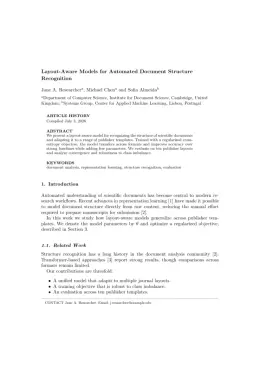
No. DocuGuru generates the interact LaTeX class and compiles the PDF for you in the background, so you get a Taylor & Francis-ready Expert Opinion on Emerging Drugs document without writing any LaTeX. If you do want it, the LaTeX source is included in the export.
Can I import an existing draft into the Expert Opinion on Emerging Drugs template?
Yes. Paste or upload your current manuscript — Word, LaTeX, Markdown, or plain text — and DocuGuru reflows it into the Expert Opinion on Emerging Drugs format with correct headings, figures, tables, and author–year citations.
Who publishes Expert Opinion on Emerging Drugs?
Expert Opinion on Emerging Drugs is a multidisciplinary journal published by Taylor & Francis. DocuGuru's Expert Opinion on Emerging Drugs template matches Taylor & Francis's official submission format.
Can I export a submission-ready Expert Opinion on Emerging Drugs PDF?
Yes — DocuGuru produces a PDF built with the official Expert Opinion on Emerging Drugs template (the interact class) that is ready to submit to Taylor & Francis, together with the matching LaTeX source files.
How much does the Expert Opinion on Emerging Drugs template cost?
You can start writing in the Expert Opinion on Emerging Drugs template for free. Exporting the final submission-ready Expert Opinion on Emerging Drugs PDF and LaTeX source is part of DocuGuru's paid plans — see the app for current pricing.
Use the Expert Opinion on Emerging Drugs template