Taylor & Francis

Exceptionality Template

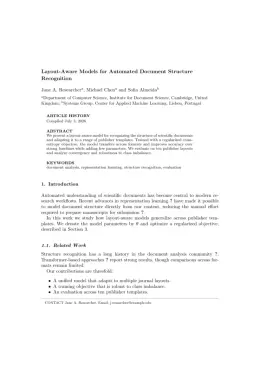
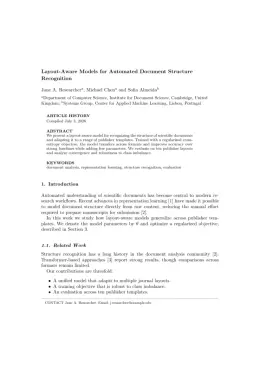
Write in a clean editor, then format for Exceptionality in one click — DocuGuru applies the official Taylor & Francis template with author–year references and exports a submission-ready PDF plus the editable LaTeX source. Free to start.

About the Exceptionality format

Exceptionality is a peer-reviewed journal published by Taylor & Francis, covering Disability Education and Employment, Family and Disability Support Research, Behavioral and Psychological Studies.

PublisherTaylor & Francis
Reference styleAuthor–year (Chicago, T&F)
Author–year — (Smith, 2023) in the text
Smith, Ada, Ben Jones, and Cara Lee. 2023. "A Representative Article Title." Exceptionality 12 (3): 45–58.

Formats any DOI in Exceptionality style. No sign-up.

Publishes research inDisability Education and Employment Family and Disability Support Research Behavioral and Psychological Studies Autism Spectrum Disorder Research Collaborative Teaching and Inclusion
ISSN0936-2835
Citation impact (2-yr)2.8
h-index64
i10-index381
Total citations17,873
Top institutions publishing hereUniversity of Kansas
Journal websitewww.tandfonline.com
You getA submission-ready PDF and the editable LaTeX source — ready to submit.

Papers published in Exceptionality per year

16
2014
15
2015
41
2016
21
2017
20
2018
8
2019
46
2020
19
2021
14
2022
14
2023
32
2024
18
2025

Citation impact of Exceptionality by publication year

185
2014
319
2015
1.1K
2016
380
2017
316
2018
123
2019
522
2020
164
2021
73
2022
83
2023
131
2024
15
2025

Citations each year’s papers have accumulated so far — the most recent years are still building up.

Most-cited papers in Exceptionality

Responsiveness-to-Intervention and School-Wide Positive Behavior Supports: Integration of Multi-Tiered System Approaches

George Sugai, Robert H. Horner · 11 Oct 2009

The Individuals with Disabilities Education Act and No Child Left Behind emphasize the use of scientifically based research to improve outcomes for students. From this emphasis, response-to-intervention has evolved. We present one perspective on the defining features of response-to-intervention and application of those features to school-wide positive behavior supports (SWPBS). We suggest that the initial…

Breaking the School to Prison Pipeline: Identifying School Risk and Protective Factors for Youth Delinquency

Christine A. Christle, Kristine Jolivette, C. Michael Nelson · 1 Jun 2005

Abstract Academic failure, exclusionary discipline practices, and dropout have been identified as key elements in a "school to prison pipeline." Although a strong body of research exists on the risks for delinquency, few studies have attempted to understand the variables within schools that exacerbate or counteract these risks. We conducted three multimethod studies that examined…

Parenting stress, child behavior problems, and dysphoria in parents of children with autism, down syndrome, behavior disorders, and normal development

Jean E. Dumas, Lucille C. Wolf, Sandra Fisman et al. · 1 Jan 1991

Abstract We assessed differences in parental reports of parenting stress, child behavior problems, and dysphoria in 150 families who had children with autism (n = 30), behavior disorders (n = 30), Down syndrome (n = 30), or normal development (n = 60). We measured stress with the Parenting Stress Index, child behavior problems with the…

Teaching Vocabulary During Shared Storybook Readings: An Examination of Differential Effects

Michael D. Coyne, Deborah C. Simmons, Edward J. Kameenui et al. · 1 Sep 2004

Abstract A storybook intervention for kindergarten children that integrates principles of explicit vocabulary instruction within the shared storybook reading experience is described with findings from an experimental study demonstrating the effects of this intervention on the vocabulary development of kindergarten students at risk of reading difficulty. Results indicated that in comparison to students in the…

How to Summarize Single-Participant Research: Ideas and Applications

Thomas E. Scruggs, Margo A. Mastropieri · 1 Dec 2001

This article describes the need for systematic methods for summarizing single-participant research, describes various approaches for quantitative synthesis, and reviews conclusions of completed synthesis efforts. There is general, but not universal, agreement for the need for systematic literature-review procedures. Areas of disagreement center around the issue of whether outcomes of single-participant research studies can be…

Exceptionality template — frequently asked questions

How do I write a paper in the Exceptionality format?
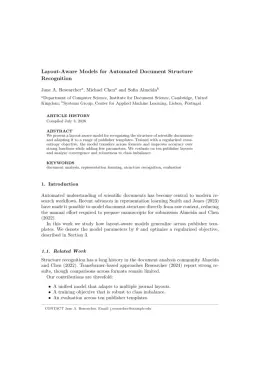
In DocuGuru you write your manuscript in a normal editor — no LaTeX setup required — and select the Exceptionality template. When you export, DocuGuru compiles the paper into the official Taylor & Francis format and hands you a submission-ready PDF along with the editable LaTeX source.
What reference style does Exceptionality use?
Exceptionality uses Author–year (Chicago, T&F) references, shown as author–year markers such as (Smith, 2023) in the text. DocuGuru formats every in-text citation and the reference list in this exact style automatically. A reference appears like this: Smith, Ada, Ben Jones, and Cara Lee. 2023. "A Representative Article Title." Exceptionality 12 (3): 45–58.
Do I need to know LaTeX to submit to Exceptionality?
No. DocuGuru generates the interact LaTeX class and compiles the PDF for you in the background, so you get a Taylor & Francis-ready Exceptionality document without writing any LaTeX. If you do want it, the LaTeX source is included in the export.
Can I import an existing draft into the Exceptionality template?
Yes. Paste or upload your current manuscript — Word, LaTeX, Markdown, or plain text — and DocuGuru reflows it into the Exceptionality format with correct headings, figures, tables, and author–year citations.
Who publishes Exceptionality?
Exceptionality is a multidisciplinary journal published by Taylor & Francis. DocuGuru's Exceptionality template matches Taylor & Francis's official submission format.
Can I export a submission-ready Exceptionality PDF?
Yes — DocuGuru produces a PDF built with the official Exceptionality template (the interact class) that is ready to submit to Taylor & Francis, together with the matching LaTeX source files.
How much does the Exceptionality template cost?
You can start writing in the Exceptionality template for free. Exporting the final submission-ready Exceptionality PDF and LaTeX source is part of DocuGuru's paid plans — see the app for current pricing.
Use the Exceptionality template