Taylor & Francis

Emotional and Behavioural Difficulties Template

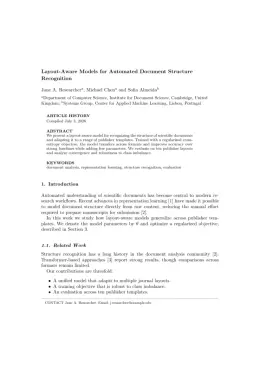
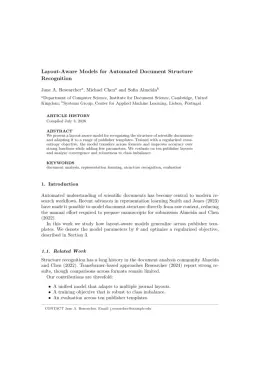
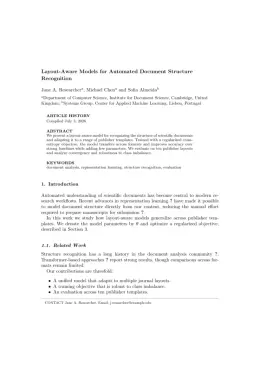
Write in a clean editor, then format for Emotional and Behavioural Difficulties in one click — DocuGuru applies the official Taylor & Francis template with author–year references and exports a submission-ready PDF plus the editable LaTeX source. Free to start.

About the Emotional and Behavioural Difficulties format

Emotional and Behavioural Difficulties is a peer-reviewed journal published by Taylor & Francis, covering Child and Adolescent Psychosocial and Emotional Development, Early Childhood Education and Development, Educational and Psychological Assessments.

PublisherTaylor & Francis
Reference styleAuthor–year (Chicago, T&F)
Author–year — (Smith, 2023) in the text
Smith, Ada, Ben Jones, and Cara Lee. 2023. "A Representative Article Title." Emotional and Behavioural Difficulties 12 (3): 45–58.

Formats any DOI in Emotional and Behavioural Difficulties style. No sign-up.

Publishes research inChild and Adolescent Psychosocial and Emotional Development Early Childhood Education and Development Educational and Psychological Assessments Family and Disability Support Research Behavioral and Psychological Studies
ISSN1363-2752
Citation impact (2-yr)1.04
h-index48
i10-index353
Total citations12,812
Top institutions publishing hereUniversity of Oxford
Journal websitewww.tandfonline.com
You getA submission-ready PDF and the editable LaTeX source — ready to submit.

Papers published in Emotional and Behavioural Difficulties per year

41
2014
17
2015
28
2016
47
2017
26
2018
37
2019
19
2020
36
2021
25
2022
23
2023
20
2024
37
2025

Citation impact of Emotional and Behavioural Difficulties by publication year

605
2014
250
2015
630
2016
536
2017
263
2018
694
2019
114
2020
428
2021
155
2022
112
2023
53
2024
19
2025

Citations each year’s papers have accumulated so far — the most recent years are still building up.

Most-cited papers in Emotional and Behavioural Difficulties

Victims’ perceptions of traditional and cyberbullying, and the psychosocial correlates of their victimisation

Marilyn Campbell, Barbara Spears, Phillip T. Slee et al. · 23 Aug 2012

It is well recognised that there are serious correlates for victims of traditional bullying. These have been shown to include increased levels of depression, anxiety and psychosomatic symptoms, in addition to often severe physical harm and even suicide. Bullied students also feel more socially ineffective and have greater interpersonal difficulties, together with higher absenteeism from…

Peer victimisation and depressive symptoms: can specific coping strategies buffer the negative impact of cybervictimisation?

Katja Machmutow, Sonja Perren, Fabio Sticca et al. · 23 Aug 2012

This longitudinal study investigated whether cybervictimisation is an additional risk factor for depressive symptoms over and beyond traditional victimisation in adolescents. Furthermore, it explored whether certain coping strategies moderate the impact of cybervictimisation on depressive symptoms. A total of 765 Swiss seventh graders (mean age at time-point 1 (t1) = 13.18 years) reported on the…

From cyberbullying to electronic aggression: typology of the phenomenon

Jacek Pyżalski · 23 Aug 2012

Cyberbullying is usually operationalised as a kind of bullying understood as peer aggression that is intentional and continuous, and involves an aspect of imbalance of power between a victim and a perpetrator or perpetrators. Despite the tool used (new media), cyberbullying often takes place within a traditional group (e.g. school class). However, cyberspace gives Internet…

Cyberbullying victimisation in adolescence: relationships with loneliness and depressive mood

Dorit Olenik‐Shemesh, Tali Heiman, Sigal Eden · 23 Aug 2012

Cyberbullying is deliberate, aggressive activity carried out through digital means. Cybervictimisation in adolescence may be related to negative psychosocial variables such as loneliness and depressive mood. The purpose of the present study, the first of its kind in Israel, was to examine the association between adolescent cybervictimisation and two socio-emotional variables: loneliness and depressive mood.…

Predictors of victimisation across direct bullying, indirect bullying and cyberbullying

Antonella Brighi, Annalisa Guarini, Giannino Melotti et al. · 23 Aug 2012

Cyberbullying may sometimes be an extension of traditional bullying. However, some particular features of cyberbullying suggest that it may have a distinct causal pathway, due to the social context of a virtual environment within which peer social processes occur. Moreover, boys and girls may perceive and respond differentially to their social context, which may heighten…

Emotional and Behavioural Difficulties template — frequently asked questions

How do I write a paper in the Emotional and Behavioural Difficulties format?
In DocuGuru you write your manuscript in a normal editor — no LaTeX setup required — and select the Emotional and Behavioural Difficulties template. When you export, DocuGuru compiles the paper into the official Taylor & Francis format and hands you a submission-ready PDF along with the editable LaTeX source.
What reference style does Emotional and Behavioural Difficulties use?
Emotional and Behavioural Difficulties uses Author–year (Chicago, T&F) references, shown as author–year markers such as (Smith, 2023) in the text. DocuGuru formats every in-text citation and the reference list in this exact style automatically. A reference appears like this: Smith, Ada, Ben Jones, and Cara Lee. 2023. "A Representative Article Title." Emotional and Behavioural Difficulties 12 (3): 45–58.
Do I need to know LaTeX to submit to Emotional and Behavioural Difficulties?
No. DocuGuru generates the interact LaTeX class and compiles the PDF for you in the background, so you get a Taylor & Francis-ready Emotional and Behavioural Difficulties document without writing any LaTeX. If you do want it, the LaTeX source is included in the export.
Can I import an existing draft into the Emotional and Behavioural Difficulties template?
Yes. Paste or upload your current manuscript — Word, LaTeX, Markdown, or plain text — and DocuGuru reflows it into the Emotional and Behavioural Difficulties format with correct headings, figures, tables, and author–year citations.
Who publishes Emotional and Behavioural Difficulties?
Emotional and Behavioural Difficulties is a multidisciplinary journal published by Taylor & Francis. DocuGuru's Emotional and Behavioural Difficulties template matches Taylor & Francis's official submission format.
Can I export a submission-ready Emotional and Behavioural Difficulties PDF?
Yes — DocuGuru produces a PDF built with the official Emotional and Behavioural Difficulties template (the interact class) that is ready to submit to Taylor & Francis, together with the matching LaTeX source files.
How much does the Emotional and Behavioural Difficulties template cost?
You can start writing in the Emotional and Behavioural Difficulties template for free. Exporting the final submission-ready Emotional and Behavioural Difficulties PDF and LaTeX source is part of DocuGuru's paid plans — see the app for current pricing.

Use the Emotional and Behavioural Difficulties template