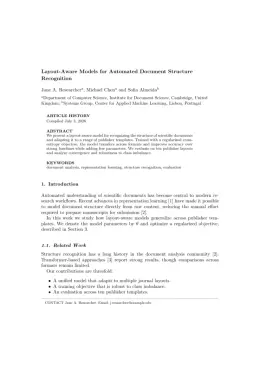
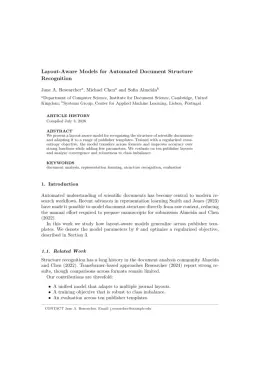
About the Electric Power Components and Systems format
Electric Power Components and Systems is a peer-reviewed journal published by Taylor & Francis, covering Microgrid Control and Optimization, Optimal Power Flow Distribution, Power System Optimization and Stability.
| Publisher | Taylor & Francis |
|---|
| Reference style | Author–year (Chicago, T&F) Author–year — (Smith, 2023) in the text
Smith, Ada, Ben Jones, and Cara Lee. 2023. "A Representative Article Title." Electric Power Components and Systems 12 (3): 45–58.
Formats any DOI in Electric Power Components and Systems style. No sign-up.
|
|---|
| Publishes research in | Microgrid Control and Optimization Optimal Power Flow Distribution Power System Optimization and Stability Multilevel Inverters and Converters Electric Motor Design and Analysis |
|---|
| ISSN | 1532-5008 |
|---|
| Citation impact (2-yr) | 5.76 |
|---|
| h-index | 72 |
|---|
| i10-index | 1,280 |
|---|
| Total citations | 43,088 |
|---|
| Top institutions publishing here | Indian Institute of Technology Roorkee |
|---|
| Journal website | www.tandfonline.com |
|---|
| You get | A submission-ready PDF and the editable LaTeX source — ready to submit. |
|---|
Papers published in Electric Power Components and Systems per year
Citation impact of Electric Power Components and Systems by publication year
Citations each year’s papers have accumulated so far — the most recent years are still building up.
Most-cited papers in Electric Power Components and Systems
Optimal Power Flow Using Tabu Search Algorithm
M. A. Abido · 1 May 2002
This paper presents an e � cient and reliable tabu search (TS)–based approach to solve the optimal power �ow (OPF) problem. The proposed approach employs TS algorithm for optimal settings of the control variables of the OPF problem. Incorporation of TS as a derivative-free optimization technique in solving
The Smart Grid—State-of-the-art and Future Trends
M.E. El-Hawary · 5 Feb 2014
Abstract This paper introduces Smart Grid and associated technical, environmental and socio-economic, and other non-tangible benefits to society, and articulates the need for the concept and the fact that it is a dynamic interactive, real-time infrastructure that responds to the challenges of designing and building the power system of the future, rather than being simply…
Single and Multi-objective Optimal Power Flow Using Grey Wolf Optimizer and Differential Evolution Algorithms
Attia A. El‐Fergany, Hany M. Hasanien · 24 Jul 2015
This article applies the grey wolf optimizer and differential evolution (DE) algorithms to solve the optimal power flow (OPF) problem. Both algorithms are used to optimize single objective functions sequentially under the system constraints. Then, the DE algorithm is utilized to solve multi-objective OPF problems. The indicator of the static line stability index is incorporated…
Simulated Annealing Technique for Dynamic Economic Dispatch
Chinmoy Kumar Panigrahi, Pabitra Chattopadhyay, R. Chakrabarti et al. · 14 Feb 2006
Dynamic economic dispatch (DED) is one of the main functions of power system operation and control. It determines the optimal operation of units with predicted load demands over a certain period of time with an objective to minimize total production cost while the system is operating within its ramp rate limits. This paper presents DED…
Distribution Systems Forward/Backward Sweep-based Power Flow Algorithms: A Review and Comparison Study
U. Eminoğlu, Mehmet Hakan Hocaoğlu · 11 Dec 2008
Abstract Because of different characteristic features of distribution networks, such as radial structure and high R/X ratio, distribution system load flow analysis differs significantly from transmission systems. Accordingly, a number of methods that are specially designed for the solution of the power flow problem in radial distribution systems are found in the literature. Most of…