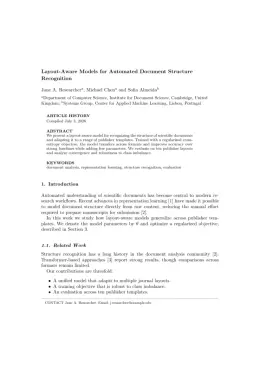
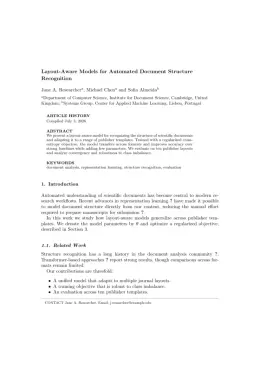
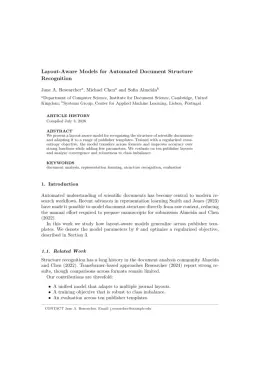
About the Dynamical Systems format
Dynamical Systems is a peer-reviewed journal published by Taylor & Francis, covering Mathematical Dynamics and Fractals, Quantum chaos and dynamical systems, Advanced Differential Equations and Dynamical Systems.
| Publisher | Taylor & Francis |
|---|
| Reference style | Numbered (Vancouver/NLM) Numbered — [1], [2] in the text
1. Smith A, Jones B, Lee C. A representative article title. Dynamical Systems. 2023;12(3):45–58.
Formats any DOI in Dynamical Systems style. No sign-up.
|
|---|
| Publishes research in | Mathematical Dynamics and Fractals Quantum chaos and dynamical systems Advanced Differential Equations and Dynamical Systems Nonlinear Dynamics and Pattern Formation Chaos control and synchronization |
|---|
| ISSN | 1468-9367 |
|---|
| Citation impact (2-yr) | 0.66 |
|---|
| h-index | 42 |
|---|
| i10-index | 239 |
|---|
| Total citations | 9,811 |
|---|
| Top institutions publishing here | Universidade do Porto |
|---|
| Journal website | www.tandfonline.com |
|---|
| You get | A submission-ready PDF and the editable LaTeX source — ready to submit. |
|---|
Papers published in Dynamical Systems per year
Citation impact of Dynamical Systems by publication year
Citations each year’s papers have accumulated so far — the most recent years are still building up.
Most-cited papers in Dynamical Systems
A class of piecewise linear differential equations arising in biological models
Jean‐Luc Gouzé, Tewfik Sari · 1 Dec 2002
We investigate the properties of the solutions of a class of piecewise-linear differential equations. The equations are appropriate to model biological systems (e.g. genetic networks) in which there are switch-like interactions between the elements. The analysis uses the concept of Filippov solutions of differential equations with a discontinuous right-hand side. It gives an insight into…
Quasivelocities and symmetries in non-holonomic systems
Anthony M. Bloch, Jerrold E. Marsden, Dmitry V. Zenkov · 14 Jan 2009
This article is concerned with the theory of quasivelocities for non-holonomic systems. The equations of non-holonomic mechanics are derived using the Lagrange–d'Alembert principle written in an arbitrary configuration-dependent frame. The article also shows how quasivelocities may be used in the formulation of non-holonomic systems with symmetry. In particular, the use of quasivelocities in the analysis…
High-order expansions of invariant manifolds of libration point orbits with applications to mission design
Josep J. Masdemont · 1 Mar 2005
This paper deals with two methodologies for computing the stable and unstable manifolds of libration point orbits in series expansions. One of the procedures is based on the Lindstedt–Poincaré method, the other one on a normal form of the Hamiltonian equations of motion, and, from a geometrical point of view, both methodologies complement each other.…
Oscillations, SE(2)-snakes and motion control: A study of the Roller Racer
P. S. Krishnaprasad, Dimitris P. Tsakiris · 1 Dec 2001
This report is concerned with the problem of motion generation via cyclic variations in selected degrees of freedom (usually referred to as shape variables) in mechanical systems subject to nonholonomic constraints (here the classical one of a disk rolling without sliding on a at surface). In earlier work, we identi ed an interesting class of…
The irregular set for maps with the specification property has full topological pressure
Daniel J. Thompson · 21 Aug 2009
Let (X, d) be a compact metric space, f : X ↦ X be a continuous map with the specification property and ϕ : X ↦ ℝ a continuous function. We consider the set of points for which the Birkhoff average of ϕ does not exist (which we call the irregular set for ϕ) and…