Taylor & Francis

DNA sequence Template

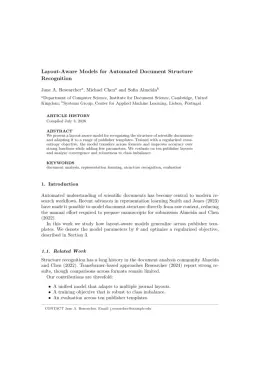
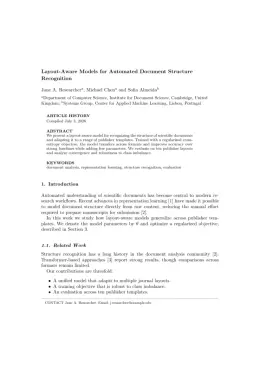
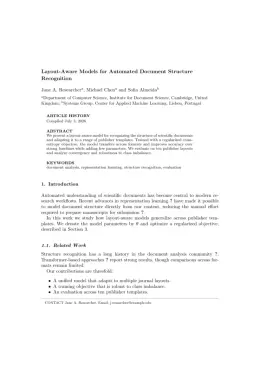
Write in a clean editor, then format for DNA sequence in one click — DocuGuru applies the official Taylor & Francis template with author–year references and exports a submission-ready PDF plus the editable LaTeX source. Free to start.

About the DNA sequence format

DNA sequence is a peer-reviewed journal published by Taylor & Francis, covering RNA and protein synthesis mechanisms, Genomics and Phylogenetic Studies, RNA Research and Splicing.

PublisherTaylor & Francis
Reference styleAuthor–year (Chicago, T&F)
Author–year — (Smith, 2023) in the text
Smith, Ada, Ben Jones, and Cara Lee. 2023. "A Representative Article Title." DNA sequence 12 (3): 45–58.

Formats any DOI in DNA sequence style. No sign-up.

Publishes research inRNA and protein synthesis mechanisms Genomics and Phylogenetic Studies RNA Research and Splicing Bacterial Genetics and Biotechnology Genomics and Chromatin Dynamics
ISSN1026-7913
h-index40
i10-index424
Total citations13,208
Top institutions publishing hereFudan University
Journal websitewww.gbhap-us.com
You getA submission-ready PDF and the editable LaTeX source — ready to submit.

Papers published in DNA sequence per year

67
1997
70
1998
47
1999
75
2000
72
2001
60
2002
58
2003
63
2004
69
2005
71
2006
63
2007
71
2008

Citation impact of DNA sequence by publication year

593
1997
607
1998
402
1999
608
2000
537
2001
493
2002
721
2003
689
2004
835
2005
549
2006
759
2007
773
2008

Citations each year’s papers have accumulated so far — the most recent years are still building up.

Most-cited papers in DNA sequence

Cloning and characterization of zona pellucida genes and cDNAs from a variety of mammalian species: The ZPA, ZPB and ZPC gene families

Jeffrey D. Harris, David W. Hibler, Gregory K. Fontenot et al. · 1 Jan 1994

Full length zona pellucida cDNAs from cat, dog and pig that are homologous to the ZP2/rc75 genes from mouse, human and rabbit, a full length zona pellucida cDNA from cat and a gene and full length cDNA from human that are homologous to the rc55/ZP3 alpha genes from rabbit and pig, and full length zona…

Multiple secondary plant product UDP-glucose glucosyltransferase genes expressed in cassava (Manihot esculenta Crantz) cotyledons

Jane Hughes, Monica A. Hughes · 1 Jan 1994

Six different putative UDP-glucose glucosyltransferase clones were isolated from a cassava cotyledon cDNA library probed with an Acc I-Bgl II restriction fragment from a UDP-glucose flavonoid 3-O-glucosyltransferase from Antirrhinum majus. The heterologous probe contained a glucosyltransferase consensus signature amino acid sequence which was also present in the cassava cDNA clones. Nucleotide and derived amino acid…

A method for DNA sequencing by hybridization with oligonucleotide matrix

Konstantin Khrapko, Yu. P. Lysov, Alexander Khorlin et al. · 1 Jan 1991

A new technique of DNA sequencing by hybridization with oligonucleotide matrix (SHOM) which could also be applied for DNA mapping and fingerprinting, mutant diagnostics, etc., has been tested in model experiments. A dot matrix was prepared which contained 9 overlapping octanucleotides (8-mers) complementary to a common 17-mer. Each of the 8-mers was immobilized as individual…

A dictionary of transcription control sequences

Joseph Locker, Gregory S. Buzard · 1 Jan 1990

It is very difficult to distinguish control elements in the DNA of higher eukaryotes, since they are mingled with vast amounts of non-functional sequence. In contrast, protein-coding exons are much easier to analyse. Exons are often extensive and compact. Exon regions can be searched for open reading frames and compared with peptide and cDNA sequences.…

DNA sequence template — frequently asked questions

How do I write a paper in the DNA sequence format?
In DocuGuru you write your manuscript in a normal editor — no LaTeX setup required — and select the DNA sequence template. When you export, DocuGuru compiles the paper into the official Taylor & Francis format and hands you a submission-ready PDF along with the editable LaTeX source.
What reference style does DNA sequence use?
DNA sequence uses Author–year (Chicago, T&F) references, shown as author–year markers such as (Smith, 2023) in the text. DocuGuru formats every in-text citation and the reference list in this exact style automatically. A reference appears like this: Smith, Ada, Ben Jones, and Cara Lee. 2023. "A Representative Article Title." DNA sequence 12 (3): 45–58.
Do I need to know LaTeX to submit to DNA sequence?
No. DocuGuru generates the interact LaTeX class and compiles the PDF for you in the background, so you get a Taylor & Francis-ready DNA sequence document without writing any LaTeX. If you do want it, the LaTeX source is included in the export.
Can I import an existing draft into the DNA sequence template?
Yes. Paste or upload your current manuscript — Word, LaTeX, Markdown, or plain text — and DocuGuru reflows it into the DNA sequence format with correct headings, figures, tables, and author–year citations.
Who publishes DNA sequence?
DNA sequence is a multidisciplinary journal published by Taylor & Francis. DocuGuru's DNA sequence template matches Taylor & Francis's official submission format.
Can I export a submission-ready DNA sequence PDF?
Yes — DocuGuru produces a PDF built with the official DNA sequence template (the interact class) that is ready to submit to Taylor & Francis, together with the matching LaTeX source files.
How much does the DNA sequence template cost?
You can start writing in the DNA sequence template for free. Exporting the final submission-ready DNA sequence PDF and LaTeX source is part of DocuGuru's paid plans — see the app for current pricing.

Use the DNA sequence template