Taylor & Francis

Diaspora Indigenous and Minority Education Template

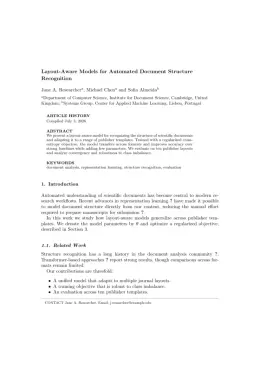
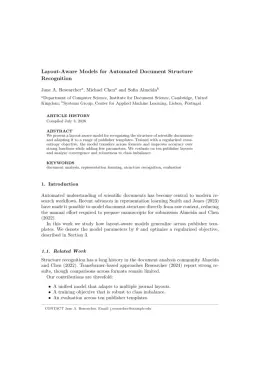
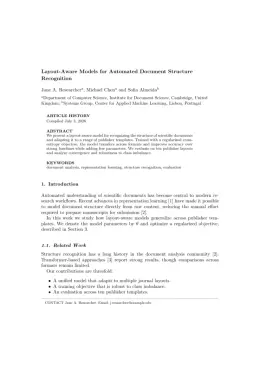
Write in a clean editor, then format for Diaspora Indigenous and Minority Education in one click — DocuGuru applies the official Taylor & Francis template with author–year references and exports a submission-ready PDF plus the editable LaTeX source. Free to start.

About the Diaspora Indigenous and Minority Education format

Diaspora Indigenous and Minority Education is a peer-reviewed journal published by Taylor & Francis, covering Global Education and Multiculturalism, Multilingual Education and Policy, Critical Race Theory in Education.

PublisherTaylor & Francis
Reference styleAuthor–year (Chicago, T&F)
Author–year — (Smith, 2023) in the text
Smith, Ada, Ben Jones, and Cara Lee. 2023. "A Representative Article Title." Diaspora Indigenous and Minority Education 12 (3): 45–58.

Formats any DOI in Diaspora Indigenous and Minority Education style. No sign-up.

Publishes research inGlobal Education and Multiculturalism Multilingual Education and Policy Critical Race Theory in Education Educator Training and Historical Pedagogy Indigenous and Place-Based Education
ISSN1559-5692
Citation impact (2-yr)1.02
h-index26
i10-index128
Total citations3,988
Top institutions publishing hereUniversity of Calgary
Journal websitewww.tandfonline.com
You getA submission-ready PDF and the editable LaTeX source — ready to submit.

Papers published in Diaspora Indigenous and Minority Education per year

22
2014
20
2015
32
2016
28
2017
16
2018
23
2019
24
2020
28
2021
30
2022
35
2023
44
2024
39
2025

Citation impact of Diaspora Indigenous and Minority Education by publication year

186
2014
235
2015
333
2016
292
2017
127
2018
235
2019
207
2020
173
2021
303
2022
124
2023
63
2024
26
2025

Citations each year’s papers have accumulated so far — the most recent years are still building up.

Most-cited papers in Diaspora Indigenous and Minority Education

Systemic Discrimination as a Barrier for Immigrant Teachers

Clea Schmidt · 12 Oct 2010

Using a theoretical framework provided by critical educational and postcolonial scholars, this article presents critical ethnographic research documenting the perspectives of various stakeholders involved in the process of immigrant teacher integration in the province of Manitoba. The author problematizes the assumption that successful integration is solely the responsibility of individual immigrants, and highlights the systemic…

<i>Colonialingualism</i>: colonial legacies, imperial mindsets, and inequitable practices in English language education

Paul J. Meighan · 6 Jun 2022

Translanguaging and plurilingual approaches in English Language Education (ELE) have been important for envisaging more equitable language education. However, the languages implemented in translanguaging or plurilingual classrooms predominantly reflect the knowledge and belief systems of dominant, nation-state, “official”, and/or colonial languages as opposed to those of endangered and Indigenous languages. This paper contends that privileging…

Family Language Policy: A Case Study of a Russian-Hebrew Bilingual Family: Toward a Theoretical Framework

Shulamit Kopeliovich · 15 Jul 2010

This article presents an in-depth, small-scale qualitative study of a Hebrew-Russian bilingual family with 8 children, and compares the parents' perspective on the family language policy with their children's evaluation of it. Spolsky's (2004 Spolsky, B. 2004. Language policy, Cambridge, , England: Cambridge University Press. [Google Scholar], 2009 Spolsky, B. 2009. Language management, Cambridge, ,…

Transforming Schools and Strengthening Leadership to Support the Educational and Psychosocial Needs of War-Affected Children Living in Canada

Jan Stewart · 1 Jul 2012

This article describes a qualitative research study that examined the educational experiences of refugee students who have immigrated to Canada. Many children from war-affected countries have been denied basic human entitlements, and their immigration to Canada represents hope for their futures. Evidence suggests that these students are further marginalized by an educational system that does…

The Educational Challenge of Unraveling the Fantasies of Ontological Security

Sharon Stein, Dallas Hunt, Rene Suša et al. · 2 Mar 2017

In this article we address the current context of intensified racialized state securitization by tracing its roots to the naturalized colonial architectures of everyday modern life—which we present through the metaphor of “the house modernity built.” While contemporary crises are often perceived to derive from external threats to the house, we argue that in fact…

Diaspora Indigenous and Minority Education template — frequently asked questions

How do I write a paper in the Diaspora Indigenous and Minority Education format?
In DocuGuru you write your manuscript in a normal editor — no LaTeX setup required — and select the Diaspora Indigenous and Minority Education template. When you export, DocuGuru compiles the paper into the official Taylor & Francis format and hands you a submission-ready PDF along with the editable LaTeX source.
What reference style does Diaspora Indigenous and Minority Education use?
Diaspora Indigenous and Minority Education uses Author–year (Chicago, T&F) references, shown as author–year markers such as (Smith, 2023) in the text. DocuGuru formats every in-text citation and the reference list in this exact style automatically. A reference appears like this: Smith, Ada, Ben Jones, and Cara Lee. 2023. "A Representative Article Title." Diaspora Indigenous and Minority Education 12 (3): 45–58.
Do I need to know LaTeX to submit to Diaspora Indigenous and Minority Education?
No. DocuGuru generates the interact LaTeX class and compiles the PDF for you in the background, so you get a Taylor & Francis-ready Diaspora Indigenous and Minority Education document without writing any LaTeX. If you do want it, the LaTeX source is included in the export.
Can I import an existing draft into the Diaspora Indigenous and Minority Education template?
Yes. Paste or upload your current manuscript — Word, LaTeX, Markdown, or plain text — and DocuGuru reflows it into the Diaspora Indigenous and Minority Education format with correct headings, figures, tables, and author–year citations.
Who publishes Diaspora Indigenous and Minority Education?
Diaspora Indigenous and Minority Education is a multidisciplinary journal published by Taylor & Francis. DocuGuru's Diaspora Indigenous and Minority Education template matches Taylor & Francis's official submission format.
Can I export a submission-ready Diaspora Indigenous and Minority Education PDF?
Yes — DocuGuru produces a PDF built with the official Diaspora Indigenous and Minority Education template (the interact class) that is ready to submit to Taylor & Francis, together with the matching LaTeX source files.
How much does the Diaspora Indigenous and Minority Education template cost?
You can start writing in the Diaspora Indigenous and Minority Education template for free. Exporting the final submission-ready Diaspora Indigenous and Minority Education PDF and LaTeX source is part of DocuGuru's paid plans — see the app for current pricing.

Use the Diaspora Indigenous and Minority Education template