Taylor & Francis

Cyber-Physical Systems Template

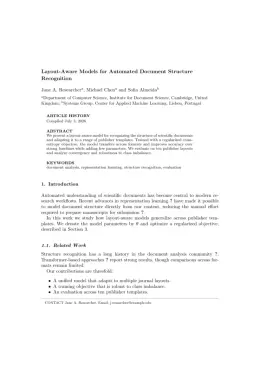
Write in a clean editor, then format for Cyber-Physical Systems in one click — DocuGuru applies the official Taylor & Francis template with author–year references and exports a submission-ready PDF plus the editable LaTeX source. Free to start.

About the Cyber-Physical Systems format

Cyber-Physical Systems is a peer-reviewed journal published by Taylor & Francis, covering Smart Grid Security and Resilience, Network Security and Intrusion Detection, Smart Grid Energy Management.

PublisherTaylor & Francis
Reference styleAuthor–year (Chicago, T&F)
Author–year — (Smith, 2023) in the text
Smith, Ada, Ben Jones, and Cara Lee. 2023. "A Representative Article Title." Cyber-Physical Systems 12 (3): 45–58.

Formats any DOI in Cyber-Physical Systems style. No sign-up.

Publishes research inSmart Grid Security and Resilience Network Security and Intrusion Detection Smart Grid Energy Management IoT and Edge/Fog Computing Microgrid Control and Optimization
ISSN2333-5777
Citation impact (2-yr)1.46
h-index21
i10-index41
Total citations1,351
Top institutions publishing hereGeorgia Institute of Technology
Journal websitewww.tandfonline.com
You getA submission-ready PDF and the editable LaTeX source — ready to submit.

Papers published in Cyber-Physical Systems per year

3
2014
8
2015
4
2016
6
2017
15
2018
13
2019
19
2020
22
2021
13
2022
9
2023
19
2024
20
2025

Citation impact of Cyber-Physical Systems by publication year

35
2014
124
2015
136
2016
117
2017
136
2018
198
2019
186
2020
186
2021
103
2022
47
2023
38
2024
32
2025

Citations each year’s papers have accumulated so far — the most recent years are still building up.

Most-cited papers in Cyber-Physical Systems

Adaptive control architectures for mitigating sensor attacks in cyber-physical systems

Tansel Yucelen, Wassim M. Haddad, Éric Féron · 1 Oct 2016

The accuracy of sensor measurements is critical to the design of high-performance control systems since sensor uncertainties can significantly deteriorate achievable closed-loop dynamical system performance. Sensor uncertainty can arise due to low sensor quality, sensor failure or detrimental environmental conditions. For example, relatively cheap sensor suites are used for low-cost, small-scale unmanned vehicle applications that…

RFID-based smart parking management system

Eirini Eleni Tsiropoulou, John S. Baras, Symeon Papavassiliou et al. · 4 Aug 2017

In this paper, the adoption of passive Radio Frequency Identification (RFID) tag-to-tag communication paradigm within the context of a smart parking system is evangelised, in terms of achieving improved energy-efficiency and operational effectiveness. To demonstrate that the joint routing and RFID readers’ transmission power minimisation problem is studied, considering tag-to-tag communication. The superiority of the…

Battery draining attacks against edge computing nodes in IoT networks

Ryan Smith, Daniel Palin, Philokypros P. Ioulianou et al. · 20 Jan 2020

Many IoT devices, especially those deployed at the network edge have limited power resources. In this work, we study the effects of a variety of battery draining attacks against edge nodes. Specifically, we implemented hello flooding, packet flooding, selective forwarding, rank attack, and versioning attack in ContikiOS and simulated them in the Cooja simulator. We…

A survey of video violence detection

Huiling Yao, Xing Hu · 24 Jun 2021

As one of the important applications of intelligent video surveillance, violent behaviour detection (VioBD) plays a crucial role in public security and safety. As a particular type of behaviour recognition, VioBD aims to identify whether the behaviours that occurred in the scene is aggressive, such as fighting and assault. To comprehensively analyse the current state…

Leveraging the power of quantum computing for breaking RSA encryption

Moolchand Sharma, Vikas Choudhary, R. S. Bhatia et al. · 3 Sep 2020

Encryption is the process of securing confidential data that bars a third party’s access to the information.RSA encryption utilises the property of complexity classes wherein the problem of prime integer factorization lies inside the Non-Polynomial time (NP-Hard) class, which makes it impervious to classical computers. Since it is so hard to break even for a…


Cyber-Physical Systems template — frequently asked questions

How do I write a paper in the Cyber-Physical Systems format?
In DocuGuru you write your manuscript in a normal editor — no LaTeX setup required — and select the Cyber-Physical Systems template. When you export, DocuGuru compiles the paper into the official Taylor & Francis format and hands you a submission-ready PDF along with the editable LaTeX source.
What reference style does Cyber-Physical Systems use?
Cyber-Physical Systems uses Author–year (Chicago, T&F) references, shown as author–year markers such as (Smith, 2023) in the text. DocuGuru formats every in-text citation and the reference list in this exact style automatically. A reference appears like this: Smith, Ada, Ben Jones, and Cara Lee. 2023. "A Representative Article Title." Cyber-Physical Systems 12 (3): 45–58.
Do I need to know LaTeX to submit to Cyber-Physical Systems?
No. DocuGuru generates the interact LaTeX class and compiles the PDF for you in the background, so you get a Taylor & Francis-ready Cyber-Physical Systems document without writing any LaTeX. If you do want it, the LaTeX source is included in the export.
Can I import an existing draft into the Cyber-Physical Systems template?
Yes. Paste or upload your current manuscript — Word, LaTeX, Markdown, or plain text — and DocuGuru reflows it into the Cyber-Physical Systems format with correct headings, figures, tables, and author–year citations.
Who publishes Cyber-Physical Systems?
Cyber-Physical Systems is a multidisciplinary journal published by Taylor & Francis. DocuGuru's Cyber-Physical Systems template matches Taylor & Francis's official submission format.
Can I export a submission-ready Cyber-Physical Systems PDF?
Yes — DocuGuru produces a PDF built with the official Cyber-Physical Systems template (the interact class) that is ready to submit to Taylor & Francis, together with the matching LaTeX source files.
How much does the Cyber-Physical Systems template cost?
You can start writing in the Cyber-Physical Systems template for free. Exporting the final submission-ready Cyber-Physical Systems PDF and LaTeX source is part of DocuGuru's paid plans — see the app for current pricing.
Use the Cyber-Physical Systems template