Taylor & Francis

Current Eye Research Template

Write in a clean editor, then format for Current Eye Research in one click — DocuGuru applies the official Taylor & Francis template with author–year references and exports a submission-ready PDF plus the editable LaTeX source. Free to start.

About the Current Eye Research format

Current Eye Research is a peer-reviewed journal published by Taylor & Francis, covering Glaucoma and retinal disorders, Retinal Diseases and Treatments, Ocular Surface and Contact Lens.

PublisherTaylor & Francis
Reference styleAuthor–year (Chicago, T&F)
Author–year — (Smith, 2023) in the text
Smith, Ada, Ben Jones, and Cara Lee. 2023. "A Representative Article Title." Current Eye Research 12 (3): 45–58.

Formats any DOI in Current Eye Research style. No sign-up.

Publishes research inGlaucoma and retinal disorders Retinal Diseases and Treatments Ocular Surface and Contact Lens Corneal Surgery and Treatments Corneal surgery and disorders
ISSN0271-3683
Citation impact (2-yr)1.68
h-index119
i10-index4,451
Total citations166,423
Top institutions publishing hereHarvard University
Journal websitewww.tandfonline.com
You getA submission-ready PDF and the editable LaTeX source — ready to submit.

Papers published in Current Eye Research per year

236
2014
172
2015
192
2016
213
2017
210
2018
237
2019
246
2020
192
2021
179
2022
146
2023
154
2024
161
2025

Citation impact of Current Eye Research by publication year

6.1K
2014
3.9K
2015
4.1K
2016
4.3K
2017
3.4K
2018
4.5K
2019
3K
2020
1.9K
2021
1.7K
2022
785
2023
445
2024
188
2025

Citations each year’s papers have accumulated so far — the most recent years are still building up.

Most-cited papers in Current Eye Research

Revised formulas for summarizing retinal vessel diameters

Michael D. Knudtson, Kristine E. Lee, Larry D. Hubbard et al. · 1 Jan 2003

Background/Purpose. Recent findings suggest that an objective assessment of retinal vessel caliber from fundus photographs provide information about the association of microvascular characteristics with macrovascular disease. Current methods used to quantify retinal vessel caliber, introduced by Parr(1,2) and Hubbard,(3) are not independent of scale and are affected by the number of vessels. To improve upon…

A Review of Antimicrobial Peptides and Their Therapeutic Potential as Anti-Infective Drugs

Y. Jerold Gordon, Eric G. Romanowski, Alison M. McDermott · 1 Jan 2005

PURPOSE: Antimicrobial peptides (AMPs) are an essential part of innate immunity that evolved in most living organisms over 2.6 billion years to combat microbial challenge. These small cationic peptides are multifunctional as effectors of innate immunity on skin and mucosal surfaces and have demonstrated direct antimicrobial activity against various bacteria, viruses, fungi, and parasites. This…

Increased resistance of crosslinked cornea against enzymatic digestion

Eberhard Spoerl, Gregor Wollensak, Theo Seiler · 1 Jan 2004

PURPOSE: Collagen-crosslinking using combined riboflavin/ UVA treatment has been developed by us as a new treatment for keratoconus by stiffening the collagenous matrix. Recently, we have started to use the same method for the treatment of corneal ulcers. The aim of the present study was to evaluate the influence of the crosslinking treatment on the…

Growth factor mRNA and protein in preserved human amniotic membrane

Noriko Koizumi, Tsutomu Inatomi, Chie Sotozono et al. · 1 Jan 2000

PURPOSE: To investigate the expression of growth factor mRNA and the level of growth factor protein in preserved human amniotic membrane (AM). METHODS: RT-PCR was used to examine the expression of mRNA for eight growth factors (EGF, TGF-alpha, KGF, HGF, bFGF, TGF-beta1, -beta2, -beta3) and two growth factor receptors (KGFR and HGFR) in human AM…

Altered cytokine balance in the tear fluid and conjunctiva of patients with Sjögren's syndrome keratoconjunctivitis sicca

Stephen C. Pflugfelder, David Jones, Zhonghua Ji et al. · 1 Jan 1999

PURPOSE: To compare epidermal growth factor (EGF) concentration in tear fluid and levels of inflammatory cytokines in the conjunctival epithelium of patients with Sjögren's syndrome keratoconjunctivitis sicca with those of normal controls. METHODS: Schirmer 1 tear testing, corneal fluorescein staining and conjunctival impression cytology for quantitation of goblet cell density were performed in ten patients…

Current Eye Research template — frequently asked questions

How do I write a paper in the Current Eye Research format?
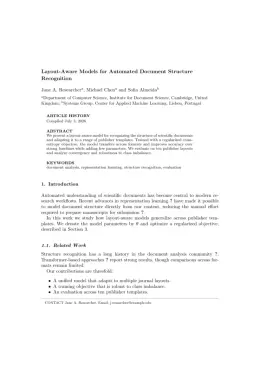
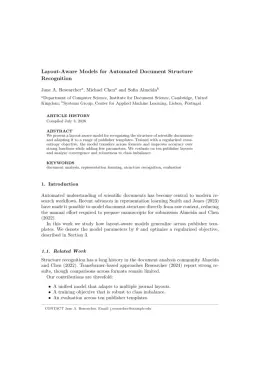
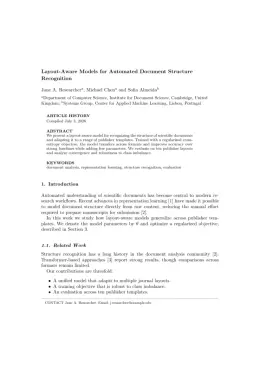
In DocuGuru you write your manuscript in a normal editor — no LaTeX setup required — and select the Current Eye Research template. When you export, DocuGuru compiles the paper into the official Taylor & Francis format and hands you a submission-ready PDF along with the editable LaTeX source.
What reference style does Current Eye Research use?
Current Eye Research uses Author–year (Chicago, T&F) references, shown as author–year markers such as (Smith, 2023) in the text. DocuGuru formats every in-text citation and the reference list in this exact style automatically. A reference appears like this: Smith, Ada, Ben Jones, and Cara Lee. 2023. "A Representative Article Title." Current Eye Research 12 (3): 45–58.
Do I need to know LaTeX to submit to Current Eye Research?
No. DocuGuru generates the interact LaTeX class and compiles the PDF for you in the background, so you get a Taylor & Francis-ready Current Eye Research document without writing any LaTeX. If you do want it, the LaTeX source is included in the export.
Can I import an existing draft into the Current Eye Research template?
Yes. Paste or upload your current manuscript — Word, LaTeX, Markdown, or plain text — and DocuGuru reflows it into the Current Eye Research format with correct headings, figures, tables, and author–year citations.
Who publishes Current Eye Research?
Current Eye Research is a multidisciplinary journal published by Taylor & Francis. DocuGuru's Current Eye Research template matches Taylor & Francis's official submission format.
Can I export a submission-ready Current Eye Research PDF?
Yes — DocuGuru produces a PDF built with the official Current Eye Research template (the interact class) that is ready to submit to Taylor & Francis, together with the matching LaTeX source files.
How much does the Current Eye Research template cost?
You can start writing in the Current Eye Research template for free. Exporting the final submission-ready Current Eye Research PDF and LaTeX source is part of DocuGuru's paid plans — see the app for current pricing.
Use the Current Eye Research template