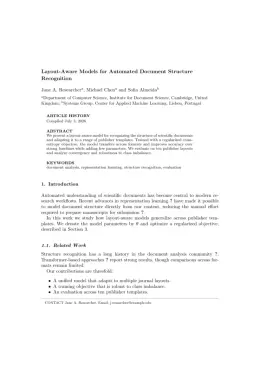
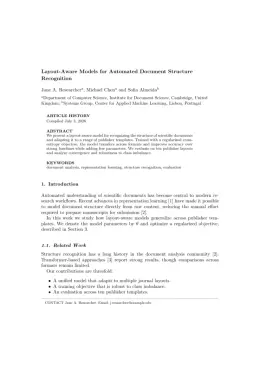
Taylor & Francis

Critical Reviews in Plant Sciences Template

Write in a clean editor, then format for Critical Reviews in Plant Sciences in one click — DocuGuru applies the official Taylor & Francis template with author–year references and exports a submission-ready PDF plus the editable LaTeX source. Free to start.

About the Critical Reviews in Plant Sciences format

Critical Reviews in Plant Sciences is a peer-reviewed journal published by Taylor & Francis, covering Plant Molecular Biology Research, Plant tissue culture and regeneration, Photosynthetic Processes and Mechanisms.

PublisherTaylor & Francis
Reference styleAuthor–year (Chicago, T&F)
Author–year — (Smith, 2023) in the text
Smith, Ada, Ben Jones, and Cara Lee. 2023. "A Representative Article Title." Critical Reviews in Plant Sciences 12 (3): 45–58.

Formats any DOI in Critical Reviews in Plant Sciences style. No sign-up.

Publishes research inPlant Molecular Biology Research Plant tissue culture and regeneration Photosynthetic Processes and Mechanisms Plant Stress Responses and Tolerance Legume Nitrogen Fixing Symbiosis
ISSN0735-2689
Citation impact (2-yr)11.29
h-index186
i10-index837
Total citations118,059
Top institutions publishing hereAgricultural Research Service
Journal websitewww.tandfonline.com
You getA submission-ready PDF and the editable LaTeX source — ready to submit.

Papers published in Critical Reviews in Plant Sciences per year

39
2014
9
2015
25
2016
20
2017
18
2018
17
2019
20
2020
20
2021
18
2022
23
2023
14
2024
15
2025

Citation impact of Critical Reviews in Plant Sciences by publication year

5.5K
2014
759
2015
2.1K
2016
2.5K
2017
984
2018
792
2019
1.4K
2020
906
2021
529
2022
357
2023
298
2024
80
2025

Citations each year’s papers have accumulated so far — the most recent years are still building up.

Most-cited papers in Critical Reviews in Plant Sciences

Drought and Salt Tolerance in Plants

Dorothea Bartels, Ramanjulu Sunkar · 23 Feb 2005

Agricultural productivity worldwide is subject to increasing environmental constraints, particularly to drought and salinity due to their high magnitude of impact and wide distribution. Traditional breeding programs trying to improve abiotic stress tolerance have had some success, but are limited by the multigenic nature of the trait. Tolerant plants such as Craterostigma plantagenium, Mesembryanthemum crystallinum,…

2,635 citations Cite SaveGo to paper →
Plant Volatiles: Recent Advances and Future Perspectives

Natalia Dudareva, Florence Negre, Dinesh A. Nagegowda et al. · 19 Sep 2006

Volatile compounds act as a language that plants use for their communication and interaction with the surrounding environment. To date, a total of 1700 volatile compounds have been isolated from more than 90 plant families. These volatiles, released from leaves, flowers, and fruits into the atmosphere and from roots into the soil, defend plants against…

1,380 citations Cite SaveGo to paper →
Plant Growth-Promoting Effects of Diazotrophs in the Rhizosphere

Sofie Dobbelaere, Jos Vanderleyden, Yaacov Okon · 1 Mar 2003

Because of their ability to transform atmospheric N2 into ammonia that can be used by the plant, researchers were originally very optimistic about the potential of associative diazotrophic bacteria to promote the growth of many cereals and grasses. However, multiple inoculation experiments during recent decades failed to show a substantial contribution of Biological Nitrogen Fixation…

1,104 citations Cite SaveGo to paper →
Heat Stress in Wheat during Reproductive and Grain-Filling Phases

Muhammad Farooq, Helen Bramley, Jairo A. Palta et al. · 1 Nov 2011

Ambient temperatures have increased since the beginning of the century and are predicted to continue rising under climate change. Such increases in temperature can cause heat stress: a severe threat to wheat production in many countries, particularly when it occurs during reproductive and grain-filling phases. Heat stress reduces plant photosynthetic capacity through metabolic limitations and…

1,029 citations Cite SaveGo to paper →
Plant Disease Severity Estimated Visually, by Digital Photography and Image Analysis, and by Hyperspectral Imaging

Clive H. Bock, Gavin H. Poole, P. E. Parker et al. · 10 Mar 2010

Reliable, precise and accurate estimates of disease severity are important for predicting yield loss, monitoring and forecasting epidemics, for assessing crop germplasm for disease resistance, and for understanding fundamental biological processes including co-evolution. Disease assessments that are inaccurate and/or imprecise might lead to faulty conclusions being drawn from the data, which in turn can lead…

Critical Reviews in Plant Sciences template — frequently asked questions

How do I write a paper in the Critical Reviews in Plant Sciences format?
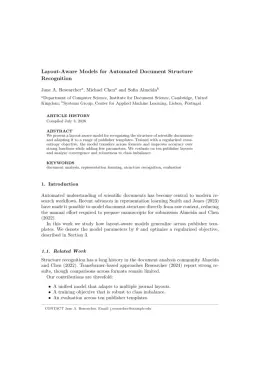
In DocuGuru you write your manuscript in a normal editor — no LaTeX setup required — and select the Critical Reviews in Plant Sciences template. When you export, DocuGuru compiles the paper into the official Taylor & Francis format and hands you a submission-ready PDF along with the editable LaTeX source.
What reference style does Critical Reviews in Plant Sciences use?
Critical Reviews in Plant Sciences uses Author–year (Chicago, T&F) references, shown as author–year markers such as (Smith, 2023) in the text. DocuGuru formats every in-text citation and the reference list in this exact style automatically. A reference appears like this: Smith, Ada, Ben Jones, and Cara Lee. 2023. "A Representative Article Title." Critical Reviews in Plant Sciences 12 (3): 45–58.
Do I need to know LaTeX to submit to Critical Reviews in Plant Sciences?
No. DocuGuru generates the interact LaTeX class and compiles the PDF for you in the background, so you get a Taylor & Francis-ready Critical Reviews in Plant Sciences document without writing any LaTeX. If you do want it, the LaTeX source is included in the export.
Can I import an existing draft into the Critical Reviews in Plant Sciences template?
Yes. Paste or upload your current manuscript — Word, LaTeX, Markdown, or plain text — and DocuGuru reflows it into the Critical Reviews in Plant Sciences format with correct headings, figures, tables, and author–year citations.
Who publishes Critical Reviews in Plant Sciences?
Critical Reviews in Plant Sciences is a multidisciplinary journal published by Taylor & Francis. DocuGuru's Critical Reviews in Plant Sciences template matches Taylor & Francis's official submission format.
Can I export a submission-ready Critical Reviews in Plant Sciences PDF?
Yes — DocuGuru produces a PDF built with the official Critical Reviews in Plant Sciences template (the interact class) that is ready to submit to Taylor & Francis, together with the matching LaTeX source files.
How much does the Critical Reviews in Plant Sciences template cost?
You can start writing in the Critical Reviews in Plant Sciences template for free. Exporting the final submission-ready Critical Reviews in Plant Sciences PDF and LaTeX source is part of DocuGuru's paid plans — see the app for current pricing.
Use the Critical Reviews in Plant Sciences template