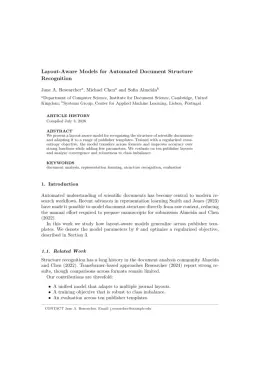
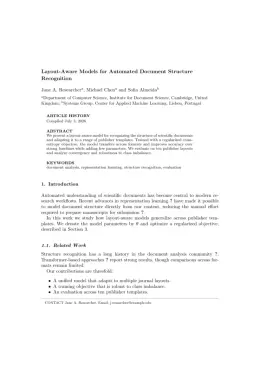
Taylor & Francis

Critical Reviews in Food Science and Nutrition Template

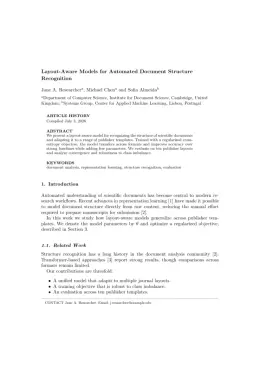
Write in a clean editor, then format for Critical Reviews in Food Science and Nutrition in one click — DocuGuru applies the official Taylor & Francis template with author–year references and exports a submission-ready PDF plus the editable LaTeX source. Free to start.

About the Critical Reviews in Food Science and Nutrition format

Critical Reviews in Food Science and Nutrition is a peer-reviewed journal published by Taylor & Francis, covering Phytochemicals and Antioxidant Activities, Food composition and properties, Proteins in Food Systems.

PublisherTaylor & Francis
Reference styleAuthor–year (Chicago, T&F)
Author–year — (Smith, 2023) in the text
Smith, Ada, Ben Jones, and Cara Lee. 2023. "A Representative Article Title." Critical Reviews in Food Science and Nutrition 12 (3): 45–58.

Formats any DOI in Critical Reviews in Food Science and Nutrition style. No sign-up.

Publishes research inPhytochemicals and Antioxidant Activities Food composition and properties Proteins in Food Systems Meat and Animal Product Quality Protein Hydrolysis and Bioactive Peptides
ISSN1040-8398
Citation impact (2-yr)8.16
h-index301
i10-index4,387
Total citations467,403
Top institutions publishing hereState Key Laboratory of Food Science and Technology
Journal websitewww.tandfonline.com
You getA submission-ready PDF and the editable LaTeX source — ready to submit.

Papers published in Critical Reviews in Food Science and Nutrition per year

74
2014
354
2015
149
2016
214
2017
205
2018
198
2019
421
2020
587
2021
664
2022
472
2023
249
2024
305
2025

Citation impact of Critical Reviews in Food Science and Nutrition by publication year

7.8K
2014
44.2K
2015
18.6K
2016
21.7K
2017
25.3K
2018
25.5K
2019
35.7K
2020
34.2K
2021
27.2K
2022
13.4K
2023
3.8K
2024
1.6K
2025

Citations each year’s papers have accumulated so far — the most recent years are still building up.

Most-cited papers in Critical Reviews in Food Science and Nutrition

Dietary Polyphenols and the Prevention of Diseases

Augustin Scalbert, Claudine Manach, Christine Morand et al. · 1 Jun 2005

Polyphenols are the most abundant antioxidants in the diet and are widespread constituents of fruits, vegetables, cereals, dry legumes, chocolate, and beverages, such as tea, coffee, or wine. Experimental studies on animals or cultured human cell lines support a role of polyphenols in the prevention of cardiovascular diseases, cancers, neurodegenerative diseases, diabetes, or osteoporosis. However,…

2,961 citations Cite SaveGo to paper →
Tannins and Human Health: A Review

King‐Thom Chung, Tit-Yee Wong, Cheng–I Wei et al. · 1 Aug 1998

Tannins (commonly referred to as tannic acid) are water-soluble polyphenols that are present in many plant foods. They have been reported to be responsible for decreases in feed intake, growth rate, feed efficiency, net metabolizable energy, and protein digestibility in experimental animals. Therefore, foods rich in tannins are considered to be of low nutritional value.…

1,987 citations Cite SaveGo to paper →
Tea Catechins and Polyphenols: Health Effects, Metabolism, and Antioxidant Functions

Jane V. Higdon, Balz Frei · 1 Jan 2003

Increasing interest in the health benefits of tea has led to the inclusion of tea extracts in dietary supplements and functional foods. However, epidemiologic evidence regarding the effects of tea consumption on cancer and cardiovascular disease risk is conflicting. While tea contains a number of bioactive chemicals, it is particularly rich in catechins, of which…

1,856 citations Cite SaveGo to paper →
Food-Grade Nanoemulsions: Formulation, Fabrication, Properties, Performance, Biological Fate, and Potential Toxicity

David Julian McClements, Jiajia Rao · 24 Mar 2011

Nanoemulsions fabricated from food-grade ingredients are being increasingly utilized in the food industry to encapsulate, protect, and deliver lipophilic functional components, such as biologically-active lipids (e.g., ω-3 fatty acids, conjugated linoleic acid) and oil-soluble flavors, vitamins, preservatives, and nutraceuticals. The small size of the particles in nanoemulsions (r<100 nm) means that they have a number…

1,595 citations Cite SaveGo to paper →

Critical Reviews in Food Science and Nutrition template — frequently asked questions

How do I write a paper in the Critical Reviews in Food Science and Nutrition format?
In DocuGuru you write your manuscript in a normal editor — no LaTeX setup required — and select the Critical Reviews in Food Science and Nutrition template. When you export, DocuGuru compiles the paper into the official Taylor & Francis format and hands you a submission-ready PDF along with the editable LaTeX source.
What reference style does Critical Reviews in Food Science and Nutrition use?
Critical Reviews in Food Science and Nutrition uses Author–year (Chicago, T&F) references, shown as author–year markers such as (Smith, 2023) in the text. DocuGuru formats every in-text citation and the reference list in this exact style automatically. A reference appears like this: Smith, Ada, Ben Jones, and Cara Lee. 2023. "A Representative Article Title." Critical Reviews in Food Science and Nutrition 12 (3): 45–58.
Do I need to know LaTeX to submit to Critical Reviews in Food Science and Nutrition?
No. DocuGuru generates the interact LaTeX class and compiles the PDF for you in the background, so you get a Taylor & Francis-ready Critical Reviews in Food Science and Nutrition document without writing any LaTeX. If you do want it, the LaTeX source is included in the export.
Can I import an existing draft into the Critical Reviews in Food Science and Nutrition template?
Yes. Paste or upload your current manuscript — Word, LaTeX, Markdown, or plain text — and DocuGuru reflows it into the Critical Reviews in Food Science and Nutrition format with correct headings, figures, tables, and author–year citations.
Who publishes Critical Reviews in Food Science and Nutrition?
Critical Reviews in Food Science and Nutrition is a multidisciplinary journal published by Taylor & Francis. DocuGuru's Critical Reviews in Food Science and Nutrition template matches Taylor & Francis's official submission format.
Can I export a submission-ready Critical Reviews in Food Science and Nutrition PDF?
Yes — DocuGuru produces a PDF built with the official Critical Reviews in Food Science and Nutrition template (the interact class) that is ready to submit to Taylor & Francis, together with the matching LaTeX source files.
How much does the Critical Reviews in Food Science and Nutrition template cost?
You can start writing in the Critical Reviews in Food Science and Nutrition template for free. Exporting the final submission-ready Critical Reviews in Food Science and Nutrition PDF and LaTeX source is part of DocuGuru's paid plans — see the app for current pricing.
Use the Critical Reviews in Food Science and Nutrition template