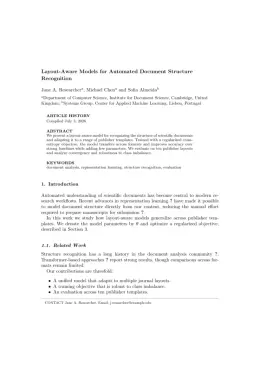
About the Cognitive Neuropsychiatry format
Cognitive Neuropsychiatry is a peer-reviewed journal published by Taylor & Francis, covering Schizophrenia research and treatment, Mental Health and Psychiatry, Neural and Behavioral Psychology Studies.
| Publisher | Taylor & Francis |
|---|
| Reference style | Author–year (Chicago, T&F) Author–year — (Smith, 2023) in the text
Smith, Ada, Ben Jones, and Cara Lee. 2023. "A Representative Article Title." Cognitive Neuropsychiatry 12 (3): 45–58.
Formats any DOI in Cognitive Neuropsychiatry style. No sign-up.
|
|---|
| Publishes research in | Schizophrenia research and treatment Mental Health and Psychiatry Neural and Behavioral Psychology Studies Psychosomatic Disorders and Their Treatments Face Recognition and Perception |
|---|
| ISSN | 1354-6805 |
|---|
| Citation impact (2-yr) | 1.97 |
|---|
| h-index | 82 |
|---|
| i10-index | 567 |
|---|
| Total citations | 28,146 |
|---|
| Top institutions publishing here | Macquarie University |
|---|
| Journal website | www.tandfonline.com |
|---|
| You get | A submission-ready PDF and the editable LaTeX source — ready to submit. |
|---|
Papers published in Cognitive Neuropsychiatry per year
Citation impact of Cognitive Neuropsychiatry by publication year
Citations each year’s papers have accumulated so far — the most recent years are still building up.
Most-cited papers in Cognitive Neuropsychiatry
Theory of mind in schizophrenia: A critical review
Leigh Harrington, Richard J. Siegert, John McClure · 1 Aug 2005
INTRODUCTION: Frith's (1992) neuropsychological theory of schizophrenia posits a number of fundamental cognitive impairments underpinning the characteristic symptoms of this disorder. One of these is an impairment in the ability to correctly interpret and predict the mental states of other people, so-called theory of mind (ToM). There is already a substantial body of evidence that…
The Ambiguous Intentions Hostility Questionnaire (AIHQ): A new measure for evaluating hostile social-cognitive biases in paranoia
Dennis R. Combs, David L. Penn, Melanie Wicher et al. · 1 Mar 2007
INTRODUCTION: This study reports on the development of a new measure of hostile social-cognitive biases for use in paranoia research, the Ambiguous Intentions Hostility Questionnaire (AIHQ). The AIHQ is comprised of a variety of negative situations that differ in terms of intentionality. Items were developed to reflect causes that were ambiguous, intentional, and accidental in…
Are Children with Autism Deaf to Gricean Maxims?
Luca Surian · 1 Feb 1996
Department of Psychology, Birkbeck College, University of London, UK High-functioning children with autism show a severe deficit in the development of pragmatics whereas their knowledge of syntax and morphology is relatively intact. In this study we investigated further their selective communication impairment by comparing them with children with specific language impairment (SLI) and normally developing…
Hopping, skipping or jumping to conclusions? Clarifying the role of the JTC bias in delusions
Cordelia Fine, Mark Gardner, Jillian Craigie et al. · 6 Dec 2006
INTRODUCTION: There is substantial evidence that patients with delusions exhibit a reasoning bias--known as the "jumping to conclusions" (JTC) bias--which leads them to accept hypotheses as correct on the basis of less evidence than controls. We address three questions concerning the JTC bias that require clarification. Firstly, what is the best measure of the JTC…
A meta-analytic review of verbal fluency deficits in schizophrenia relative to other neurocognitive deficits
Julie D. Henry, John R. Crawford · 13 Dec 2004
INTRODUCTION: A prominent view in the neuropsychological literature is that schizophrenia is particularly associated with executive dysfunction, yet in a meta-analytic review it was concluded that, relative to their general level of intellectual functioning, schizophrenics are not disproportionately impaired on a measure of this construct, the Wisconsin Card Sorting Test (WCST). However, verbal fluency tests…