Taylor & Francis

Chemistry and Ecology Template

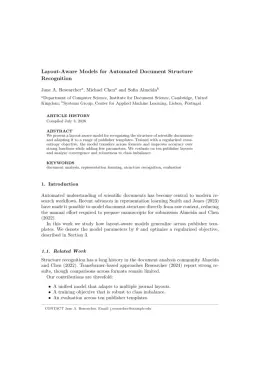
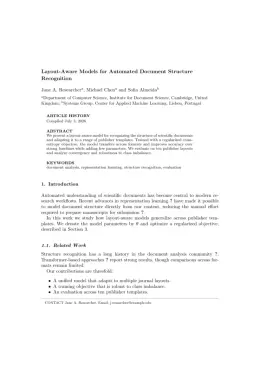
Write in a clean editor, then format for Chemistry and Ecology in one click — DocuGuru applies the official Taylor & Francis template with numbered references and exports a submission-ready PDF plus the editable LaTeX source. Free to start.

About the Chemistry and Ecology format

Chemistry and Ecology is a peer-reviewed journal published by Taylor & Francis, covering Heavy metals in environment, Environmental Toxicology and Ecotoxicology, Marine and coastal ecosystems.

PublisherTaylor & Francis
Reference styleNumbered (Vancouver/NLM)
Numbered — [1], [2] in the text
1. Smith A, Jones B, Lee C. A representative article title. Chemistry and Ecology. 2023;12(3):45–58.

Formats any DOI in Chemistry and Ecology style. No sign-up.

Publishes research inHeavy metals in environment Environmental Toxicology and Ecotoxicology Marine and coastal ecosystems Water Quality and Pollution Assessment Marine Biology and Ecology Research
ISSN0275-7540
Citation impact (2-yr)5.11
h-index58
i10-index887
Total citations29,291
Top institutions publishing hereUniversity of Genoa
Journal websitewww.tandfonline.com
You getA submission-ready PDF and the editable LaTeX source — ready to submit.

Papers published in Chemistry and Ecology per year

64
2014
46
2015
67
2016
76
2017
69
2018
53
2019
67
2020
40
2021
66
2022
53
2023
75
2024
57
2025

Citation impact of Chemistry and Ecology by publication year

1.1K
2014
806
2015
945
2016
1.2K
2017
1K
2018
766
2019
993
2020
397
2021
489
2022
382
2023
654
2024
129
2025

Citations each year’s papers have accumulated so far — the most recent years are still building up.

Most-cited papers in Chemistry and Ecology

Estrogenic Effects of Effluents from Sewage Treatment Works

C. E. Purdom, P. A. Hardiman, V. V. J. Bye et al. · 1 Jan 1994

Abstract The occurrence of hermaphrodite fish in the lagoons of sewage treatment works led us to hypothesize that sewage effluent might contain a substance, or substances, estrogenic to fish. to test this hypothesis, we placed cages containing rainbow trout in the effluent from sewage-treatment works, and one to three weeks later measured the vitellogenin concentration…

1,687 citations Cite SaveGo to paper →
Internal eutrophication: How it works and what to do about it—a review

Alfons J. P. Smolders, Leon P. M. Lamers, E.C.H.E.T. Lucassen et al. · 30 Mar 2006

In the 1980s and 1990s, it became increasingly clear that changes in external nutrient loads alone could not entirely explain the severe eutrophication of surface waters in the Netherlands. Nowadays, ‘internal eutrophication’ has become a widely accepted term in Dutch water management practice to describe the eutrophication of an ecosystem without additional external input of…

Environmental persistence, bioaccumulation, and ecotoxicology of heavy metals

Great Iruoghene Edo, Princess Oghenekeno Samuel, Gift Onyinyechi Oloni et al. · 22 Jan 2024

Heavy metals, pervasive in the environment due to natural processes and human activities, pose substantial threats to ecosystems and human health. This study aims to delve into the sources, contamination pathways in natural waters, and subsequent bioaccumulation of heavy metals across various organisms. The overview encompasses an exploration of the environmental persistence, bioaccumulation dynamics, and…

Some aspects of heavy metals contamination remediation and role of biosurfactants

Leonie Asfora Sarubbo, Rivaldo B. da Rocha, Juliana M. Luna et al. · 5 Nov 2015

Contamination by heavy metals is the result of different industrial activities. The presence of heavy metals in soil and water causes serious problems, as these materials are not biodegradable and do contaminate both biological systems and the subsoil. Biological surface-active compounds otherwise known as biosurfactants in general and rhamnolipids biosurfactants in particular have been successfully…

It's a dirty job but someone has to do it: The role of marine benthic macrofauna in organic matter turnover and nutrient recycling to the water column

David T. Welsh · 1 Oct 2003

Benthic macrofaunal populations through their feeding, bioturbation, burrow construction and sediment irrigation activities have profound influences on organic matter inputs to marine sediments (biodeposition) and on the vertical distribution of deposited organic matter within the sediment. These effects in turn influence the rates and pathways of organic matter mineralisation, and element cycles. Similarly, bioturbation, burrow…

Chemistry and Ecology template — frequently asked questions

How do I write a paper in the Chemistry and Ecology format?
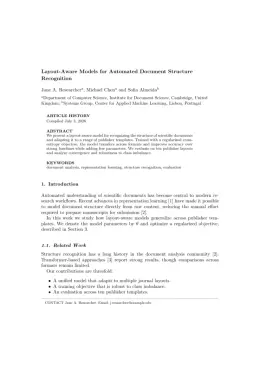
In DocuGuru you write your manuscript in a normal editor — no LaTeX setup required — and select the Chemistry and Ecology template. When you export, DocuGuru compiles the paper into the official Taylor & Francis format and hands you a submission-ready PDF along with the editable LaTeX source.
What reference style does Chemistry and Ecology use?
Chemistry and Ecology uses Numbered (Vancouver/NLM) references, shown as numbered [1], [2] markers in the text. DocuGuru formats every in-text citation and the reference list in this exact style automatically. A reference appears like this: 1. Smith A, Jones B, Lee C. A representative article title. Chemistry and Ecology. 2023;12(3):45–58.
Do I need to know LaTeX to submit to Chemistry and Ecology?
No. DocuGuru generates the interact LaTeX class and compiles the PDF for you in the background, so you get a Taylor & Francis-ready Chemistry and Ecology document without writing any LaTeX. If you do want it, the LaTeX source is included in the export.
Can I import an existing draft into the Chemistry and Ecology template?
Yes. Paste or upload your current manuscript — Word, LaTeX, Markdown, or plain text — and DocuGuru reflows it into the Chemistry and Ecology format with correct headings, figures, tables, and numbered citations.
Who publishes Chemistry and Ecology?
Chemistry and Ecology is a multidisciplinary journal published by Taylor & Francis. DocuGuru's Chemistry and Ecology template matches Taylor & Francis's official submission format.
Can I export a submission-ready Chemistry and Ecology PDF?
Yes — DocuGuru produces a PDF built with the official Chemistry and Ecology template (the interact class) that is ready to submit to Taylor & Francis, together with the matching LaTeX source files.
How much does the Chemistry and Ecology template cost?
You can start writing in the Chemistry and Ecology template for free. Exporting the final submission-ready Chemistry and Ecology PDF and LaTeX source is part of DocuGuru's paid plans — see the app for current pricing.
Use the Chemistry and Ecology template