Taylor & Francis

Chemical Engineering Communications Template

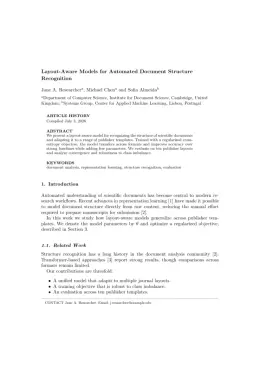
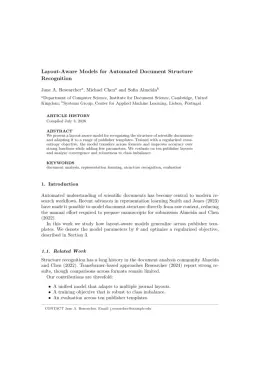
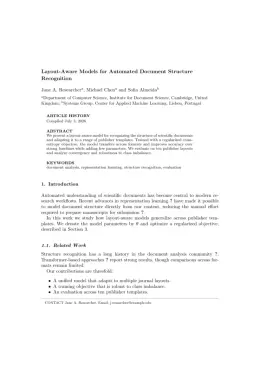
Write in a clean editor, then format for Chemical Engineering Communications in one click — DocuGuru applies the official Taylor & Francis template with author–year references and exports a submission-ready PDF plus the editable LaTeX source. Free to start.

About the Chemical Engineering Communications format

Chemical Engineering Communications is a peer-reviewed journal published by Taylor & Francis, covering Fluid Dynamics and Mixing, Advanced Control Systems Optimization, Phase Equilibria and Thermodynamics.

PublisherTaylor & Francis
Reference styleAuthor–year (Chicago, T&F)
Author–year — (Smith, 2023) in the text
Smith, Ada, Ben Jones, and Cara Lee. 2023. "A Representative Article Title." Chemical Engineering Communications 12 (3): 45–58.

Formats any DOI in Chemical Engineering Communications style. No sign-up.

Publishes research inFluid Dynamics and Mixing Advanced Control Systems Optimization Phase Equilibria and Thermodynamics Process Optimization and Integration Granular flow and fluidized beds
ISSN0098-6445
Citation impact (2-yr)2.19
h-index96
i10-index2,512
Total citations93,286
Top institutions publishing hereUniversity at Buffalo, State University of New York
Journal websitewww.tandfonline.com
You getA submission-ready PDF and the editable LaTeX source — ready to submit.

Papers published in Chemical Engineering Communications per year

247
2014
84
2015
127
2016
136
2017
202
2018
210
2019
118
2020
137
2021
91
2022
74
2023
131
2024
135
2025

Citation impact of Chemical Engineering Communications by publication year

5.1K
2014
1.2K
2015
2.2K
2016
2.5K
2017
3.5K
2018
3.9K
2019
1.8K
2020
1.5K
2021
533
2022
488
2023
545
2024
175
2025

Citations each year’s papers have accumulated so far — the most recent years are still building up.

Most-cited papers in Chemical Engineering Communications

ESTIMATION OF PURE-COMPONENT PROPERTIES FROM GROUP-CONTRIBUTIONS

Kevin G. Joback, Robert C. Reid · 1 Jul 1987

Abstract Simple group-contribution methods are proposed to estimate eleven important physical properties of pure materials. A common set of structural groups was employed. High accuracy is not claimed, but the proposed methods are often as accurate as or more accurate than techniques in common use today.

1,979 citations Cite SaveGo to paper →
DISPERSION PHENOMENA IN HIGH VISCOSITY IMMISCIBLE FLUID SYSTEMS AND APPLICATION OF STATIC MIXERS AS DISPERSION DEVICES IN SUCH SYSTEMS

H. P. Grace · 1 Mar 1982

Click to increase image sizeClick to decrease image size Additional informationNotes on contributorsHAROLD P. GRACE† This paper was presented by Dr. H. P. Grace, at the time Senior Research Fellow with E. I. DuPont de Nemours Co., at the “Third Engineering Foundation Conference on Mixing” held in Andover (N.H.) in August 1971. Although the paper…

1,439 citations Cite SaveGo to paper →
ON THE KINETICS BETWEEN CO<sub>2</sub>AND ALKANOLAMINES BOTH IN AQUEOUS AND NON-AQUEOUS SOLUTIONS. AN OVERVIEW

G.F. Versteeg, L.A.J. van Dijck, W.P.M. van Swaaij · 1 Feb 1996

Alkanolamine solutions are frequently used as solvent for the removal of acid compounds from industrial gases (Kohl and Riesenfeld, 1979). Depending on the process requirements, e.g., selective removal of H2S, CO2-bulk removal, several options for alkanolamine based treating solvents with varying compositions of the solution have been proposed. In this paper an overview is presented…

QUADRATIC PROGRAMMING SOLUTION OF DYNAMIC MATRIX CONTROL (QDMC)

Carlos E. García, A.M. Morshedi · 1 Jul 1986

Abstract QDMC is an improved version of Shell's Dynamic Matrix Control (DMC) multivariable algorithm which provides a direct and efficient method for handling process constraints. The algorithm utilizes a quadratic program to compute moves on process manipulated variables which keep controlled variables close to their targets while preventing violations of process constraints. Several on-line applications…

MEASURED ATMOSPHERIC NEW PARTICLE FORMATION RATES: IMPLICATIONS FOR NUCLEATION MECHANISMS

Rodney J. Weber, James Marti, Peter H. McMurry et al. · 1 Sep 1996

Measured production rates of tropospheric ultrafine particles (˜3nm diameter) are reported for the first time and are shown to be orders of magnitude greater than nucleation rates predicted by the binary theory of homogeneous nucleation for sulfuric acid and water. Furthermore, the functional dependence of observed particle formation rates on sulfuric acid vapor concentrations is…

Chemical Engineering Communications template — frequently asked questions

How do I write a paper in the Chemical Engineering Communications format?
In DocuGuru you write your manuscript in a normal editor — no LaTeX setup required — and select the Chemical Engineering Communications template. When you export, DocuGuru compiles the paper into the official Taylor & Francis format and hands you a submission-ready PDF along with the editable LaTeX source.
What reference style does Chemical Engineering Communications use?
Chemical Engineering Communications uses Author–year (Chicago, T&F) references, shown as author–year markers such as (Smith, 2023) in the text. DocuGuru formats every in-text citation and the reference list in this exact style automatically. A reference appears like this: Smith, Ada, Ben Jones, and Cara Lee. 2023. "A Representative Article Title." Chemical Engineering Communications 12 (3): 45–58.
Do I need to know LaTeX to submit to Chemical Engineering Communications?
No. DocuGuru generates the interact LaTeX class and compiles the PDF for you in the background, so you get a Taylor & Francis-ready Chemical Engineering Communications document without writing any LaTeX. If you do want it, the LaTeX source is included in the export.
Can I import an existing draft into the Chemical Engineering Communications template?
Yes. Paste or upload your current manuscript — Word, LaTeX, Markdown, or plain text — and DocuGuru reflows it into the Chemical Engineering Communications format with correct headings, figures, tables, and author–year citations.
Who publishes Chemical Engineering Communications?
Chemical Engineering Communications is a multidisciplinary journal published by Taylor & Francis. DocuGuru's Chemical Engineering Communications template matches Taylor & Francis's official submission format.
Can I export a submission-ready Chemical Engineering Communications PDF?
Yes — DocuGuru produces a PDF built with the official Chemical Engineering Communications template (the interact class) that is ready to submit to Taylor & Francis, together with the matching LaTeX source files.
How much does the Chemical Engineering Communications template cost?
You can start writing in the Chemical Engineering Communications template for free. Exporting the final submission-ready Chemical Engineering Communications PDF and LaTeX source is part of DocuGuru's paid plans — see the app for current pricing.

Use the Chemical Engineering Communications template