Taylor & Francis

Art Therapy Template

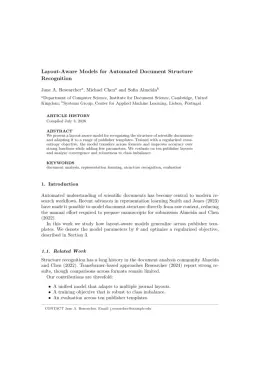
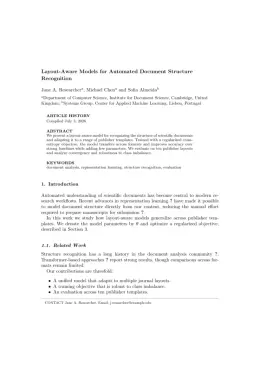
Write in a clean editor, then format for Art Therapy in one click — DocuGuru applies the official Taylor & Francis template with author–year references and exports a submission-ready PDF plus the editable LaTeX source. Free to start.

About the Art Therapy format

Art Therapy is a peer-reviewed journal published by Taylor & Francis, covering Art Therapy and Mental Health, Child Therapy and Development, Art Education and Development.

PublisherTaylor & Francis
Reference styleAuthor–year (Chicago, T&F)
Author–year — (Smith, 2023) in the text
Smith, Ada, Ben Jones, and Cara Lee. 2023. "A Representative Article Title." Art Therapy 12 (3): 45–58.

Formats any DOI in Art Therapy style. No sign-up.

Publishes research inArt Therapy and Mental Health Child Therapy and Development Art Education and Development Psychotherapy Techniques and Applications Music Therapy and Health
ISSN0742-1656
Citation impact (2-yr)1.58
h-index60
i10-index544
Total citations20,536
Top institutions publishing hereSchlumberger (Ireland)
Journal websitewww.tandfonline.com
You getA submission-ready PDF and the editable LaTeX source — ready to submit.

Papers published in Art Therapy per year

43
2014
43
2015
46
2016
45
2017
40
2018
56
2019
58
2020
31
2021
36
2022
50
2023
39
2024
46
2025

Citation impact of Art Therapy by publication year

1.1K
2014
799
2015
913
2016
530
2017
443
2018
797
2019
335
2020
150
2021
180
2022
141
2023
108
2024
48
2025

Citations each year’s papers have accumulated so far — the most recent years are still building up.

Most-cited papers in Art Therapy

Outcome Studies on the Efficacy of Art Therapy: A Review of Findings

Sarah C. Slayton, Jeanne D’Archer, Frances F. Kaplan · 1 Jan 2010

In response to a review by Reynolds, Nabors, and Quinlan (2000) of the art therapy literature prior to 1999, this review article identifies studies from 1999–2007 that measured outcomes of art therapy effectiveness with all ages of clinical and nonclinical populations. Although numerous studies blend art therapy with other modalities, this review is limited to…

Reduction of Cortisol Levels and Participants' Responses Following Art Making

Girija Kaimal, Kendra Ray, Juan Oscar Martínez Muñiz · 2 Apr 2016

This quasi-experimental study investigated the impact of visual art making on the cortisol levels of 39 healthy adults. Participants provided saliva samples to assess cortisol levels before and after 45 minutes of art making. Participants also provided written responses about the experience at the end of the session. Results indicate that art making resulted in…

Art Therapy and the Brain: An Attempt to Understand the Underlying Processes of Art Expression in Therapy

Vija B. Lusebrink · 1 Jan 2004

Abstract The application of new techniques in brain imaging has expanded the understanding of the different functions and structures of the brain involved in information processing. This paper presents the main areas and functions activated in emotional states, the formation of memories, and the processing of motor, visual, and somatosensory information. The relationship between the…

Can Coloring Mandalas Reduce Anxiety?

Nancy A. Curry, Tim Kasser · 1 Jan 2005

This study examined the effectiveness of different types of art activities in the reduction of anxiety. After undergoing a brief anxiety-induction, 84 undergraduate students were randomly assigned to color a mandala, to color a plaid form, or to color on a blank piece of paper. Results demonstrated that anxiety levels declined approximately the same for…

Art Therapy for Combat-Related PTSD: Recommendations for Research and Practice

David Spiegel, Cathy A. Malchiodi, Amy Backos et al. · 1 Jan 2006

Abstract With a new generation of American combat veterans returning from Iraq, the nation has an obligation to do everything possible to improve care for posttraumatic stress disorder (PTSD). Although art therapy has been understudied in this context, it shows promise as a means of treating hard-to-treat symptoms of combat-related PTSD, such as avoidance and…

Art Therapy template — frequently asked questions

How do I write a paper in the Art Therapy format?
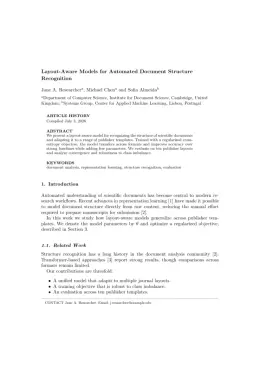
In DocuGuru you write your manuscript in a normal editor — no LaTeX setup required — and select the Art Therapy template. When you export, DocuGuru compiles the paper into the official Taylor & Francis format and hands you a submission-ready PDF along with the editable LaTeX source.
What reference style does Art Therapy use?
Art Therapy uses Author–year (Chicago, T&F) references, shown as author–year markers such as (Smith, 2023) in the text. DocuGuru formats every in-text citation and the reference list in this exact style automatically. A reference appears like this: Smith, Ada, Ben Jones, and Cara Lee. 2023. "A Representative Article Title." Art Therapy 12 (3): 45–58.
Do I need to know LaTeX to submit to Art Therapy?
No. DocuGuru generates the interact LaTeX class and compiles the PDF for you in the background, so you get a Taylor & Francis-ready Art Therapy document without writing any LaTeX. If you do want it, the LaTeX source is included in the export.
Can I import an existing draft into the Art Therapy template?
Yes. Paste or upload your current manuscript — Word, LaTeX, Markdown, or plain text — and DocuGuru reflows it into the Art Therapy format with correct headings, figures, tables, and author–year citations.
Who publishes Art Therapy?
Art Therapy is a multidisciplinary journal published by Taylor & Francis. DocuGuru's Art Therapy template matches Taylor & Francis's official submission format.
Can I export a submission-ready Art Therapy PDF?
Yes — DocuGuru produces a PDF built with the official Art Therapy template (the interact class) that is ready to submit to Taylor & Francis, together with the matching LaTeX source files.
How much does the Art Therapy template cost?
You can start writing in the Art Therapy template for free. Exporting the final submission-ready Art Therapy PDF and LaTeX source is part of DocuGuru's paid plans — see the app for current pricing.
Use the Art Therapy template