Taylor & Francis

Applied Neuropsychology Child Template

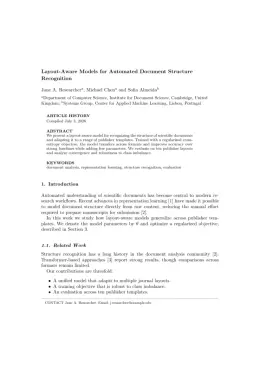
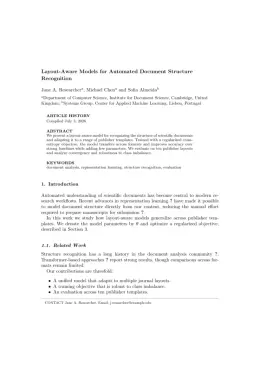
Write in a clean editor, then format for Applied Neuropsychology Child in one click — DocuGuru applies the official Taylor & Francis template with author–year references and exports a submission-ready PDF plus the editable LaTeX source. Free to start.

About the Applied Neuropsychology Child format

Applied Neuropsychology Child is a peer-reviewed journal published by Taylor & Francis, covering Attention Deficit Hyperactivity Disorder, Traumatic Brain Injury Research, Reading and Literacy Development.

PublisherTaylor & Francis
Reference styleAuthor–year (Chicago, T&F)
Author–year — (Smith, 2023) in the text
Smith, Ada, Ben Jones, and Cara Lee. 2023. "A Representative Article Title." Applied Neuropsychology Child 12 (3): 45–58.

Formats any DOI in Applied Neuropsychology Child style. No sign-up.

Publishes research inAttention Deficit Hyperactivity Disorder Traumatic Brain Injury Research Reading and Literacy Development Children's Physical and Motor Development Infant Development and Preterm Care
ISSN2162-2965
Citation impact (2-yr)1.24
h-index39
i10-index263
Total citations8,587
Top institutions publishing hereAmerican Academy of Child and Adolescent Psychiatry
Journal websitewww.tandfonline.com
You getA submission-ready PDF and the editable LaTeX source — ready to submit.

Papers published in Applied Neuropsychology Child per year

42
2014
21
2015
64
2016
51
2017
35
2018
48
2019
57
2020
59
2021
56
2022
49
2023
75
2024
89
2025

Citation impact of Applied Neuropsychology Child by publication year

967
2014
497
2015
1.2K
2016
766
2017
529
2018
772
2019
627
2020
619
2021
310
2022
181
2023
178
2024
64
2025

Citations each year’s papers have accumulated so far — the most recent years are still building up.

Most-cited papers in Applied Neuropsychology Child

Contribution of Rating Scales to the Assessment of Executive Functions

Peter Κ. Isquith, Robert M. Roth, Gérard A. Gioia · 26 Feb 2013

Executive functions play a vital role in the everyday functioning of healthy individuals across the lifespan and have been implicated in a wide variety of clinical conditions. Historically, the assessment of executive functions in clinical and research settings relied on performance-based measures. A number of authors have argued, however, that such measures have limited ecological…

Neurocognitive deficits in children and adolescents following maltreatment: Neurodevelopmental consequences and neuropsychological implications of traumatic stress

Brian C. Kavanaugh, Jennifer A. Dupont-Frechette, Beth A. Jerskey et al. · 6 Apr 2016

Childhood maltreatment is a significant risk factor for a host of psychiatric, developmental, medical, and neurocognitive conditions, often resulting in debilitating and long-term consequences. However, there is no available neuropsychological resource reviewing the literature on the associated neurocognitive deficits in children and adolescents. This review comprehensively examines the 23 prior studies that evaluated the intellectual,…

Executive Function and Emotion Regulation Strategy Use in Adolescents

Crystal Lantrip, Peter Κ. Isquith, Nancy S. Koven et al. · 4 Feb 2015

Development of emotion regulation strategy use involves a transition from reliance on suppression during childhood to greater use of reappraisal in adolescence and adulthood-a transition that parallels developmental changes in executive functions. We evaluated the relationship between emotion regulation strategy use and executive functioning in the everyday life of 70 typically developing adolescents who completed…

Lead (Pb) neurotoxicology and cognition

Michael P. Santa Maria, Benjamin D. Hill, Joshua Kline · 1 Mar 2018

Lead (Pb) is a neurotoxic substance. While it is widely understood that Pb exposure in early childhood adversely impacts neurodevelopment and intelligence, other aspects of cognition that are negatively affected, and the neuroanatomy and neurophysiology underlying Pb-related cognitive impairment are not widely appreciated by clinicians. This critical review gives a broad synopsis of the current…

Cogmed WM Training: Reviewing the Reviews

Charles Shinaver, P. C. Entwistle, Stina Söderqvist · 1 Jul 2014

Abstract Does Cogmed working-memory training (CWMT) work? Independent groups of reviewers have come to what appears to be starkly different conclusions to this question, causing somewhat of a debate within scientific and popular media. Here, various studies, meta-analyses, and reviews of the Cogmed research literature will be considered to provide an overview of our present…

Applied Neuropsychology Child template — frequently asked questions

How do I write a paper in the Applied Neuropsychology Child format?
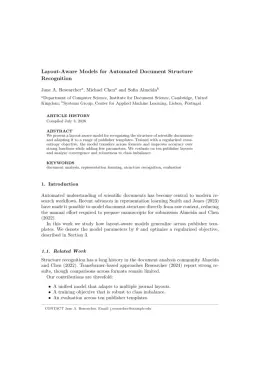
In DocuGuru you write your manuscript in a normal editor — no LaTeX setup required — and select the Applied Neuropsychology Child template. When you export, DocuGuru compiles the paper into the official Taylor & Francis format and hands you a submission-ready PDF along with the editable LaTeX source.
What reference style does Applied Neuropsychology Child use?
Applied Neuropsychology Child uses Author–year (Chicago, T&F) references, shown as author–year markers such as (Smith, 2023) in the text. DocuGuru formats every in-text citation and the reference list in this exact style automatically. A reference appears like this: Smith, Ada, Ben Jones, and Cara Lee. 2023. "A Representative Article Title." Applied Neuropsychology Child 12 (3): 45–58.
Do I need to know LaTeX to submit to Applied Neuropsychology Child?
No. DocuGuru generates the interact LaTeX class and compiles the PDF for you in the background, so you get a Taylor & Francis-ready Applied Neuropsychology Child document without writing any LaTeX. If you do want it, the LaTeX source is included in the export.
Can I import an existing draft into the Applied Neuropsychology Child template?
Yes. Paste or upload your current manuscript — Word, LaTeX, Markdown, or plain text — and DocuGuru reflows it into the Applied Neuropsychology Child format with correct headings, figures, tables, and author–year citations.
Who publishes Applied Neuropsychology Child?
Applied Neuropsychology Child is a multidisciplinary journal published by Taylor & Francis. DocuGuru's Applied Neuropsychology Child template matches Taylor & Francis's official submission format.
Can I export a submission-ready Applied Neuropsychology Child PDF?
Yes — DocuGuru produces a PDF built with the official Applied Neuropsychology Child template (the interact class) that is ready to submit to Taylor & Francis, together with the matching LaTeX source files.
How much does the Applied Neuropsychology Child template cost?
You can start writing in the Applied Neuropsychology Child template for free. Exporting the final submission-ready Applied Neuropsychology Child PDF and LaTeX source is part of DocuGuru's paid plans — see the app for current pricing.
Use the Applied Neuropsychology Child template