Taylor & Francis

Analytical Chemistry Letters Template

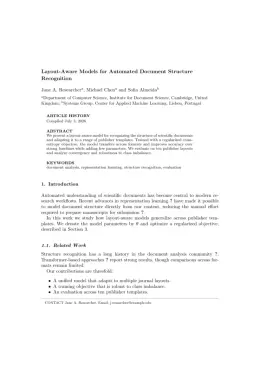
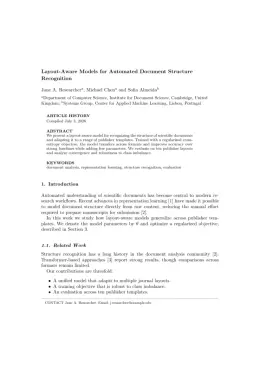
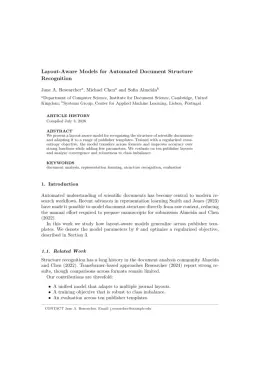
Write in a clean editor, then format for Analytical Chemistry Letters in one click — DocuGuru applies the official Taylor & Francis template with author–year references and exports a submission-ready PDF plus the editable LaTeX source. Free to start.

About the Analytical Chemistry Letters format

Analytical Chemistry Letters is a peer-reviewed journal published by Taylor & Francis, covering Analytical Methods in Pharmaceuticals, Analytical Chemistry and Chromatography, Antibiotics Pharmacokinetics and Efficacy.

PublisherTaylor & Francis
Reference styleAuthor–year (Chicago, T&F)
Author–year — (Smith, 2023) in the text
Smith, Ada, Ben Jones, and Cara Lee. 2023. "A Representative Article Title." Analytical Chemistry Letters 12 (3): 45–58.

Formats any DOI in Analytical Chemistry Letters style. No sign-up.

Publishes research inAnalytical Methods in Pharmaceuticals Analytical Chemistry and Chromatography Antibiotics Pharmacokinetics and Efficacy Essential Oils and Antimicrobial Activity Analytical Chemistry and Sensors
ISSN2229-7928
Citation impact (2-yr)1.51
h-index23
i10-index144
Total citations4,877
Top institutions publishing hereCairo University
Journal websitewww.anachemletters.com
You getA submission-ready PDF and the editable LaTeX source — ready to submit.

Papers published in Analytical Chemistry Letters per year

35
2014
42
2015
76
2016
69
2017
74
2018
64
2019
61
2020
64
2021
55
2022
47
2023
58
2024
73
2025

Citation impact of Analytical Chemistry Letters by publication year

183
2014
206
2015
518
2016
535
2017
438
2018
532
2019
588
2020
374
2021
336
2022
194
2023
172
2024
65
2025

Citations each year’s papers have accumulated so far — the most recent years are still building up.

Most-cited papers in Analytical Chemistry Letters

Computational Investigation on Structural and Reactive Sites (HOMO-LUMO, MEP, NBO, NPA, ELF, LOL, RDG) Identification, Pharmacokinetic (ADME) Properties and Molecular Docking Investigation of (E)-4-((4-chlorobenzylidene) amino) Benzene Sulfonamide Compound

N. Elangovan, R. Sangeetha, S. Sowrirajan et al. · 2 Jan 2022

(E)-4-((4-chlorobenzylidene) amino) benzene sulfonamide molecule has been optimized and characterized by DFT/B3LYP/6-311++G(d,p) quantum computational method. Mulliken and Fukui function analysis have been done to know the chemical reactivity of the compound. MEP for electrophilic, nucleophilic attack and FMO for electronic transitions have been explained. (ADME) Adsorption Spreading Metabolism and excretion, molecular physicochemical mechanism, inter and…

Utilization of <i>Cucumis Sativus</i> Peel as an Eco-Friendly Biosorbent for the Confiscation of Crystal Violet Dye from Artificially Contaminated Wastewater

Sadia Shakoor, Abu Nasar · 2 Jan 2019

In the present investigation, the applicability of Cucumis sativus peel (CSP) waste as an inexpensive biosorbent for the confiscation of harmful crystal violet (CV) dye from synthetically polluted water was examined. The biosorbent was characterized by Scanning Electron Microscopy (SEM), thermo-gravimetric analysis (TGA), transmission electron microscopy (TEM) and Fourier transform infrared (FTIR) spectroscopy. The efficacy…

Stability Indicating HPTLC Method for Simultaneous Estimation of Empagliflozin and Linagliptin in Pharmaceutical Formulation

Ritesh Bhole, Sagar B. Wankhede, Madhu pandey · 2 Jan 2017

A high-performance thin-layer chromatographic method was developed and validated for simultaneous determination of Empagliflozin and Linagliptin. The proposed method was applied successfully to the pharmaceutical analysis of the recently approved dosage form, Glyxambi tablets. The drugs were satisfactorily resolved with RF 0.22 for Linagliptin and 0.57 for Empagliflozin. Method was validated according to the ICH…

Green Synthesis of BiVO4 Nanoparticles by Microwave Method using <i>Aegle marmelos</i> Juice as a Fuel: Photocatalytic and Antimicrobial Study

S. Pramila, G. Nagaraju, C. Mallikarjunaswamy et al. · 3 May 2020

As a part of the non-hazardous way of synthesizing nanomaterials, herein we report the synthesis of BiVO4 nanoparticles by the aid of Aegle marmelos juice as a fuel. This method employed a simple, effective, and low-cost microwave irradiation technique. Further, the physical properties of synthesized nanoparticles were fully characterized by using X-ray diffraction (XRD), Fourier…

Graphene Oxide as Proficient Adsorbent for the Removal of Harmful Pesticides: Comprehensive Experimental Cum DFT Investigations

Sarita Yadav, Neetu Goel, Vinod Kumar et al. · 4 May 2019

Application of graphene oxide (GO) as an adsorbent for the removal of toxic organophosphorus pesticides (OPP’s) from aqueous phase has been elucidated by employing both adsorption experiments and first principles calculations based on density functional theory (DFT). Modified Hummer’s method was used to synthesize GO followed by its characterization using Fourier transform infrared (FTIR) spectroscopy,…

Analytical Chemistry Letters template — frequently asked questions

How do I write a paper in the Analytical Chemistry Letters format?
In DocuGuru you write your manuscript in a normal editor — no LaTeX setup required — and select the Analytical Chemistry Letters template. When you export, DocuGuru compiles the paper into the official Taylor & Francis format and hands you a submission-ready PDF along with the editable LaTeX source.
What reference style does Analytical Chemistry Letters use?
Analytical Chemistry Letters uses Author–year (Chicago, T&F) references, shown as author–year markers such as (Smith, 2023) in the text. DocuGuru formats every in-text citation and the reference list in this exact style automatically. A reference appears like this: Smith, Ada, Ben Jones, and Cara Lee. 2023. "A Representative Article Title." Analytical Chemistry Letters 12 (3): 45–58.
Do I need to know LaTeX to submit to Analytical Chemistry Letters?
No. DocuGuru generates the interact LaTeX class and compiles the PDF for you in the background, so you get a Taylor & Francis-ready Analytical Chemistry Letters document without writing any LaTeX. If you do want it, the LaTeX source is included in the export.
Can I import an existing draft into the Analytical Chemistry Letters template?
Yes. Paste or upload your current manuscript — Word, LaTeX, Markdown, or plain text — and DocuGuru reflows it into the Analytical Chemistry Letters format with correct headings, figures, tables, and author–year citations.
Who publishes Analytical Chemistry Letters?
Analytical Chemistry Letters is a multidisciplinary journal published by Taylor & Francis. DocuGuru's Analytical Chemistry Letters template matches Taylor & Francis's official submission format.
Can I export a submission-ready Analytical Chemistry Letters PDF?
Yes — DocuGuru produces a PDF built with the official Analytical Chemistry Letters template (the interact class) that is ready to submit to Taylor & Francis, together with the matching LaTeX source files.
How much does the Analytical Chemistry Letters template cost?
You can start writing in the Analytical Chemistry Letters template for free. Exporting the final submission-ready Analytical Chemistry Letters PDF and LaTeX source is part of DocuGuru's paid plans — see the app for current pricing.

Use the Analytical Chemistry Letters template