Taylor & Francis

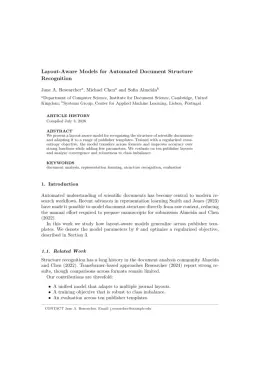
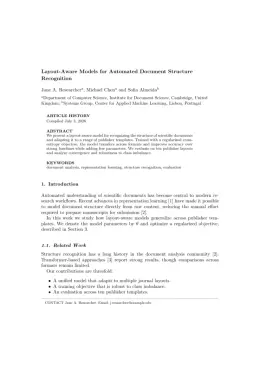
Advanced Composite Materials Template

Write in a clean editor, then format for Advanced Composite Materials in one click — DocuGuru applies the official Taylor & Francis template with numbered references and exports a submission-ready PDF plus the editable LaTeX source. Free to start.

About the Advanced Composite Materials format

Advanced Composite Materials is a peer-reviewed journal published by Taylor & Francis, covering Mechanical Behavior of Composites, Fiber-reinforced polymer composites, Composite Structure Analysis and Optimization.

PublisherTaylor & Francis
Reference styleNumbered (Vancouver/NLM)
Numbered — [1], [2] in the text
1. Smith A, Jones B, Lee C. A representative article title. Advanced Composite Materials. 2023;12(3):45–58.

Formats any DOI in Advanced Composite Materials style. No sign-up.

Publishes research inMechanical Behavior of Composites Fiber-reinforced polymer composites Composite Structure Analysis and Optimization Natural Fiber Reinforced Composites Advanced ceramic materials synthesis
ISSN0924-3046
Citation impact (2-yr)2.46
h-index49
i10-index518
Total citations15,872
Top institutions publishing hereThe University of Tokyo
Journal websitewww.tandfonline.com
You getA submission-ready PDF and the editable LaTeX source — ready to submit.

Papers published in Advanced Composite Materials per year

73
2014
28
2015
59
2016
54
2017
36
2018
40
2019
59
2020
31
2021
59
2022
45
2023
85
2024
47
2025

Citation impact of Advanced Composite Materials by publication year

1.3K
2014
417
2015
785
2016
878
2017
533
2018
968
2019
786
2020
328
2021
500
2022
408
2023
305
2024
53
2025

Citations each year’s papers have accumulated so far — the most recent years are still building up.

Most-cited papers in Advanced Composite Materials

SiC and Si3N4 recession due to SiO2 scale volatility under combustor conditions

James L. Smialek, R. Craig Robinson, Elizabeth J. Opila et al. · 1 Jan 1999

SiC and Si3N4 materials were tested under various turbine engine combustion environments, chosen to represent either conventional fuel-lean or fuel-rich mixtures proposed for high speed aircraft. Representative CVD, sintered, and composite materials were evaluated in both furnace and high pressure burner rig exposure. While protective SiO2 scales form in all cases, evidence is presented to…

Tensile strength of unidirectional CFRP laminate under high strain rate

Norihiko TANIGUCHI, Tsuyoshi NISHIWAKI, Hiroyuki KAWADA · 1 Jan 2007

The tensile strength of unidirectional carbon fiber reinforced plastics under a high strain rate was experimentally investigated. A high-strain-rate test was performed using the tension-type split Hopkinson bar technique. In order to obtain the tensile stress–strain relations, a special fixture was used for the impact tensile specimen. The experimental results demonstrated that the tensile modulus…

Thermal conductivity of PLA-bamboo fiber composites

Hitoshi Takagi, Shuhei Kako, Koji KUSANO et al. · 1 Jan 2007

Abstract 'Green' composites were fabricated from poly lactic acid (PLA) and bamboo fibers by using a conventional hot pressing method. The insulating properties of the PLA-bamboo fiber 'green' composites were evaluated by determination of the thermal conductivity, which was measured using a hot-wire method. The thermal conductivity values were compared with theoretical estimations. It was…

Damage propagation in CFRP laminates subjected to low velocity impact and static indentation

Y. Aoki, Hiroshi Suemasu, Takashi Ishikawa · 1 Jan 2007

This paper describes a damage accumulation mechanism in cross-ply CFRP laminates [02/902]2S subjected to out-of-plane loading. Drop-weight impact and static indentation tests were carried out, and induced damage was observed by ultrasonic C-scan and an optical microscope. Both tests gave essentially the same results for damage modes, sizes, and load-deformation history. First, a crack occurred…

Tensile property evaluations of 3D printed continuous carbon fiber reinforced thermoplastic composites

Akira TODOROKI, Tastuki Oasada, Yoshihiro Mizutani et al. · 6 Aug 2019

Continuous carbon fiber composites can be printed using 3D printers. Many studies detailing the mechanical properties of such 3D printed composites have been published, all of which employed a conventional tensile specimen configuration with surface resin layers. In the present study, 0°, 90°, ±45°, and lay-up direction type specimens have been designed for 3D printed…

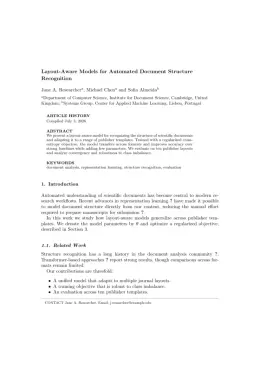
Advanced Composite Materials template — frequently asked questions

How do I write a paper in the Advanced Composite Materials format?
In DocuGuru you write your manuscript in a normal editor — no LaTeX setup required — and select the Advanced Composite Materials template. When you export, DocuGuru compiles the paper into the official Taylor & Francis format and hands you a submission-ready PDF along with the editable LaTeX source.
What reference style does Advanced Composite Materials use?
Advanced Composite Materials uses Numbered (Vancouver/NLM) references, shown as numbered [1], [2] markers in the text. DocuGuru formats every in-text citation and the reference list in this exact style automatically. A reference appears like this: 1. Smith A, Jones B, Lee C. A representative article title. Advanced Composite Materials. 2023;12(3):45–58.
Do I need to know LaTeX to submit to Advanced Composite Materials?
No. DocuGuru generates the interact LaTeX class and compiles the PDF for you in the background, so you get a Taylor & Francis-ready Advanced Composite Materials document without writing any LaTeX. If you do want it, the LaTeX source is included in the export.
Can I import an existing draft into the Advanced Composite Materials template?
Yes. Paste or upload your current manuscript — Word, LaTeX, Markdown, or plain text — and DocuGuru reflows it into the Advanced Composite Materials format with correct headings, figures, tables, and numbered citations.
Who publishes Advanced Composite Materials?
Advanced Composite Materials is a multidisciplinary journal published by Taylor & Francis. DocuGuru's Advanced Composite Materials template matches Taylor & Francis's official submission format.
Can I export a submission-ready Advanced Composite Materials PDF?
Yes — DocuGuru produces a PDF built with the official Advanced Composite Materials template (the interact class) that is ready to submit to Taylor & Francis, together with the matching LaTeX source files.
How much does the Advanced Composite Materials template cost?
You can start writing in the Advanced Composite Materials template for free. Exporting the final submission-ready Advanced Composite Materials PDF and LaTeX source is part of DocuGuru's paid plans — see the app for current pricing.
Use the Advanced Composite Materials template