Taylor & Francis

Adipocyte Template

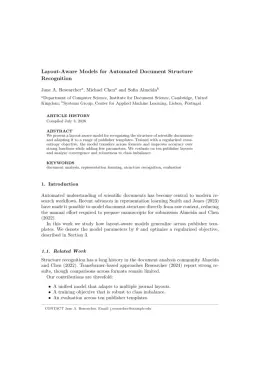
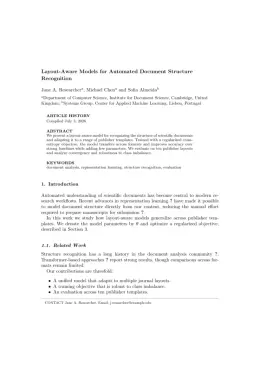
Write in a clean editor, then format for Adipocyte in one click — DocuGuru applies the official Taylor & Francis template with author–year references and exports a submission-ready PDF plus the editable LaTeX source. Free to start.

About the Adipocyte format

Adipocyte is a peer-reviewed journal published by Taylor & Francis, covering Adipose Tissue and Metabolism, Adipokines, Inflammation, and Metabolic Diseases, Cardiovascular Disease and Adiposity.

PublisherTaylor & Francis
Reference styleAuthor–year (Chicago, T&F)
Author–year — (Smith, 2023) in the text
Smith, Ada, Ben Jones, and Cara Lee. 2023. "A Representative Article Title." Adipocyte 12 (3): 45–58.

Formats any DOI in Adipocyte style. No sign-up.

Publishes research inAdipose Tissue and Metabolism Adipokines, Inflammation, and Metabolic Diseases Cardiovascular Disease and Adiposity Diet and metabolism studies Regulation of Appetite and Obesity
ISSN2162-3945
Citation impact (2-yr)2.45
h-index56
i10-index394
Total citations15,782
Article processing charge$2,557
Open accessYes
Top institutions publishing hereUniversity of California San Diego
Journal websitewww.tandfonline.com
You getA submission-ready PDF and the editable LaTeX source — ready to submit.

Papers published in Adipocyte per year

64
2014
42
2015
34
2016
39
2017
33
2018
36
2019
63
2020
59
2021
50
2022
30
2023
29
2024
38
2025

Citation impact of Adipocyte by publication year

2.2K
2014
1.5K
2015
1.3K
2016
1.5K
2017
824
2018
799
2019
1.3K
2020
1.3K
2021
662
2022
302
2023
123
2024
65
2025

Citations each year’s papers have accumulated so far — the most recent years are still building up.

Most-cited papers in Adipocyte

Adiponectin-leptin ratio: A promising index to estimate adipose tissue dysfunction. Relation with obesity-associated cardiometabolic risk

Gema Frühbeck, Victoria Catalán, Amaia Rodrı́guez et al. · 8 Nov 2017

Obesity is currently the most extended metabolic disturbance worldwide favoring the development of cardiometabolic alterations such as type 2 diabetes, hypertension, and dyslipidemia. Obesity and the metabolic syndrome (MS) are characterized by an increase in circulating leptin concentrations, in parallel to a decrease in blood levels of adiponectin. Consequently, the adiponectin/leptin ratio has been suggested…

Brown and beige adipose tissue: a novel therapeutic strategy for obesity and type 2 diabetes mellitus

Long Cheng, Jingkang Wang, Hongyu Dai et al. · 1 Jan 2021

Mammalian adipose tissue can be divided into two major types, namely, white adipose tissue (WAT) and brown adipose tissue (BAT). According to classical view, the main function of WAT is to store excess energy in the form of triglycerides, while BAT is a thermogenic tissue that acts a pivotal part in maintaining the core body…

High-fat diet-induced obesity Rat model: a comparison between Wistar and Sprague-Dawley Rat

Cláudia Marques, Manuela Meireles, Sónia Norberto et al. · 15 Jul 2015

In the past decades, obesity and associated metabolic complications have reached epidemic proportions. For the study of these pathologies, a number of animal models have been developed. However, a direct comparison between Wistar and Sprague-Dawley (SD) Rat as models of high-fat (HF) diet-induced obesity has not been adequately evaluated so far. Wistar and SD rats…

Branched short-chain fatty acids modulate glucose and lipid metabolism in primary adipocytes

Emilia Heimann, Margareta Nyman, Ann-Ki Pålbrink et al. · 1 Oct 2016

Short-chain fatty acids (SCFAs), e.g. acetic acid, propionic acid and butyric acid, generated through colonic fermentation of dietary fibers, have been shown to reach the systemic circulation at micromolar concentrations. Moreover, SCFAs have been conferred anti-obesity properties in both animal models and human subjects. Branched SCFAs (BSCFAs), e.g., isobutyric and isovaleric acid, are generated by…

Quantitative assessment of adipocyte differentiation in cell culture

Nils Arne Kraus, Franziska Ehebauer, B. Zapp et al. · 26 Sep 2016

Adipocyte cell culture is an important tool for mechanistic studies of energy metabolism. Many factors affect the differentiation of adipocytes in culture. Oil red O staining can be used to assess the degree of differentiation. However, the validity of this method for quantitative analysis has not yet been established. Here we show that a protocol…

Adipocyte template — frequently asked questions

How do I write a paper in the Adipocyte format?
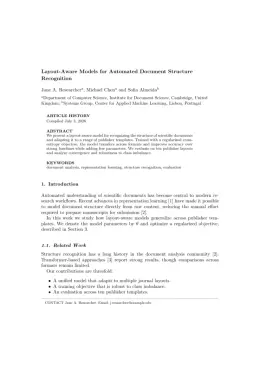
In DocuGuru you write your manuscript in a normal editor — no LaTeX setup required — and select the Adipocyte template. When you export, DocuGuru compiles the paper into the official Taylor & Francis format and hands you a submission-ready PDF along with the editable LaTeX source.
What reference style does Adipocyte use?
Adipocyte uses Author–year (Chicago, T&F) references, shown as author–year markers such as (Smith, 2023) in the text. DocuGuru formats every in-text citation and the reference list in this exact style automatically. A reference appears like this: Smith, Ada, Ben Jones, and Cara Lee. 2023. "A Representative Article Title." Adipocyte 12 (3): 45–58.
Do I need to know LaTeX to submit to Adipocyte?
No. DocuGuru generates the interact LaTeX class and compiles the PDF for you in the background, so you get a Taylor & Francis-ready Adipocyte document without writing any LaTeX. If you do want it, the LaTeX source is included in the export.
Can I import an existing draft into the Adipocyte template?
Yes. Paste or upload your current manuscript — Word, LaTeX, Markdown, or plain text — and DocuGuru reflows it into the Adipocyte format with correct headings, figures, tables, and author–year citations.
Who publishes Adipocyte?
Adipocyte is a multidisciplinary journal published by Taylor & Francis. DocuGuru's Adipocyte template matches Taylor & Francis's official submission format.
Can I export a submission-ready Adipocyte PDF?
Yes — DocuGuru produces a PDF built with the official Adipocyte template (the interact class) that is ready to submit to Taylor & Francis, together with the matching LaTeX source files.
How much does the Adipocyte template cost?
You can start writing in the Adipocyte template for free. Exporting the final submission-ready Adipocyte PDF and LaTeX source is part of DocuGuru's paid plans — see the app for current pricing.
Use the Adipocyte template