Taylor & Francis

Acta Linguistica Template

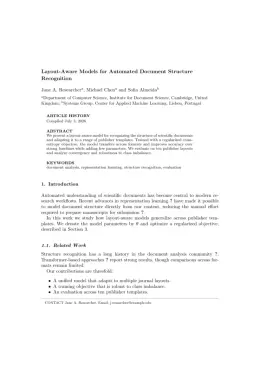
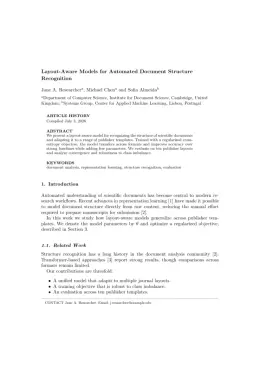
Write in a clean editor, then format for Acta Linguistica in one click — DocuGuru applies the official Taylor & Francis template with author–year references and exports a submission-ready PDF plus the editable LaTeX source. Free to start.

About the Acta Linguistica format

Acta Linguistica is a peer-reviewed journal published by Taylor & Francis, covering Historical Linguistics and Language Studies, Linguistics and Discourse Analysis, Linguistics and language evolution.

PublisherTaylor & Francis
Reference styleAuthor–year (Chicago, T&F)
Author–year — (Smith, 2023) in the text
Smith, Ada, Ben Jones, and Cara Lee. 2023. "A Representative Article Title." Acta Linguistica 12 (3): 45–58.

Formats any DOI in Acta Linguistica style. No sign-up.

Publishes research inHistorical Linguistics and Language Studies Linguistics and Discourse Analysis Linguistics and language evolution Linguistic research and analysis French Urban and Social Studies
ISSN0105-001X
h-index14
i10-index17
Total citations1,082
Top institutions publishing hereLund Science (Sweden)
You getA submission-ready PDF and the editable LaTeX source — ready to submit.

Papers published in Acta Linguistica per year

22
1939
22
1940
11
1942
18
1944
21
1945
9
1951
5
1952
6
1960

Citation impact of Acta Linguistica by publication year

413
1939
44
1940
49
1942
108
1944
266
1945
25
1951
150
1952
24
1960

Citations each year’s papers have accumulated so far — the most recent years are still building up.

Most-cited papers in Acta Linguistica

La nature des procés dits «Analogiques»

Jerzy Kuryłowicz · 1 Jan 1945

Abstract L'opposition mot-base: dérivé permet de dégager, chez ce dernier, le morphème de dérivation. P. e. fille: fill-ette (suffixe), fait: mé-fait (préfixe). Le morphème n'est pas toujours simple, il consiste parfois en deux ou plusieurs parties. Ainsi le diminutif allemand Bäum-chen est caractérisé, par rapport à Baum, non seulement par le suffixe (diminutif) -chen, mais…

Gedanken über das indogermanenproblem

N. S. Trubetzkoy · 1 Jan 1939

Abstract Indogermanen heissen solche Menschen, deren Muttersprache zur indogermanischen Sprachfamilie gehört. Aus dieser wissenschaftlich einzig möglichen Definition folgt, dass »Indogermane« ein rein sprachwissenschaftlicher Begriff ist, so wie etwa »Syntax«, »Gienitiv«, »Lautwandel«, usw. Es gibt indogermanische Sprachen, und es gibt Völker, die diese Sprachen reden. Das Einzige, was all diesen Völkern gemein ist, ist die Zugehörigkeit…

Nature du signe linguistique

Émile Benveniste · 1 Jan 1939

Abstract C 'est de F. de Saussure que procède la théorie du signe linguistique actuellement affirmée ou impliquée dans la plupart des travaux de linguistique générale. Et c'est comme une vérité évidente, non encore explicite, mais cependant incontestée en fait, que Saussure a enseigné que la nature du signe est arbitraire. La formule s'est immédiatement…

Five phonemic pitch levels in trique

Robert E. Longacre · 1 Jan 1952

Abstract There are five phonemic pitch levels in Trique 1 Trique is spoken by approximately 10,000 Indians in the state of Oaxaca, Mexico within a rough triangle formed by the towns of Tlaxiaco, Putla, and Juxtlahuaca — all non-Trique speaking. The dialect represented in this paper is that of San Andres Chicahuaxtla. A variety of…

On the definition of phoneme categories on a distributional basis

Eli Fischer-Jørgensen · 1 Jan 1952

Abstract Sapir was probably the first to suggest that phonemes might be grouped into categories according to their possibilities of combination with other phonemes in the speech chain2. Bloomfield goes much farther. He maintains3 that this is the only definition of phoneme categories which is structurally relevant, whereas the classification by distinctive features is irrelevant,…

Acta Linguistica template — frequently asked questions

How do I write a paper in the Acta Linguistica format?
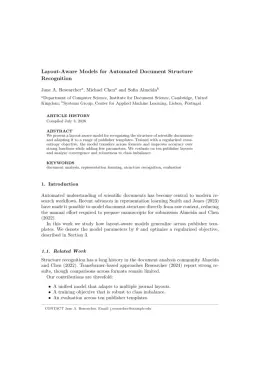
In DocuGuru you write your manuscript in a normal editor — no LaTeX setup required — and select the Acta Linguistica template. When you export, DocuGuru compiles the paper into the official Taylor & Francis format and hands you a submission-ready PDF along with the editable LaTeX source.
What reference style does Acta Linguistica use?
Acta Linguistica uses Author–year (Chicago, T&F) references, shown as author–year markers such as (Smith, 2023) in the text. DocuGuru formats every in-text citation and the reference list in this exact style automatically. A reference appears like this: Smith, Ada, Ben Jones, and Cara Lee. 2023. "A Representative Article Title." Acta Linguistica 12 (3): 45–58.
Do I need to know LaTeX to submit to Acta Linguistica?
No. DocuGuru generates the interact LaTeX class and compiles the PDF for you in the background, so you get a Taylor & Francis-ready Acta Linguistica document without writing any LaTeX. If you do want it, the LaTeX source is included in the export.
Can I import an existing draft into the Acta Linguistica template?
Yes. Paste or upload your current manuscript — Word, LaTeX, Markdown, or plain text — and DocuGuru reflows it into the Acta Linguistica format with correct headings, figures, tables, and author–year citations.
Who publishes Acta Linguistica?
Acta Linguistica is a multidisciplinary journal published by Taylor & Francis. DocuGuru's Acta Linguistica template matches Taylor & Francis's official submission format.
Can I export a submission-ready Acta Linguistica PDF?
Yes — DocuGuru produces a PDF built with the official Acta Linguistica template (the interact class) that is ready to submit to Taylor & Francis, together with the matching LaTeX source files.
How much does the Acta Linguistica template cost?
You can start writing in the Acta Linguistica template for free. Exporting the final submission-ready Acta Linguistica PDF and LaTeX source is part of DocuGuru's paid plans — see the app for current pricing.
Use the Acta Linguistica template