
572 citations
Cite
SaveGo to paper →
Springer Nature
Toxicological Research Template
Write in a clean editor, then format for Toxicological Research in one click — DocuGuru applies the official Springer Nature template with superscript references and exports a submission-ready PDF plus the editable LaTeX source. Free to start.
About the Toxicological Research format
Toxicological Research is a peer-reviewed journal published by Springer Nature, covering Legal and Regulatory Analysis, Linguistic, Cultural, and Literary Studies, Military Technology and Strategies.
| Publisher | Springer Nature |
|---|---|
| Reference style | Superscript numbered (Nature) Superscript — small raised numerals in the text 1. Smith, A., Jones, B. & Lee, C. A representative article title. Toxicological Research 12, 45–58 (2023).
Formats any DOI in Toxicological Research style. No sign-up. |
| Publishes research in | Legal and Regulatory Analysis Linguistic, Cultural, and Literary Studies Military Technology and Strategies Effects and risks of endocrine disrupting chemicals Carcinogens and Genotoxicity Assessment |
| ISSN | 1976-8257 |
| Citation impact (2-yr) | 2.86 |
| h-index | 56 |
| i10-index | 436 |
| Total citations | 17,845 |
| Article processing charge | $2,890 |
| Top institutions publishing here | Korea Institute of Toxicology |
| Journal website | www.springer.com |
| You get | A submission-ready PDF and the editable LaTeX source — ready to submit. |
Papers published in Toxicological Research per year
Citation impact of Toxicological Research by publication year
Citations each year’s papers have accumulated so far — the most recent years are still building up.
Most-cited papers in Toxicological Research
Mycotoxin contamination is a global phenomenon and causes a wide array of negative effects and other complications. This study focused on commonly found mycotoxins in Africa and the possible means of prevention or reduction of their contaminating effects. Mycotoxins are secondary metabolites of mold and fungi; they are generally toxic to living organisms. Hundreds of…
336 citations
Cite
SaveGo to paper →
329 citations
Cite
SaveGo to paper →
In the recent years, noble nanoparticles have attracted and emerged in the field of biology, medicine and electronics due to their incredible applications. There were several methods have been used for synthesis of nanoparticles such as toxic chemicals and high energy physical procedures. To overcome these, biological method has been used for the synthesis of…
325 citations
Cite
SaveGo to paper →
Man-made cadmium (Cd) emissions can be transported between environmental matrices and the food chain. Food is the primary source of Cd exposure among general population as a consequence of the bio-concentration of Cd from soil. Chronic Cd exposure has been reported to be associated with chronic kidney disease, osteoporosis, diabetes, cardiovascular disease and cancer. The…
241 citations
Cite
SaveGo to paper →
Related journal templates
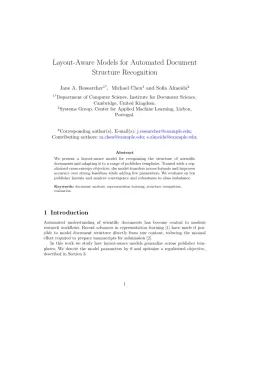
Toxicological Research template — frequently asked questions
How do I write a paper in the Toxicological Research format?
In DocuGuru you write your manuscript in a normal editor — no LaTeX setup required — and select the Toxicological Research template. When you export, DocuGuru compiles the paper into the official Springer Nature format and hands you a submission-ready PDF along with the editable LaTeX source.
What reference style does Toxicological Research use?
Toxicological Research uses Superscript numbered (Nature) references, shown as superscript numerals in the text. DocuGuru formats every in-text citation and the reference list in this exact style automatically. A reference appears like this: 1. Smith, A., Jones, B. & Lee, C. A representative article title. Toxicological Research 12, 45–58 (2023).
Do I need to know LaTeX to submit to Toxicological Research?
No. DocuGuru generates the sn-jnl LaTeX class and compiles the PDF for you in the background, so you get a Springer Nature-ready Toxicological Research document without writing any LaTeX. If you do want it, the LaTeX source is included in the export.
Can I import an existing draft into the Toxicological Research template?
Yes. Paste or upload your current manuscript — Word, LaTeX, Markdown, or plain text — and DocuGuru reflows it into the Toxicological Research format with correct headings, figures, tables, and superscript citations.
Who publishes Toxicological Research?
Toxicological Research is a multidisciplinary journal published by Springer Nature. DocuGuru's Toxicological Research template matches Springer Nature's official submission format.
Can I export a submission-ready Toxicological Research PDF?
Yes — DocuGuru produces a PDF built with the official Toxicological Research template (the sn-jnl class) that is ready to submit to Springer Nature, together with the matching LaTeX source files.
How much does the Toxicological Research template cost?
You can start writing in the Toxicological Research template for free. Exporting the final submission-ready Toxicological Research PDF and LaTeX source is part of DocuGuru's paid plans — see the app for current pricing.