
2,199 citations
Cite
SaveGo to paper →
Springer Nature
Nature Reviews Methods Primers Template
Write in a clean editor, then format for Nature Reviews Methods Primers in one click — DocuGuru applies the official Springer Nature template with superscript references and exports a submission-ready PDF plus the editable LaTeX source. Free to start.
About the Nature Reviews Methods Primers format
Nature Reviews Methods Primers is a peer-reviewed journal published by Springer Nature, covering Advanced Fluorescence Microscopy Techniques, Spectroscopy Techniques in Biomedical and Chemical Research, Advanced Electron Microscopy Techniques and Applications. Over its lifetime it has published 499 papers, which have received 47,449 citations.
| Publisher | Springer Nature |
|---|---|
| Reference style | Superscript numbered (Nature) Superscript — small raised numerals in the text 1. Smith, A., Jones, B. & Lee, C. A representative article title. Nature Reviews Methods Primers 12, 45–58 (2023).
Formats any DOI in Nature Reviews Methods Primers style. No sign-up. |
| Publishes research in | Advanced Fluorescence Microscopy Techniques Spectroscopy Techniques in Biomedical and Chemical Research Advanced Electron Microscopy Techniques and Applications Force Microscopy Techniques and Applications Innovative Microfluidic and Catalytic Techniques Innovation |
| ISSN | 2662-8449 |
| Citation impact (2-yr) | 25.38 |
| h-index | 106 |
| i10-index | 251 |
| Top institutions publishing here | Centre National de la Recherche Scientifique |
| Journal website | www.nature.com |
| You get | A submission-ready PDF and the editable LaTeX source — ready to submit. |
Papers published in Nature Reviews Methods Primers per year
Citation impact of Nature Reviews Methods Primers by publication year
Citations each year’s papers have accumulated so far — the most recent years are still building up.
Most-cited papers in Nature Reviews Methods Primers
Genome-wide association studies (GWAS) test hundreds of thousands of genetic variants across many genomes to find those statistically associated with a specific trait or disease. This methodology has generated a myriad of robust associations for a range of traits and diseases, and the number of associated variants is expected to grow steadily as GWAS sample…
1,810 citations
Cite
SaveGo to paper →
1,606 citations
Cite
SaveGo to paper →
In recent years, network analysis has been applied to identify and analyse patterns of statistical association in multivariate psychological data. In these approaches, network nodes represent variables in a data set, and edges represent pairwise conditional associations between variables in the data, while conditioning on the remaining variables. This Primer provides an anatomy of these…
1,286 citations
Cite
SaveGo to paper →
1,181 citations
Cite
SaveGo to paper →
Related journal templates
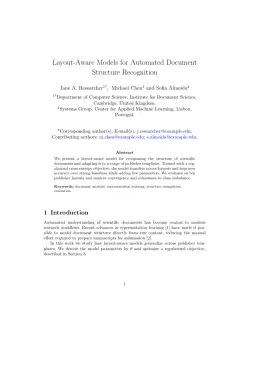

Nature Reviews Methods Primers template — frequently asked questions
How do I write a paper in the Nature Reviews Methods Primers format?
In DocuGuru you write your manuscript in a normal editor — no LaTeX setup required — and select the Nature Reviews Methods Primers template. When you export, DocuGuru compiles the paper into the official Springer Nature format and hands you a submission-ready PDF along with the editable LaTeX source.
What reference style does Nature Reviews Methods Primers use?
Nature Reviews Methods Primers uses Superscript numbered (Nature) references, shown as superscript numerals in the text. DocuGuru formats every in-text citation and the reference list in this exact style automatically. A reference appears like this: 1. Smith, A., Jones, B. & Lee, C. A representative article title. Nature Reviews Methods Primers 12, 45–58 (2023).
Do I need to know LaTeX to submit to Nature Reviews Methods Primers?
No. DocuGuru generates the sn-jnl LaTeX class and compiles the PDF for you in the background, so you get a Springer Nature-ready Nature Reviews Methods Primers document without writing any LaTeX. If you do want it, the LaTeX source is included in the export.
Can I import an existing draft into the Nature Reviews Methods Primers template?
Yes. Paste or upload your current manuscript — Word, LaTeX, Markdown, or plain text — and DocuGuru reflows it into the Nature Reviews Methods Primers format with correct headings, figures, tables, and superscript citations.
What is Nature Reviews Methods Primers?
Nature Portfolio journal (Springer Nature). It is a multidisciplinary journal, published by Springer Nature.
Can I export a submission-ready Nature Reviews Methods Primers PDF?
Yes — DocuGuru produces a PDF built with the official Nature Reviews Methods Primers template (the sn-jnl class) that is ready to submit to Springer Nature, together with the matching LaTeX source files.
How much does the Nature Reviews Methods Primers template cost?
You can start writing in the Nature Reviews Methods Primers template for free. Exporting the final submission-ready Nature Reviews Methods Primers PDF and LaTeX source is part of DocuGuru's paid plans — see the app for current pricing.