
1,005 citations
Cite
SaveGo to paper →
Springer Nature
Topics in Current Chemistry Template
Write in a clean editor, then format for Topics in Current Chemistry in one click — DocuGuru applies the official Springer Nature template with numbered references and exports a submission-ready PDF plus the editable LaTeX source. Free to start.
About the Topics in Current Chemistry format
Topics in Current Chemistry is a peer-reviewed journal published by Springer Nature, covering Chemical Synthesis and Analysis, Catalytic C–H Functionalization Methods, Advanced biosensing and bioanalysis techniques.
| Publisher | Springer Nature |
|---|---|
| Reference style | Numbered (Springer Basic) Numbered — [1], [2] in the text 1. Smith A, Jones B, Lee C (2023) A representative article title. Topics in Current Chemistry 12:45–58
Formats any DOI in Topics in Current Chemistry style. No sign-up. |
| Publishes research in | Chemical Synthesis and Analysis Catalytic C–H Functionalization Methods Advanced biosensing and bioanalysis techniques Asymmetric Hydrogenation and Catalysis Luminescence and Fluorescent Materials |
| ISSN | 2364-8961 |
| Citation impact (2-yr) | 8.31 |
| h-index | 109 |
| i10-index | 748 |
| Total citations | 51,978 |
| Article processing charge | $4,190 |
| Top institutions publishing here | Centre National de la Recherche Scientifique |
| Journal website | www.springer.com |
| You get | A submission-ready PDF and the editable LaTeX source — ready to submit. |
Papers published in Topics in Current Chemistry per year
Citation impact of Topics in Current Chemistry by publication year
Citations each year’s papers have accumulated so far — the most recent years are still building up.
Most-cited papers in Topics in Current Chemistry
467 citations
Cite
SaveGo to paper →
Human existence and societal growth are both dependent on the availability of clean and fresh water. Photocatalysis is a type of artificial photosynthesis that uses environmentally friendly, long-lasting materials to address energy and environmental issues. There is currently a considerable demand for low-cost, high-performance wastewater treatment equipment. By changing the structure, size, and characteristics of…
377 citations
Cite
SaveGo to paper →
A nearly forgotten reaction discovered more than 60 years ago-the cycloaddition of a cyclic alkyne and an organic azide, leading to an aromatic triazole-enjoys a remarkable popularity. Originally discovered out of pure chemical curiosity, and dusted off early this century as an efficient and clean bioconjugation tool, the usefulness of cyclooctyne-azide cycloaddition is now adopted…
361 citations
Cite
SaveGo to paper →
356 citations
Cite
SaveGo to paper →
Related journal templates
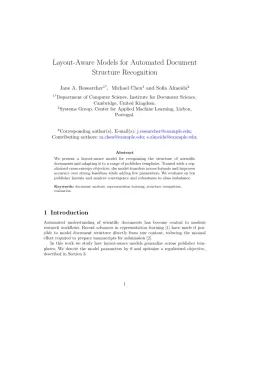
Topics in Current Chemistry template — frequently asked questions
How do I write a paper in the Topics in Current Chemistry format?
In DocuGuru you write your manuscript in a normal editor — no LaTeX setup required — and select the Topics in Current Chemistry template. When you export, DocuGuru compiles the paper into the official Springer Nature format and hands you a submission-ready PDF along with the editable LaTeX source.
What reference style does Topics in Current Chemistry use?
Topics in Current Chemistry uses Numbered (Springer Basic) references, shown as numbered [1], [2] markers in the text. DocuGuru formats every in-text citation and the reference list in this exact style automatically. A reference appears like this: 1. Smith A, Jones B, Lee C (2023) A representative article title. Topics in Current Chemistry 12:45–58
Do I need to know LaTeX to submit to Topics in Current Chemistry?
No. DocuGuru generates the sn-jnl LaTeX class and compiles the PDF for you in the background, so you get a Springer Nature-ready Topics in Current Chemistry document without writing any LaTeX. If you do want it, the LaTeX source is included in the export.
Can I import an existing draft into the Topics in Current Chemistry template?
Yes. Paste or upload your current manuscript — Word, LaTeX, Markdown, or plain text — and DocuGuru reflows it into the Topics in Current Chemistry format with correct headings, figures, tables, and numbered citations.
Who publishes Topics in Current Chemistry?
Topics in Current Chemistry is a multidisciplinary journal published by Springer Nature. DocuGuru's Topics in Current Chemistry template matches Springer Nature's official submission format.
Can I export a submission-ready Topics in Current Chemistry PDF?
Yes — DocuGuru produces a PDF built with the official Topics in Current Chemistry template (the sn-jnl class) that is ready to submit to Springer Nature, together with the matching LaTeX source files.
How much does the Topics in Current Chemistry template cost?
You can start writing in the Topics in Current Chemistry template for free. Exporting the final submission-ready Topics in Current Chemistry PDF and LaTeX source is part of DocuGuru's paid plans — see the app for current pricing.