Springer Nature

Revista Brasileira de Farmacognosia Template

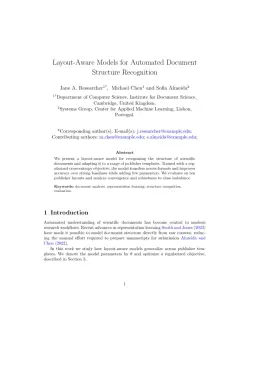
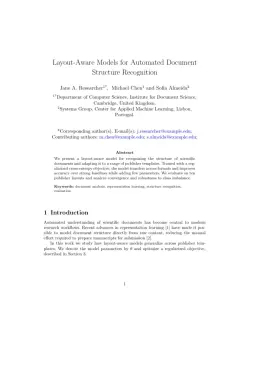
Write in a clean editor, then format for Revista Brasileira de Farmacognosia in one click — DocuGuru applies the official Springer Nature template with author–year references and exports a submission-ready PDF plus the editable LaTeX source. Free to start.

About the Revista Brasileira de Farmacognosia format

Revista Brasileira de Farmacognosia is a peer-reviewed journal published by Springer Nature, covering Phytochemistry Medicinal Plant Applications, Essential Oils and Antimicrobial Activity, Natural product bioactivities and synthesis.

PublisherSpringer Nature
Reference styleAuthor–year (Harvard)
Author–year — (Smith, 2023) in the text
Smith, A., Jones, B. and Lee, C. (2023) 'A representative article title', Revista Brasileira de Farmacognosia, 12(3), pp. 45–58.

Formats any DOI in Revista Brasileira de Farmacognosia style. No sign-up.

Publishes research inPhytochemistry Medicinal Plant Applications Essential Oils and Antimicrobial Activity Natural product bioactivities and synthesis Phytochemistry and Biological Activities Ethnobotanical and Medicinal Plants Studies
ISSN0102-695X
Citation impact (2-yr)1.43
h-index88
i10-index1,618
Total citations59,688
Article processing charge$3,090
Top institutions publishing hereUniversidade de São Paulo
Journal websitelink.springer.com
You getA submission-ready PDF and the editable LaTeX source — ready to submit.

Papers published in Revista Brasileira de Farmacognosia per year

89
2014
135
2015
121
2016
89
2017
115
2018
80
2019
116
2020
98
2021
124
2022
151
2023
107
2024
111
2025

Citation impact of Revista Brasileira de Farmacognosia by publication year

3.4K
2014
4.7K
2015
3.5K
2016
2K
2017
2.8K
2018
1.8K
2019
1.1K
2020
942
2021
840
2022
752
2023
269
2024
100
2025

Citations each year’s papers have accumulated so far — the most recent years are still building up.

Most-cited papers in Revista Brasileira de Farmacognosia

Synopsis of the plants known as medicinal and poisonous in Northeast of Brazil

Maria de Fátima Agra, Patrícia França de Freitas, José Maria Barbosa‐Filho · 1 Mar 2007

The objective of this work is a survey of the species of plants and their alleged therapeutic uses which are utilized in Northeast region of Brazil. The area of this study is well known for its rich diversity of species of plants and habitats, which range from rainforest, atlantic forest, coastal dunes systems and mangroves,…

Survey of medicinal plants used in the region Northeast of Brazil

Maria de Fátima Agra, Kiriaki Nurit Silva, Ionaldo José Lima Diniz Basílio et al. · 1 Sep 2008

This work has the objective a survey of the species of plants and their uses as medicinal, which are utilized for therapeutic purposes in Northeast region of Brazil. The area of study is recognized by a rich diversity of species of plants and habitats that ranges from Rainforest, Atlantic Forest, coastal dunes systems and mangroves,…

Evaluation of the antimicrobial activity of chitosan and its quaternized derivative on E. coli and S. aureus growth

Rejane Celi Goy, Sinara T.B. Morais, O. B. G. Assis · 18 Nov 2015

Chitosan is largely known for its activity against a wide range of microorganisms, in which the most acceptable antimicrobial mechanism is found to include the presence of charged groups in the polymer backbone and their ionic interactions with bacteria wall constituents. This interaction suggests the occurrence of a hydrolysis of the peptidoglycans in the microorganism…

Biological and therapeutic effects of honey produced by honey bees and stingless bees: a comparative review

Pasupuleti Visweswara Rao, Kumara Thevan Krishnan, Naguib Salleh et al. · 21 Jul 2016

Honey is a natural product produced by both honey bees and stingless bees. Both types of honey contain unique and distinct types of phenolic and flavonoid compounds of variable biological and clinical importance. Honey is one of the most effective natural products used for wound healing. In this review, the traditional uses and clinical applications…

Review of the genus Ipomoea: traditional uses, chemistry and biological activities

Marilena Meira, Eliezer Pereira da Silva, Jorge M. David et al. · 4 Feb 2012

Approximately 600-700 species of Ipomoea, Convolvulaceae, are found throughout tropical and subtropical regions of the world. Several of those species have been used as ornamental plants, food, medicines or in religious ritual. The present work reviews the traditional uses, chemistry and biological activities of Ipomoea species and illustrates the potential of the genus as a…

Revista Brasileira de Farmacognosia template — frequently asked questions

How do I write a paper in the Revista Brasileira de Farmacognosia format?
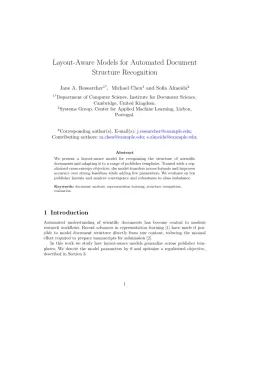
In DocuGuru you write your manuscript in a normal editor — no LaTeX setup required — and select the Revista Brasileira de Farmacognosia template. When you export, DocuGuru compiles the paper into the official Springer Nature format and hands you a submission-ready PDF along with the editable LaTeX source.
What reference style does Revista Brasileira de Farmacognosia use?
Revista Brasileira de Farmacognosia uses Author–year (Harvard) references, shown as author–year markers such as (Smith, 2023) in the text. DocuGuru formats every in-text citation and the reference list in this exact style automatically. A reference appears like this: Smith, A., Jones, B. and Lee, C. (2023) 'A representative article title', Revista Brasileira de Farmacognosia, 12(3), pp. 45–58.
Do I need to know LaTeX to submit to Revista Brasileira de Farmacognosia?
No. DocuGuru generates the elsarticle LaTeX class and compiles the PDF for you in the background, so you get a Springer Nature-ready Revista Brasileira de Farmacognosia document without writing any LaTeX. If you do want it, the LaTeX source is included in the export.
Can I import an existing draft into the Revista Brasileira de Farmacognosia template?
Yes. Paste or upload your current manuscript — Word, LaTeX, Markdown, or plain text — and DocuGuru reflows it into the Revista Brasileira de Farmacognosia format with correct headings, figures, tables, and author–year citations.
Who publishes Revista Brasileira de Farmacognosia?
Revista Brasileira de Farmacognosia is a multidisciplinary journal published by Springer Nature. DocuGuru's Revista Brasileira de Farmacognosia template matches Springer Nature's official submission format.
Can I export a submission-ready Revista Brasileira de Farmacognosia PDF?
Yes — DocuGuru produces a PDF built with the official Revista Brasileira de Farmacognosia template (the elsarticle class) that is ready to submit to Springer Nature, together with the matching LaTeX source files.
How much does the Revista Brasileira de Farmacognosia template cost?
You can start writing in the Revista Brasileira de Farmacognosia template for free. Exporting the final submission-ready Revista Brasileira de Farmacognosia PDF and LaTeX source is part of DocuGuru's paid plans — see the app for current pricing.
Use the Revista Brasileira de Farmacognosia template