Springer Nature

Review Journal of Chemistry Template

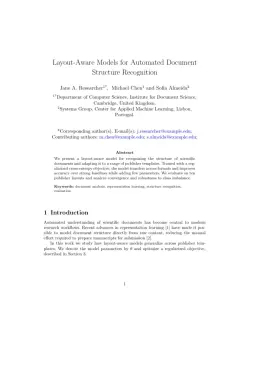
Write in a clean editor, then format for Review Journal of Chemistry in one click — DocuGuru applies the official Springer Nature template with superscript references and exports a submission-ready PDF plus the editable LaTeX source. Free to start.

About the Review Journal of Chemistry format

Review Journal of Chemistry is a peer-reviewed journal published by Springer Nature, covering Analytical Chemistry and Sensors, Gas Sensing Nanomaterials and Sensors, Advanced Chemical Sensor Technologies.

PublisherSpringer Nature
Reference styleSuperscript numbered (Nature)
Superscript — small raised numerals in the text
1. Smith, A., Jones, B. & Lee, C. A representative article title. Review Journal of Chemistry 12, 45–58 (2023).

Formats any DOI in Review Journal of Chemistry style. No sign-up.

Publishes research inAnalytical Chemistry and Sensors Gas Sensing Nanomaterials and Sensors Advanced Chemical Sensor Technologies Chemical Synthesis and Analysis Synthesis and biological activity
ISSN2079-9780
h-index19
i10-index35
Total citations1,211
Top institutions publishing hereRussian Academy of Sciences
Journal websitewww.springerlink.com
You getA submission-ready PDF and the editable LaTeX source — ready to submit.

Papers published in Review Journal of Chemistry per year

13
2011
12
2012
13
2013
11
2014
11
2015
10
2016
10
2017
10
2018
10
2019
4
2020

Citation impact of Review Journal of Chemistry by publication year

139
2011
171
2012
97
2013
130
2014
185
2015
86
2016
163
2017
51
2018
100
2019
85
2020

Citations each year’s papers have accumulated so far — the most recent years are still building up.

Most-cited papers in Review Journal of Chemistry

Energetic plasticizers for gun & rocket propellants

Dimple Kumari, R. Balakshe, Shaibal Banerjee et al. · 1 Jul 2012

Energetic plasticizers have been used in the propellant industry for improving mechanical properties of propellant formulations and to boost energy. In modern energetic propellant composition, conventional plasticizers are being gradually replaced by energetic plasticizers having nitro, nitroamino, azido and other energetic groups or combination of energetic groups in the same molecule. The present article covers…

Negative photochromism in organic systems

V. А. Barachevsky · 1 Jul 2017

The results of studies on negative photochromism of compounds and systems have been analyzed for the first time. It has been shown that the majority of studies deal with photochromic spiro compounds (spiropyrans and spirooxazines) whose negative photochromism is caused mainly by molecular structure, polarity and acidity of the medium, and complexation with metal ions.…

Polymeric Iodophors: Preparation, Properties, and Biomedical Applications

Danelya N. Makhayeva, Galiya S. Irmukhametova, Vitaliy V. Khutoryanskiy · 1 Jan 2020

The review summarizes the data on the main chemical and physiological properties of iodine and its capability of complexation with natural and synthetic polymers. Iodine is the best known antiseptic used to prevent and treat microbial infections. Its unique capability of complexation with certain polymers opens wide opportunities for targeted and prolonged delivery to target…

Propylphosphonic anhydride (T3P®): An expedient reagent for organic synthesis

Anirudha A. Waghmare, Rama Mohan Hindupur, Hari N. Pati · 1 Apr 2014

The present review article focuses on the recent advancements in amide and peptide coupling reactions of racemization-prone substrates using n-propylphosphonic anhydride (T3P). It summarizes its utility in the preparation of various carboxylic acid derivatives including esters, azides, hydroxamates, thiohydroxamates, carbamates, Weinreb amides, etc. Besides, its role in a variety of organic functional group transformations (e.g.…

Formation of dense electrolytes based on BaCeO3 and BaZrO3 for application in solid oxide fuel cells: The role of solid-state reactive sintering

Dmitry A. Medvedev, Anna A. Murashkina, A. Demin · 1 Jul 2015

Methods of synthesis and formation of a high-dense ceramic prepared from barium cerate and zirconate, which is applied as electrolyte in solid oxide fuel cells, are considered in the present work. The main attention is devoted to the relatively new strategy of solid-state reactive sintering method, which consists in the introduction of small amounts of…

Review Journal of Chemistry template — frequently asked questions

How do I write a paper in the Review Journal of Chemistry format?
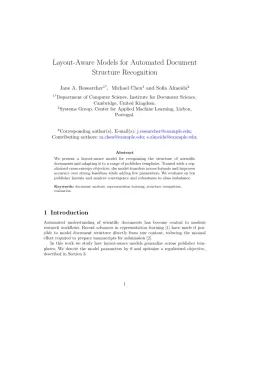
In DocuGuru you write your manuscript in a normal editor — no LaTeX setup required — and select the Review Journal of Chemistry template. When you export, DocuGuru compiles the paper into the official Springer Nature format and hands you a submission-ready PDF along with the editable LaTeX source.
What reference style does Review Journal of Chemistry use?
Review Journal of Chemistry uses Superscript numbered (Nature) references, shown as superscript numerals in the text. DocuGuru formats every in-text citation and the reference list in this exact style automatically. A reference appears like this: 1. Smith, A., Jones, B. & Lee, C. A representative article title. Review Journal of Chemistry 12, 45–58 (2023).
Do I need to know LaTeX to submit to Review Journal of Chemistry?
No. DocuGuru generates the sn-jnl LaTeX class and compiles the PDF for you in the background, so you get a Springer Nature-ready Review Journal of Chemistry document without writing any LaTeX. If you do want it, the LaTeX source is included in the export.
Can I import an existing draft into the Review Journal of Chemistry template?
Yes. Paste or upload your current manuscript — Word, LaTeX, Markdown, or plain text — and DocuGuru reflows it into the Review Journal of Chemistry format with correct headings, figures, tables, and superscript citations.
Who publishes Review Journal of Chemistry?
Review Journal of Chemistry is a multidisciplinary journal published by Springer Nature. DocuGuru's Review Journal of Chemistry template matches Springer Nature's official submission format.
Can I export a submission-ready Review Journal of Chemistry PDF?
Yes — DocuGuru produces a PDF built with the official Review Journal of Chemistry template (the sn-jnl class) that is ready to submit to Springer Nature, together with the matching LaTeX source files.
How much does the Review Journal of Chemistry template cost?
You can start writing in the Review Journal of Chemistry template for free. Exporting the final submission-ready Review Journal of Chemistry PDF and LaTeX source is part of DocuGuru's paid plans — see the app for current pricing.
Use the Review Journal of Chemistry template