
1,625 citations
Cite
SaveGo to paper →
Springer Nature
Phytochemistry Reviews Template
Write in a clean editor, then format for Phytochemistry Reviews in one click — DocuGuru applies the official Springer Nature template with numbered references and exports a submission-ready PDF plus the editable LaTeX source. Free to start.
About the Phytochemistry Reviews format
Phytochemistry Reviews is a peer-reviewed journal published by Springer Nature, covering Natural product bioactivities and synthesis, Phytochemicals and Antioxidant Activities, Plant biochemistry and biosynthesis.
| Publisher | Springer Nature |
|---|---|
| Reference style | Numbered (Springer Basic) Numbered — [1], [2] in the text 1. Smith A, Jones B, Lee C (2023) A representative article title. Phytochemistry Reviews 12:45–58
Formats any DOI in Phytochemistry Reviews style. No sign-up. |
| Publishes research in | Natural product bioactivities and synthesis Phytochemicals and Antioxidant Activities Plant biochemistry and biosynthesis Phytochemistry and Biological Activities Essential Oils and Antimicrobial Activity |
| ISSN | 1568-7767 |
| Citation impact (2-yr) | 6.21 |
| h-index | 136 |
| i10-index | 970 |
| Total citations | 76,896 |
| Article processing charge | $4,390 |
| Top institutions publishing here | University of Naples Federico II |
| Journal website | www.springer.com |
| You get | A submission-ready PDF and the editable LaTeX source — ready to submit. |
Papers published in Phytochemistry Reviews per year
Citation impact of Phytochemistry Reviews by publication year
Citations each year’s papers have accumulated so far — the most recent years are still building up.
Most-cited papers in Phytochemistry Reviews
Flavonoids are one of the largest classes of small molecular secondary metabolites produced in different parts of the plant. They display a wide range of pharmacological and beneficial health effects for humans, which include, among others, antioxidative activity, free radical scavenging capacity, coronary heart disease prevention and antiatherosclerotic, hepatoprotective, anti-inflammatory, and anticancer activities. Hence, flavonoids…
1,170 citations
Cite
SaveGo to paper →
Saponins are natural glycosides which possess a wide range of pharmacological properties including cytotoxic activity. In this review, the recent studies (2005-2009) concerning the cytotoxic activity of saponins have been summarized. The correlations between the structure and the cytotoxicity of both steroid and triterpenoid saponins have been described as well as the most common mechanisms…
690 citations
Cite
SaveGo to paper →
Chalcone synthase (CHS, EC 2.3.1.74) is a key enzyme of the flavonoid/isoflavonoid biosynthesis pathway. Besides being part of the plant developmental program the CHS gene expression is induced in plants under stress conditions such as UV light, bacterial or fungal infection. CHS expression causes accumulation of flavonoid and isoflavonoid phytoalexins and is involved in the…
661 citations
Cite
SaveGo to paper →
597 citations
Cite
SaveGo to paper →
Related journal templates
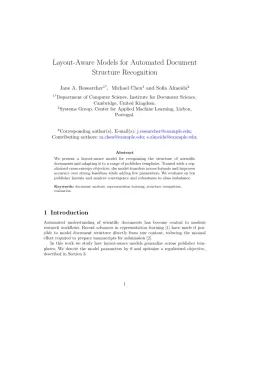
Phytochemistry Reviews template — frequently asked questions
How do I write a paper in the Phytochemistry Reviews format?
In DocuGuru you write your manuscript in a normal editor — no LaTeX setup required — and select the Phytochemistry Reviews template. When you export, DocuGuru compiles the paper into the official Springer Nature format and hands you a submission-ready PDF along with the editable LaTeX source.
What reference style does Phytochemistry Reviews use?
Phytochemistry Reviews uses Numbered (Springer Basic) references, shown as numbered [1], [2] markers in the text. DocuGuru formats every in-text citation and the reference list in this exact style automatically. A reference appears like this: 1. Smith A, Jones B, Lee C (2023) A representative article title. Phytochemistry Reviews 12:45–58
Do I need to know LaTeX to submit to Phytochemistry Reviews?
No. DocuGuru generates the sn-jnl LaTeX class and compiles the PDF for you in the background, so you get a Springer Nature-ready Phytochemistry Reviews document without writing any LaTeX. If you do want it, the LaTeX source is included in the export.
Can I import an existing draft into the Phytochemistry Reviews template?
Yes. Paste or upload your current manuscript — Word, LaTeX, Markdown, or plain text — and DocuGuru reflows it into the Phytochemistry Reviews format with correct headings, figures, tables, and numbered citations.
Who publishes Phytochemistry Reviews?
Phytochemistry Reviews is a multidisciplinary journal published by Springer Nature. DocuGuru's Phytochemistry Reviews template matches Springer Nature's official submission format.
Can I export a submission-ready Phytochemistry Reviews PDF?
Yes — DocuGuru produces a PDF built with the official Phytochemistry Reviews template (the sn-jnl class) that is ready to submit to Springer Nature, together with the matching LaTeX source files.
How much does the Phytochemistry Reviews template cost?
You can start writing in the Phytochemistry Reviews template for free. Exporting the final submission-ready Phytochemistry Reviews PDF and LaTeX source is part of DocuGuru's paid plans — see the app for current pricing.