Springer Nature

Intensive Care Medicine – Paediatric and Neonatal Template

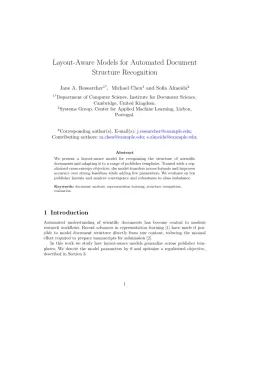
Write in a clean editor, then format for Intensive Care Medicine – Paediatric and Neonatal in one click — DocuGuru applies the official Springer Nature template with superscript references and exports a submission-ready PDF plus the editable LaTeX source. Free to start.

About the Intensive Care Medicine – Paediatric and Neonatal format

Intensive Care Medicine – Paediatric and Neonatal is a peer-reviewed journal published by Springer Nature, covering Sepsis Diagnosis and Treatment, Respiratory Support and Mechanisms, Cardiac Arrest and Resuscitation.

PublisherSpringer Nature
Reference styleSuperscript numbered (Nature)
Superscript — small raised numerals in the text
1. Smith, A., Jones, B. & Lee, C. A representative article title. Intensive Care Medicine – Paediatric and Neonatal 12, 45–58 (2023).

Formats any DOI in Intensive Care Medicine – Paediatric and Neonatal style. No sign-up.

Publishes research inSepsis Diagnosis and Treatment Respiratory Support and Mechanisms Cardiac Arrest and Resuscitation Neonatal Respiratory Health Research Intensive Care Unit Cognitive Disorders
ISSN2731-944X
Citation impact (2-yr)1.15
h-index6
i10-index1
Total citations170
Top institutions publishing hereUniversity Children's Hospital Zurich
You getA submission-ready PDF and the editable LaTeX source — ready to submit.

Papers published in Intensive Care Medicine – Paediatric and Neonatal per year

21
2023
34
2024
54
2025

Citation impact of Intensive Care Medicine – Paediatric and Neonatal by publication year

47
2023
71
2024
45
2025

Citations each year’s papers have accumulated so far — the most recent years are still building up.

Most-cited papers in Intensive Care Medicine – Paediatric and Neonatal

Late-onset vitamin K deficiency bleeding: a preventable yet prevailing cause of intracranial hemorrhage in young infants—an ambispective descriptive study

Aswini Annadurai, C. G. Delhi Kumar, S. M. Praveen et al. · 24 Jan 2024

Abstract Background Vitamin K deficiency bleeding (VKDB) may present as intracranial hemorrhage (ICH) in young infants, which results in severe morbidity and mortality. This study aims to determine the clinical presentation, risk factors, and outcome of children with VKDB. Methods This was an ambispective descriptive study conducted from January 2015 to August 2023 in southern…

High-flow nasal oxygen in infants and children for early respiratory management of pneumonia-induced acute hypoxemic respiratory failure: the CENTURI randomized clinical trial

Sasidaran Kandasamy, Ramachandran Rameshkumar, Thangavelu Sangaralingam et al. · 1 Apr 2024

Abstract Objective To compare the effectiveness of early high-flow nasal cannula (HFNC) and low-flow oxygen support (LFOS) in children under 5 years with acute hypoxemic respiratory failure (AHRF) due to severe community-acquired pneumonia in low-middle-income countries. Methods An open-label randomized clinical trial enrolled children aged 2–59 months with AHRF due to severe community-acquired pneumonia and…

Post-intensive care syndrome in pediatrics—enhancing understanding through a novel bioecological theory of human development lens

Zahra Rahmaty, Joseph C. Manning, Ibo MacDonald et al. · 5 Jul 2023

Abstract Background The post-intensive care syndrome in pediatrics (PICS-p) framework offers a new understanding of the long-term impact of critical illness on child’s and family’s health. However, a comprehensive theoretical guide to investigate potential factors influencing these outcomes and recoveries is needed. Objective The aim of the study is to conceptualize post-intensive care outcomes in…

A combined rapid clinical and lung ultrasound score for predicting bronchiolitis severity

Anna Camporesi, Rosa Morello, Amedeo Guzzardella et al. · 7 Aug 2023

Abstract Introduction Lung ultrasound (LUS) has demonstrated a good correlation with clinical severity scores in bronchiolitis but should be combined with clinical data to achieve the best results. The aim of the study is to create a quick and reliable clinical-ultrasound score to predict the risk of paediatric intensive care (Picu) admission as soon as…

Fluid management and active fluid removal practices: a global survey of paediatric critical care physicians

Angela Aramburo, Sainath Raman, Jonathan A. Silversides et al. · 16 Apr 2024

Abstract Aims Fluid accumulation (FA) in critically ill children is associated with poor clinical outcomes. While conservative fluid management has been proposed, evidence to guide practice is scarce. We surveyed paediatric critical care (PCC) physicians worldwide regarding their perceptions of FA, active fluid removal (AFR) practices, safety parameters, and willingness to participate in a clinical…

Intensive Care Medicine – Paediatric and Neonatal template — frequently asked questions

How do I write a paper in the Intensive Care Medicine – Paediatric and Neonatal format?
In DocuGuru you write your manuscript in a normal editor — no LaTeX setup required — and select the Intensive Care Medicine – Paediatric and Neonatal template. When you export, DocuGuru compiles the paper into the official Springer Nature format and hands you a submission-ready PDF along with the editable LaTeX source.
What reference style does Intensive Care Medicine – Paediatric and Neonatal use?
Intensive Care Medicine – Paediatric and Neonatal uses Superscript numbered (Nature) references, shown as superscript numerals in the text. DocuGuru formats every in-text citation and the reference list in this exact style automatically. A reference appears like this: 1. Smith, A., Jones, B. & Lee, C. A representative article title. Intensive Care Medicine – Paediatric and Neonatal 12, 45–58 (2023).
Do I need to know LaTeX to submit to Intensive Care Medicine – Paediatric and Neonatal?
No. DocuGuru generates the sn-jnl LaTeX class and compiles the PDF for you in the background, so you get a Springer Nature-ready Intensive Care Medicine – Paediatric and Neonatal document without writing any LaTeX. If you do want it, the LaTeX source is included in the export.
Can I import an existing draft into the Intensive Care Medicine – Paediatric and Neonatal template?
Yes. Paste or upload your current manuscript — Word, LaTeX, Markdown, or plain text — and DocuGuru reflows it into the Intensive Care Medicine – Paediatric and Neonatal format with correct headings, figures, tables, and superscript citations.
Who publishes Intensive Care Medicine – Paediatric and Neonatal?
Intensive Care Medicine – Paediatric and Neonatal is a multidisciplinary journal published by Springer Nature. DocuGuru's Intensive Care Medicine – Paediatric and Neonatal template matches Springer Nature's official submission format.
Can I export a submission-ready Intensive Care Medicine – Paediatric and Neonatal PDF?
Yes — DocuGuru produces a PDF built with the official Intensive Care Medicine – Paediatric and Neonatal template (the sn-jnl class) that is ready to submit to Springer Nature, together with the matching LaTeX source files.
How much does the Intensive Care Medicine – Paediatric and Neonatal template cost?
You can start writing in the Intensive Care Medicine – Paediatric and Neonatal template for free. Exporting the final submission-ready Intensive Care Medicine – Paediatric and Neonatal PDF and LaTeX source is part of DocuGuru's paid plans — see the app for current pricing.

Use the Intensive Care Medicine – Paediatric and Neonatal template