
193 citations
Cite
SaveGo to paper →
Springer Nature
Food Ethics Template
Write in a clean editor, then format for Food Ethics in one click — DocuGuru applies the official Springer Nature template with superscript references and exports a submission-ready PDF plus the editable LaTeX source. Free to start.
About the Food Ethics format
Food Ethics is a peer-reviewed journal published by Springer Nature, covering Agriculture Sustainability and Environmental Impact, Organic Food and Agriculture, Food Waste Reduction and Sustainability.
| Publisher | Springer Nature |
|---|---|
| Reference style | Superscript numbered (Nature) Superscript — small raised numerals in the text 1. Smith, A., Jones, B. & Lee, C. A representative article title. Food Ethics 12, 45–58 (2023).
Formats any DOI in Food Ethics style. No sign-up. |
| Publishes research in | Agriculture Sustainability and Environmental Impact Organic Food and Agriculture Food Waste Reduction and Sustainability Culinary Culture and Tourism Animal Behavior and Welfare Studies |
| ISSN | 2364-6853 |
| Citation impact (2-yr) | 1.51 |
| h-index | 23 |
| i10-index | 63 |
| Total citations | 2,287 |
| Article processing charge | $3,090 |
| Top institutions publishing here | University of Bergen |
| Journal website | link.springer.com |
| You get | A submission-ready PDF and the editable LaTeX source — ready to submit. |
Papers published in Food Ethics per year
Citation impact of Food Ethics by publication year
Citations each year’s papers have accumulated so far — the most recent years are still building up.
Most-cited papers in Food Ethics
Abstract The Sustainable Development Goals (SDGs) are considered a unifying global goal setting agenda that every country is meant to achieve. One of those goals, SDG2, promises to ensure food security and nutrition within sustainable food systems. However, achieving that goal is riddled with uncertainty because of the way in which the world currently produces…
164 citations
Cite
SaveGo to paper →
85 citations
Cite
SaveGo to paper →
Precision livestock farming (PLF) is the management of livestock using the principles and technology of process engineering. Key to PLF is the dense monitoring of variegated parameters, including animal growth, output of produce (e.g. milk, eggs), diseases, animal behaviour, and the physical environment (e.g. thermal micro-environment, ammonia emissions). While its proponents consider PLF a win-win…
79 citations
Cite
SaveGo to paper →
Governments and their international agencies (FAO, World Bank) conceive of the eradication of hunger and poverty as a worthy wish that will eventually be realized through economic growth. They also make great cosmetic efforts to present as good-looking trend pictures as they can. Citizens ought to insist that the eradication of severe deprivations is a…
73 citations
Cite
SaveGo to paper →
Related journal templates
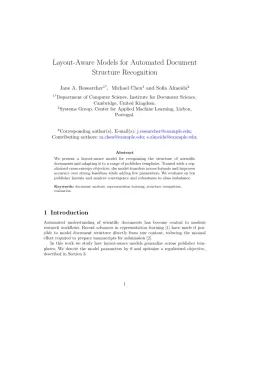
Food Ethics template — frequently asked questions
How do I write a paper in the Food Ethics format?
In DocuGuru you write your manuscript in a normal editor — no LaTeX setup required — and select the Food Ethics template. When you export, DocuGuru compiles the paper into the official Springer Nature format and hands you a submission-ready PDF along with the editable LaTeX source.
What reference style does Food Ethics use?
Food Ethics uses Superscript numbered (Nature) references, shown as superscript numerals in the text. DocuGuru formats every in-text citation and the reference list in this exact style automatically. A reference appears like this: 1. Smith, A., Jones, B. & Lee, C. A representative article title. Food Ethics 12, 45–58 (2023).
Do I need to know LaTeX to submit to Food Ethics?
No. DocuGuru generates the sn-jnl LaTeX class and compiles the PDF for you in the background, so you get a Springer Nature-ready Food Ethics document without writing any LaTeX. If you do want it, the LaTeX source is included in the export.
Can I import an existing draft into the Food Ethics template?
Yes. Paste or upload your current manuscript — Word, LaTeX, Markdown, or plain text — and DocuGuru reflows it into the Food Ethics format with correct headings, figures, tables, and superscript citations.
Who publishes Food Ethics?
Food Ethics is a multidisciplinary journal published by Springer Nature. DocuGuru's Food Ethics template matches Springer Nature's official submission format.
Can I export a submission-ready Food Ethics PDF?
Yes — DocuGuru produces a PDF built with the official Food Ethics template (the sn-jnl class) that is ready to submit to Springer Nature, together with the matching LaTeX source files.
How much does the Food Ethics template cost?
You can start writing in the Food Ethics template for free. Exporting the final submission-ready Food Ethics PDF and LaTeX source is part of DocuGuru's paid plans — see the app for current pricing.