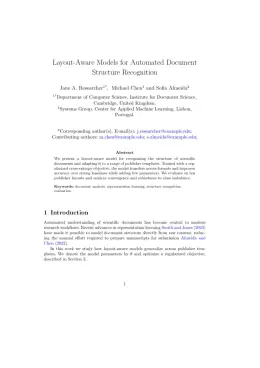
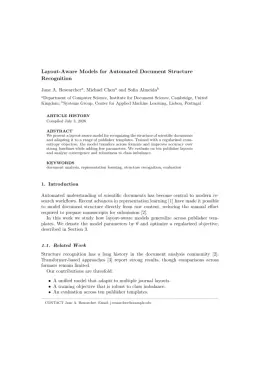
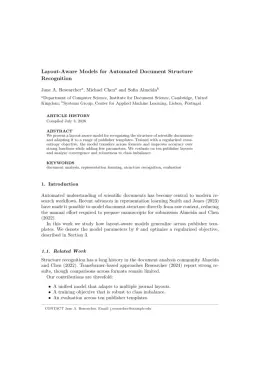
About the npj Computational Materials format
npj Computational Materials is a peer-reviewed journal published by Springer Nature, covering Machine Learning in Materials Science, 2D Materials and Applications, X-ray Diffraction in Crystallography. Over its lifetime it has published 2,212 papers, which have received 97,007 citations.
| Publisher | Springer Nature |
|---|
| Reference style | Superscript numbered (Nature) Superscript — small raised numerals in the text
1. Smith, A., Jones, B. & Lee, C. A representative article title. npj Computational Materials 12, 45–58 (2023).
Formats any DOI in npj Computational Materials style. No sign-up.
|
|---|
| Publishes research in | Machine Learning in Materials Science 2D Materials and Applications X-ray Diffraction in Crystallography Electronic and Structural Properties of Oxides Graphene research and applications |
|---|
| ISSN | 2057-3960 |
|---|
| Citation impact (2-yr) | 9.15 |
|---|
| h-index | 132 |
|---|
| i10-index | 1,345 |
|---|
| Article processing charge | $2,890 |
|---|
| Open access | Yes — indexed in DOAJ |
|---|
| Top institutions publishing here | Chinese Academy of Sciences |
|---|
| Journal website | www.nature.com |
|---|
| You get | A submission-ready PDF and the editable LaTeX source — ready to submit. |
|---|
Papers published in npj Computational Materials per year
Citation impact of npj Computational Materials by publication year
Citations each year’s papers have accumulated so far — the most recent years are still building up.
Most-cited papers in npj Computational Materials
Recent advances and applications of machine learning in solid-state materials science
Jonathan Schmidt, Mário R. G. Marques, Silvana Botti et al. · 8 Aug 2019
Abstract One of the most exciting tools that have entered the material science toolbox in recent years is machine learning. This collection of statistical methods has already proved to be capable of considerably speeding up both fundamental and applied research. At present, we are witnessing an explosion of works that develop and apply machine learning…
The Open Quantum Materials Database (OQMD): assessing the accuracy of DFT formation energies
Scott Kirklin, James E. Saal, Bryce Meredig et al. · 9 Dec 2015
Abstract The Open Quantum Materials Database (OQMD) is a high-throughput database currently consisting of nearly 300,000 density functional theory (DFT) total energy calculations of compounds from the Inorganic Crystal Structure Database (ICSD) and decorations of commonly occurring crystal structures. To maximise the impact of these data, the entire database is being made available, without restrictions,…
The ReaxFF reactive force-field: development, applications and future directions
Thomas P. Senftle, Sungwook Hong, Md Mahbubul Islam et al. · 4 Mar 2016
Abstract The reactive force-field (ReaxFF) interatomic potential is a powerful computational tool for exploring, developing and optimizing material properties. Methods based on the principles of quantum mechanics (QM), while offering valuable theoretical guidance at the electronic level, are often too computationally intense for simulations that consider the full dynamic evolution of a system. Alternatively, empirical…
Machine learning in materials informatics: recent applications and prospects
Rampi Ramprasad, Rohit Batra, Ghanshyam Pilania et al. · 7 Dec 2017
Abstract Propelled partly by the Materials Genome Initiative, and partly by the algorithmic developments and the resounding successes of data-driven efforts in other domains, informatics strategies are beginning to take shape within materials science. These approaches lead to surrogate machine learning models that enable rapid predictions based purely on past data rather than by direct…
A general-purpose machine learning framework for predicting properties of inorganic materials
Logan Ward, Ankit Agrawal, Alok Choudhary et al. · 26 Aug 2016
Abstract A very active area of materials research is to devise methods that use machine learning to automatically extract predictive models from existing materials data. While prior examples have demonstrated successful models for some applications, many more applications exist where machine learning can make a strong impact. To enable faster development of machine-learning-based models for…