
521 citations
Cite
SaveGo to paper →
Springer Nature
Current Sleep Medicine Reports Template
Write in a clean editor, then format for Current Sleep Medicine Reports in one click — DocuGuru applies the official Springer Nature template with superscript references and exports a submission-ready PDF plus the editable LaTeX source. Free to start.
About the Current Sleep Medicine Reports format
Current Sleep Medicine Reports is a peer-reviewed journal published by Springer Nature, covering Sleep and related disorders, Sleep and Wakefulness Research, Obstructive Sleep Apnea Research.
| Publisher | Springer Nature |
|---|---|
| Reference style | Superscript numbered (Nature) Superscript — small raised numerals in the text 1. Smith, A., Jones, B. & Lee, C. A representative article title. Current Sleep Medicine Reports 12, 45–58 (2023).
Formats any DOI in Current Sleep Medicine Reports style. No sign-up. |
| Publishes research in | Sleep and related disorders Sleep and Wakefulness Research Obstructive Sleep Apnea Research Neuroscience of respiration and sleep Circadian rhythm and melatonin |
| ISSN | 2198-6401 |
| Citation impact (2-yr) | 2.81 |
| h-index | 41 |
| i10-index | 126 |
| Total citations | 5,974 |
| Article processing charge | $3,390 |
| Top institutions publishing here | Harvard University |
| Journal website | www.springer.com |
| You get | A submission-ready PDF and the editable LaTeX source — ready to submit. |
Papers published in Current Sleep Medicine Reports per year
Citation impact of Current Sleep Medicine Reports by publication year
Citations each year’s papers have accumulated so far — the most recent years are still building up.
Most-cited papers in Current Sleep Medicine Reports
PURPOSE OF REVIEW: Chronotype, reflecting interindividual differences in daily activity patterns and sleep-wake cycles, is intrinsically connected with well-being. Research indicates increased risk of many adverse mental health outcomes for evening-type individuals. Here, we provide an overview of the current evidence available on the relationship between chronotype and psychiatric disorders. RECENT FINDINGS: The association between…
281 citations
Cite
SaveGo to paper →
250 citations
Cite
SaveGo to paper →
PURPOSE OF REVIEW: Over the past decade, digital solutions have been developed to support the dissemination of Cognitive Behavioral Therapy (CBT). In this paper, we review the evidence for and implications of digital CBT (dCBT) for insomnia. RECENT FINDINGS: We propose three categories of dCBT, which differ in the amount of clinician time needed, level…
167 citations
Cite
SaveGo to paper →
112 citations
Cite
SaveGo to paper →
Related journal templates
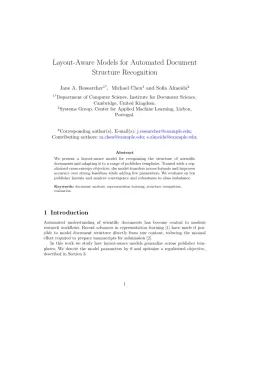
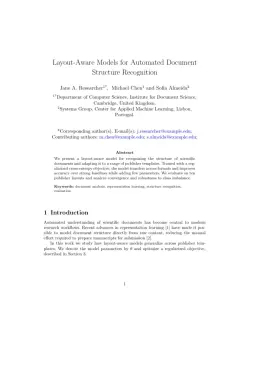
Current Sleep Medicine Reports template — frequently asked questions
How do I write a paper in the Current Sleep Medicine Reports format?
In DocuGuru you write your manuscript in a normal editor — no LaTeX setup required — and select the Current Sleep Medicine Reports template. When you export, DocuGuru compiles the paper into the official Springer Nature format and hands you a submission-ready PDF along with the editable LaTeX source.
What reference style does Current Sleep Medicine Reports use?
Current Sleep Medicine Reports uses Superscript numbered (Nature) references, shown as superscript numerals in the text. DocuGuru formats every in-text citation and the reference list in this exact style automatically. A reference appears like this: 1. Smith, A., Jones, B. & Lee, C. A representative article title. Current Sleep Medicine Reports 12, 45–58 (2023).
Do I need to know LaTeX to submit to Current Sleep Medicine Reports?
No. DocuGuru generates the sn-jnl LaTeX class and compiles the PDF for you in the background, so you get a Springer Nature-ready Current Sleep Medicine Reports document without writing any LaTeX. If you do want it, the LaTeX source is included in the export.
Can I import an existing draft into the Current Sleep Medicine Reports template?
Yes. Paste or upload your current manuscript — Word, LaTeX, Markdown, or plain text — and DocuGuru reflows it into the Current Sleep Medicine Reports format with correct headings, figures, tables, and superscript citations.
Who publishes Current Sleep Medicine Reports?
Current Sleep Medicine Reports is a multidisciplinary journal published by Springer Nature. DocuGuru's Current Sleep Medicine Reports template matches Springer Nature's official submission format.
Can I export a submission-ready Current Sleep Medicine Reports PDF?
Yes — DocuGuru produces a PDF built with the official Current Sleep Medicine Reports template (the sn-jnl class) that is ready to submit to Springer Nature, together with the matching LaTeX source files.
How much does the Current Sleep Medicine Reports template cost?
You can start writing in the Current Sleep Medicine Reports template for free. Exporting the final submission-ready Current Sleep Medicine Reports PDF and LaTeX source is part of DocuGuru's paid plans — see the app for current pricing.