Springer Nature

Crop Health Template

Write in a clean editor, then format for Crop Health in one click — DocuGuru applies the official Springer Nature template with superscript references and exports a submission-ready PDF plus the editable LaTeX source. Free to start.

About the Crop Health format

Crop Health is a peer-reviewed journal published by Springer Nature, covering Plant-Microbe Interactions and Immunity, Insect-Plant Interactions and Control, Plant and animal studies.

PublisherSpringer Nature
Reference styleSuperscript numbered (Nature)
Superscript — small raised numerals in the text
1. Smith, A., Jones, B. & Lee, C. A representative article title. Crop Health 12, 45–58 (2023).

Formats any DOI in Crop Health style. No sign-up.

Publishes research inPlant-Microbe Interactions and Immunity Insect-Plant Interactions and Control Plant and animal studies Plant Virus Research Studies Nematode management and characterization studies
ISSN2948-1945
Citation impact (2-yr)4.03
h-index13
i10-index20
Total citations564
Open accessYes
Top institutions publishing hereZhejiang University
You getA submission-ready PDF and the editable LaTeX source — ready to submit.

Papers published in Crop Health per year

20
2023
19
2024
23
2025

Citation impact of Crop Health by publication year

308
2023
138
2024
91
2025

Citations each year’s papers have accumulated so far — the most recent years are still building up.

Most-cited papers in Crop Health

Nano-enabled crop resilience against pathogens: potential, mechanisms and strategies

Muhammad Noman, Temoor Ahmed, Jiaoyu Wang et al. · 30 Nov 2023

Nanoparticles (NPs) have emerged as a revolutionary strategy in the field of agriculture, offering innovative solutions for enhancing plant health, disease management, and sustainable crop production. This review summarizes the multifaceted roles of NPs, synthesized chemically and biologically, in crop disease management, encompassing the NP modulation of plant immunity against pathogens, mechanisms of NP uptake,…

Microbe-mediated nanoparticle intervention for the management of plant diseases

Temoor Ahmed, Jinyan Luo, Muhammad Noman et al. · 10 Aug 2023

Plant diseases are caused by various pathogenic microorganisms, leading to substantial economic losses and food insecurity worldwide. However, the extensive use of chemical-based nanopesticides has adverse effects on plants, soil, and environmental systems. There is increasing interest in developing eco-friendly and sustainable alternatives to manage plant diseases. Recently, microbe-mediated nanoparticles (NPs) as nanopesticides have attracted…

The seed microbiota from an application perspective: an underexplored frontier in plant–microbe interactions

Inês Rebelo Romão, Joana do Carmo Gomes, Daniel Silva et al. · 4 Jun 2025

Seed-associated microbiota represent a critical yet underexplored frontier in plant-microbe interactions, offering unique insights into plant health, resilience, and development. Unlike the soil or rhizosphere microbiome, the seed microbiota is closely tied to plant reproduction, facilitating both vertical and horizontal transmission of microbes. These microbial communities influence key plant processes, including germination, stress tolerance, nutrient…

Regulatory roles of epigenetic modifications in plant-phytopathogen interactions

Tao Zeng, Fei Yan, Matthias Hahn et al. · 10 Aug 2023

As a sessile organism, plants have evolved a complex and sophisticated immune system to defend against various pathogenic microbes effectively. However, microbes have also developed complicated and delicate strategies to suppress host immunity and successfully colonize the host. Dynamic plant‒pathogen interactions require rapid and fine-tuned regulation of their gene expression. Increasing evidence has revealed that…

Functional, eco-friendly, and starch-based nanocarriers with sustained release of carvacrol for persistent control of tomato gray mold

Wenxuan Shang, Qiuyu Xiong, Zhengang Xie et al. · 29 Nov 2023

Carvacrol (Car) is a promising botanical fungicide. However, the volatile and easily oxidizable characterization of Car hinders its practical application. Herein, an eco-friendly, starch-based nanopesticide (Car@ACS) was successfully constructed by encapsulating of Car within acetylated corn starch, enabling sustained release to prolong its efficacy. In vitro release experiments showed that the release of Car from…

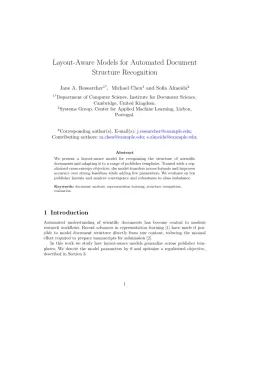
Crop Health template — frequently asked questions

How do I write a paper in the Crop Health format?
In DocuGuru you write your manuscript in a normal editor — no LaTeX setup required — and select the Crop Health template. When you export, DocuGuru compiles the paper into the official Springer Nature format and hands you a submission-ready PDF along with the editable LaTeX source.
What reference style does Crop Health use?
Crop Health uses Superscript numbered (Nature) references, shown as superscript numerals in the text. DocuGuru formats every in-text citation and the reference list in this exact style automatically. A reference appears like this: 1. Smith, A., Jones, B. & Lee, C. A representative article title. Crop Health 12, 45–58 (2023).
Do I need to know LaTeX to submit to Crop Health?
No. DocuGuru generates the sn-jnl LaTeX class and compiles the PDF for you in the background, so you get a Springer Nature-ready Crop Health document without writing any LaTeX. If you do want it, the LaTeX source is included in the export.
Can I import an existing draft into the Crop Health template?
Yes. Paste or upload your current manuscript — Word, LaTeX, Markdown, or plain text — and DocuGuru reflows it into the Crop Health format with correct headings, figures, tables, and superscript citations.
Who publishes Crop Health?
Crop Health is a multidisciplinary journal published by Springer Nature. DocuGuru's Crop Health template matches Springer Nature's official submission format.
Can I export a submission-ready Crop Health PDF?
Yes — DocuGuru produces a PDF built with the official Crop Health template (the sn-jnl class) that is ready to submit to Springer Nature, together with the matching LaTeX source files.
How much does the Crop Health template cost?
You can start writing in the Crop Health template for free. Exporting the final submission-ready Crop Health PDF and LaTeX source is part of DocuGuru's paid plans — see the app for current pricing.
Use the Crop Health template