Springer Nature

Bio-Design and Manufacturing Template

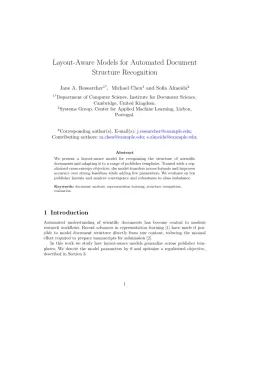
Write in a clean editor, then format for Bio-Design and Manufacturing in one click — DocuGuru applies the official Springer Nature template with superscript references and exports a submission-ready PDF plus the editable LaTeX source. Free to start.

About the Bio-Design and Manufacturing format

Bio-Design and Manufacturing is a peer-reviewed journal published by Springer Nature, covering 3D Printing in Biomedical Research, Bone Tissue Engineering Materials, Additive Manufacturing and 3D Printing Technologies.

PublisherSpringer Nature
Reference styleSuperscript numbered (Nature)
Superscript — small raised numerals in the text
1. Smith, A., Jones, B. & Lee, C. A representative article title. Bio-Design and Manufacturing 12, 45–58 (2023).

Formats any DOI in Bio-Design and Manufacturing style. No sign-up.

Publishes research in3D Printing in Biomedical Research Bone Tissue Engineering Materials Additive Manufacturing and 3D Printing Technologies Innovative Microfluidic and Catalytic Techniques Innovation Advanced Sensor and Energy Harvesting Materials
ISSN2096-5524
Citation impact (2-yr)7.04
h-index53
i10-index243
Total citations10,269
Article processing charge$2,890
Top institutions publishing hereZhejiang University
Journal websitewww.springer.com
You getA submission-ready PDF and the editable LaTeX source — ready to submit.

Papers published in Bio-Design and Manufacturing per year

30
2018
25
2019
48
2020
64
2021
54
2022
39
2023
59
2024
64
2025

Citation impact of Bio-Design and Manufacturing by publication year

1.5K
2018
844
2019
1.6K
2020
3.1K
2021
1.3K
2022
718
2023
771
2024
253
2025

Citations each year’s papers have accumulated so far — the most recent years are still building up.

Most-cited papers in Bio-Design and Manufacturing

A state-of-the-art review of the fabrication and characteristics of titanium and its alloys for biomedical applications

Masoud Sarraf, Erfan Rezvani Ghomi, S. Alipour et al. · 26 Oct 2021

Abstract: Commercially pure titanium and titanium alloys have been among the most commonly used materials for biomedical applications since the 1950s. Due to the excellent mechanical tribological properties, corrosion resistance, biocompatibility, and antibacterial properties of titanium, it is getting much attention as a biomaterial for implants. Furthermore, titanium promotes osseointegration without any additional adhesives by…

3D printing of tissue engineering scaffolds: a focus on vascular regeneration

Pengju Wang, Yazhou Sun, Xiaoquan Shi et al. · 4 Jan 2021

Tissue engineering is an emerging means for resolving the problems of tissue repair and organ replacement in regenerative medicine. Insufficient supply of nutrients and oxygen to cells in large-scale tissues has led to the demand to prepare blood vessels. Scaffold-based tissue engineering approaches are effective methods to form new blood vessel tissues. The demand for…

3D bioprinting: current status and trends—a guide to the literature and industrial practice

Silvia Santoni, Simone Giovanni Gugliandolo, Mattia Sponchioni et al. · 2 Dec 2021

Abstract The multidisciplinary research field of bioprinting combines additive manufacturing, biology and material sciences to create bioconstructs with three-dimensional architectures mimicking natural living tissues. The high interest in the possibility of reproducing biological tissues and organs is further boosted by the ever-increasing need for personalized medicine, thus allowing bioprinting to establish itself in the field…

Bio-Design and Manufacturing template — frequently asked questions

How do I write a paper in the Bio-Design and Manufacturing format?
In DocuGuru you write your manuscript in a normal editor — no LaTeX setup required — and select the Bio-Design and Manufacturing template. When you export, DocuGuru compiles the paper into the official Springer Nature format and hands you a submission-ready PDF along with the editable LaTeX source.
What reference style does Bio-Design and Manufacturing use?
Bio-Design and Manufacturing uses Superscript numbered (Nature) references, shown as superscript numerals in the text. DocuGuru formats every in-text citation and the reference list in this exact style automatically. A reference appears like this: 1. Smith, A., Jones, B. & Lee, C. A representative article title. Bio-Design and Manufacturing 12, 45–58 (2023).
Do I need to know LaTeX to submit to Bio-Design and Manufacturing?
No. DocuGuru generates the sn-jnl LaTeX class and compiles the PDF for you in the background, so you get a Springer Nature-ready Bio-Design and Manufacturing document without writing any LaTeX. If you do want it, the LaTeX source is included in the export.
Can I import an existing draft into the Bio-Design and Manufacturing template?
Yes. Paste or upload your current manuscript — Word, LaTeX, Markdown, or plain text — and DocuGuru reflows it into the Bio-Design and Manufacturing format with correct headings, figures, tables, and superscript citations.
Who publishes Bio-Design and Manufacturing?
Bio-Design and Manufacturing is a multidisciplinary journal published by Springer Nature. DocuGuru's Bio-Design and Manufacturing template matches Springer Nature's official submission format.
Can I export a submission-ready Bio-Design and Manufacturing PDF?
Yes — DocuGuru produces a PDF built with the official Bio-Design and Manufacturing template (the sn-jnl class) that is ready to submit to Springer Nature, together with the matching LaTeX source files.
How much does the Bio-Design and Manufacturing template cost?
You can start writing in the Bio-Design and Manufacturing template for free. Exporting the final submission-ready Bio-Design and Manufacturing PDF and LaTeX source is part of DocuGuru's paid plans — see the app for current pricing.

Use the Bio-Design and Manufacturing template