Springer Nature

Autoimmunity Highlights Template

Write in a clean editor, then format for Autoimmunity Highlights in one click — DocuGuru applies the official Springer Nature template with numbered references and exports a submission-ready PDF plus the editable LaTeX source. Free to start.

About the Autoimmunity Highlights format

Autoimmunity Highlights is a peer-reviewed journal published by Springer Nature, covering Systemic Lupus Erythematosus Research, Monoclonal and Polyclonal Antibodies Research, Diabetes and associated disorders.

PublisherSpringer Nature
Reference styleNumbered (Springer Basic)
Numbered — [1], [2] in the text
1. Smith A, Jones B, Lee C (2023) A representative article title. Autoimmunity Highlights 12:45–58

Formats any DOI in Autoimmunity Highlights style. No sign-up.

Publishes research inSystemic Lupus Erythematosus Research Monoclonal and Polyclonal Antibodies Research Diabetes and associated disorders T-cell and B-cell Immunology Liver Diseases and Immunity
ISSN2038-0305
h-index35
i10-index105
Total citations4,664
Open accessYes
Top institutions publishing hereUniversity of Thessaly
Journal websitelink.springer.com
You getA submission-ready PDF and the editable LaTeX source — ready to submit.

Papers published in Autoimmunity Highlights per year

14
2010
12
2011
17
2012
11
2013
10
2014
6
2015
18
2016
11
2017
8
2018
13
2019
19
2020
9
2021

Citation impact of Autoimmunity Highlights by publication year

224
2010
220
2011
372
2012
187
2013
626
2014
180
2015
871
2016
662
2017
146
2018
377
2019
502
2020
270
2021

Citations each year’s papers have accumulated so far — the most recent years are still building up.

Most-cited papers in Autoimmunity Highlights

Chemiluminescent immunoassay technology: what does it change in autoantibody detection?

Luigi Cinquanta, Desré Ethel Fontana, Nicola Bizzaro · 24 Jun 2017

Diagnostic technology is rapidly evolving, and over the last decade, substantial progress has been made even for the identification of antibodies, increasingly approaching this type of diagnostic to that of automated clinical chemistry laboratory. In this review, we describe the analytical and diagnostic characteristics of chemiluminescence technology in its strength and in its applicability for…

Muscle biopsy features of idiopathic inflammatory myopathies and differential diagnosis

Gaetano Vattemi, Massimiliano Mirabella, Valeria Guglielmi et al. · 10 Sep 2014

The gold standard to characterize idiopathic inflammatory myopathies is the morphological, immunohistochemical and immunopathological analysis of muscle biopsy. Mononuclear cell infiltrates and muscle fiber necrosis are commonly shared histopathological features. Inflammatory cells that surround, invade and destroy healthy muscle fibers expressing MHC class I antigen are the typical pathological finding of polymyositis. Perifascicular atrophy and…

Behçet’s disease physiopathology: a contemporary review

Mohamad Jamal Zeidan, David Saadoun, Marlène Garrido et al. · 12 Feb 2016

Behçet's disease, also known as the Silk Road Disease, is a rare systemic vasculitis disorder of unknown etiology. Recurrent attacks of acute inflammation characterize Behçet's disease. Frequent oral aphthous ulcers, genital ulcers, skin lesions and ocular lesions are the most common manifestations. Inflammation is typically self-limiting in time and relapsing episodes of clinical manifestations represent…

Next-generation anti-CD20 monoclonal antibodies in autoimmune disease treatment

Fanny Huynh Du, Elizabeth Mills, Yang Mao‐Draayer · 15 Nov 2017

The clinical success of anti-CD20 monoclonal antibody (mAb)-mediated B cell depletion therapy has contributed to the understanding of B cells as major players in several autoimmune diseases. The first therapeutic anti-CD20 mAb, rituximab, is a murine-human chimera to which many patients develop antibodies and/or experience infusion-related reactions. A second generation of anti-CD20 mAbs has been…

Brain atrophy in multiple sclerosis: mechanisms, clinical relevance and treatment options

Athina Andravizou, Efthimios Dardiotis, Artemios Artemiadis et al. · 10 Aug 2019

Multiple sclerosis (MS) is an immune-mediated disease of the central nervous system characterized by focal or diffuse inflammation, demyelination, axonal loss and neurodegeneration. Brain atrophy can be seen in the earliest stages of MS, progresses faster compared to healthy adults, and is a reliable predictor of future physical and cognitive disability. In addition, it is…

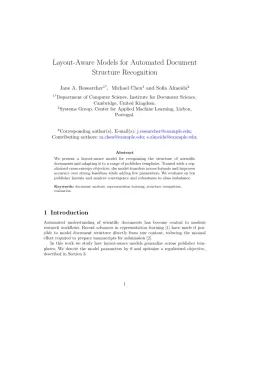
Autoimmunity Highlights template — frequently asked questions

How do I write a paper in the Autoimmunity Highlights format?
In DocuGuru you write your manuscript in a normal editor — no LaTeX setup required — and select the Autoimmunity Highlights template. When you export, DocuGuru compiles the paper into the official Springer Nature format and hands you a submission-ready PDF along with the editable LaTeX source.
What reference style does Autoimmunity Highlights use?
Autoimmunity Highlights uses Numbered (Springer Basic) references, shown as numbered [1], [2] markers in the text. DocuGuru formats every in-text citation and the reference list in this exact style automatically. A reference appears like this: 1. Smith A, Jones B, Lee C (2023) A representative article title. Autoimmunity Highlights 12:45–58
Do I need to know LaTeX to submit to Autoimmunity Highlights?
No. DocuGuru generates the sn-jnl LaTeX class and compiles the PDF for you in the background, so you get a Springer Nature-ready Autoimmunity Highlights document without writing any LaTeX. If you do want it, the LaTeX source is included in the export.
Can I import an existing draft into the Autoimmunity Highlights template?
Yes. Paste or upload your current manuscript — Word, LaTeX, Markdown, or plain text — and DocuGuru reflows it into the Autoimmunity Highlights format with correct headings, figures, tables, and numbered citations.
Who publishes Autoimmunity Highlights?
Autoimmunity Highlights is a multidisciplinary journal published by Springer Nature. DocuGuru's Autoimmunity Highlights template matches Springer Nature's official submission format.
Can I export a submission-ready Autoimmunity Highlights PDF?
Yes — DocuGuru produces a PDF built with the official Autoimmunity Highlights template (the sn-jnl class) that is ready to submit to Springer Nature, together with the matching LaTeX source files.
How much does the Autoimmunity Highlights template cost?
You can start writing in the Autoimmunity Highlights template for free. Exporting the final submission-ready Autoimmunity Highlights PDF and LaTeX source is part of DocuGuru's paid plans — see the app for current pricing.
Use the Autoimmunity Highlights template