
169 citations
Cite
SaveGo to paper →
Springer Nature
Anzeiger für Schädlingskunde Template
Write in a clean editor, then format for Anzeiger für Schädlingskunde in one click — DocuGuru applies the official Springer Nature template with superscript references and exports a submission-ready PDF plus the editable LaTeX source. Free to start.
About the Anzeiger für Schädlingskunde format
Anzeiger für Schädlingskunde is a peer-reviewed journal published by Springer Nature, covering Insect-Plant Interactions and Control, Insect and Pesticide Research, Insect Pest Control Strategies.
| Publisher | Springer Nature |
|---|---|
| Reference style | Superscript numbered (Nature) Superscript — small raised numerals in the text 1. Smith, A., Jones, B. & Lee, C. A representative article title. Anzeiger für Schädlingskunde 12, 45–58 (2023).
Formats any DOI in Anzeiger für Schädlingskunde style. No sign-up. |
| Publishes research in | Insect-Plant Interactions and Control Insect and Pesticide Research Insect Pest Control Strategies Forest Insect Ecology and Management Insect Resistance and Genetics |
| ISSN | 1436-5693 |
| h-index | 25 |
| i10-index | 73 |
| Total citations | 2,266 |
| Top institutions publishing here | National Research Centre |
| You get | A submission-ready PDF and the editable LaTeX source — ready to submit. |
Papers published in Anzeiger für Schädlingskunde per year
Citation impact of Anzeiger für Schädlingskunde by publication year
Citations each year’s papers have accumulated so far — the most recent years are still building up.
Most-cited papers in Anzeiger für Schädlingskunde
89 citations
Cite
SaveGo to paper →
73 citations
Cite
SaveGo to paper →
Abstract Pymetrozine is the first and only substance from the group of azomethine pyridines, a novel class of insecticides. The spectrum of activity covers sucking pests such as aphids, whiteflies and planthoppers. Tests were carried out in the laboratory and under field conditions to evaluate its impact on beneficial arthropods. In laboratory tests it demonstrated…
67 citations
Cite
SaveGo to paper →
Abstract A study concerning the winter mortality of a sub‐corticolous population of Ips typographus and its parasitoids has been carried out in the south‐eastern Alps (Italy) during the winter 1997/98. Three attacked spruce trees were sampled three times (November, February and April) by collecting infested bark disks (1 dm 2 each). All insects that emerged…
54 citations
Cite
SaveGo to paper →
Related journal templates
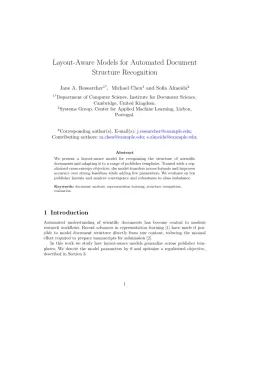
Anzeiger für Schädlingskunde template — frequently asked questions
How do I write a paper in the Anzeiger für Schädlingskunde format?
In DocuGuru you write your manuscript in a normal editor — no LaTeX setup required — and select the Anzeiger für Schädlingskunde template. When you export, DocuGuru compiles the paper into the official Springer Nature format and hands you a submission-ready PDF along with the editable LaTeX source.
What reference style does Anzeiger für Schädlingskunde use?
Anzeiger für Schädlingskunde uses Superscript numbered (Nature) references, shown as superscript numerals in the text. DocuGuru formats every in-text citation and the reference list in this exact style automatically. A reference appears like this: 1. Smith, A., Jones, B. & Lee, C. A representative article title. Anzeiger für Schädlingskunde 12, 45–58 (2023).
Do I need to know LaTeX to submit to Anzeiger für Schädlingskunde?
No. DocuGuru generates the sn-jnl LaTeX class and compiles the PDF for you in the background, so you get a Springer Nature-ready Anzeiger für Schädlingskunde document without writing any LaTeX. If you do want it, the LaTeX source is included in the export.
Can I import an existing draft into the Anzeiger für Schädlingskunde template?
Yes. Paste or upload your current manuscript — Word, LaTeX, Markdown, or plain text — and DocuGuru reflows it into the Anzeiger für Schädlingskunde format with correct headings, figures, tables, and superscript citations.
Who publishes Anzeiger für Schädlingskunde?
Anzeiger für Schädlingskunde is a multidisciplinary journal published by Springer Nature. DocuGuru's Anzeiger für Schädlingskunde template matches Springer Nature's official submission format.
Can I export a submission-ready Anzeiger für Schädlingskunde PDF?
Yes — DocuGuru produces a PDF built with the official Anzeiger für Schädlingskunde template (the sn-jnl class) that is ready to submit to Springer Nature, together with the matching LaTeX source files.
How much does the Anzeiger für Schädlingskunde template cost?
You can start writing in the Anzeiger für Schädlingskunde template for free. Exporting the final submission-ready Anzeiger für Schädlingskunde PDF and LaTeX source is part of DocuGuru's paid plans — see the app for current pricing.