
306 citations
Cite
SaveGo to paper →
Springer Nature
Affective Science Template
Write in a clean editor, then format for Affective Science in one click — DocuGuru applies the official Springer Nature template with superscript references and exports a submission-ready PDF plus the editable LaTeX source. Free to start.
About the Affective Science format
Affective Science is a peer-reviewed journal published by Springer Nature, covering Mental Health Research Topics, Face Recognition and Perception, Psychological Well-being and Life Satisfaction.
| Publisher | Springer Nature |
|---|---|
| Reference style | Superscript numbered (Nature) Superscript — small raised numerals in the text 1. Smith, A., Jones, B. & Lee, C. A representative article title. Affective Science 12, 45–58 (2023).
Formats any DOI in Affective Science style. No sign-up. |
| Publishes research in | Mental Health Research Topics Face Recognition and Perception Psychological Well-being and Life Satisfaction Cultural Differences and Values Emotions and Moral Behavior |
| ISSN | 2662-2041 |
| Citation impact (2-yr) | 2.38 |
| h-index | 32 |
| i10-index | 143 |
| Total citations | 4,938 |
| Article processing charge | $2,790 |
| Top institutions publishing here | Harvard University |
| Journal website | link.springer.com |
| You get | A submission-ready PDF and the editable LaTeX source — ready to submit. |
Papers published in Affective Science per year
Citation impact of Affective Science by publication year
Citations each year’s papers have accumulated so far — the most recent years are still building up.
Most-cited papers in Affective Science
272 citations
Cite
SaveGo to paper →
Studying facial expressions is a notoriously difficult endeavor. Recent advances in the field of affective computing have yielded impressive progress in automatically detecting facial expressions from pictures and videos. However, much of this work has yet to be widely disseminated in social science domains such as psychology. Current state-of-the-art models require considerable domain expertise that…
139 citations
Cite
SaveGo to paper →
Abstract The constructs of empathy (i.e., understanding and/or sharing another’s emotion) and emotion regulation (i.e., the processes by which one manages emotions) have largely been studied in relative isolation of one another. To better understand the interrelationships between their various component processes, this manuscript reports two studies that examined the relationship between empathy and emotion…
115 citations
Cite
SaveGo to paper →
The current theoretical paper discusses the unintended systemic racism and racial biases that impact neuroscience, specifically in research utilizing electroencephalography (EEG). As a popular technique in affective science research, EEG requires adherence between the electrode and scalp to measure brain activity. To obtain high-quality data, various factors such as hair length, hair type, body movement,…
113 citations
Cite
SaveGo to paper →
Related journal templates
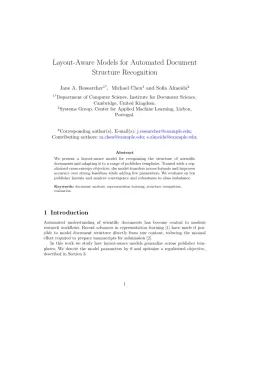
Affective Science template — frequently asked questions
How do I write a paper in the Affective Science format?
In DocuGuru you write your manuscript in a normal editor — no LaTeX setup required — and select the Affective Science template. When you export, DocuGuru compiles the paper into the official Springer Nature format and hands you a submission-ready PDF along with the editable LaTeX source.
What reference style does Affective Science use?
Affective Science uses Superscript numbered (Nature) references, shown as superscript numerals in the text. DocuGuru formats every in-text citation and the reference list in this exact style automatically. A reference appears like this: 1. Smith, A., Jones, B. & Lee, C. A representative article title. Affective Science 12, 45–58 (2023).
Do I need to know LaTeX to submit to Affective Science?
No. DocuGuru generates the sn-jnl LaTeX class and compiles the PDF for you in the background, so you get a Springer Nature-ready Affective Science document without writing any LaTeX. If you do want it, the LaTeX source is included in the export.
Can I import an existing draft into the Affective Science template?
Yes. Paste or upload your current manuscript — Word, LaTeX, Markdown, or plain text — and DocuGuru reflows it into the Affective Science format with correct headings, figures, tables, and superscript citations.
Who publishes Affective Science?
Affective Science is a multidisciplinary journal published by Springer Nature. DocuGuru's Affective Science template matches Springer Nature's official submission format.
Can I export a submission-ready Affective Science PDF?
Yes — DocuGuru produces a PDF built with the official Affective Science template (the sn-jnl class) that is ready to submit to Springer Nature, together with the matching LaTeX source files.
How much does the Affective Science template cost?
You can start writing in the Affective Science template for free. Exporting the final submission-ready Affective Science PDF and LaTeX source is part of DocuGuru's paid plans — see the app for current pricing.